| ||||||||||||||||||||||||||||||||||||||||||||||||||||||||||||||||||||||||||||||||||||||||

Thu 2026-04-23
Wed 2026-04-22
Tue 2026-04-21
Mon 2026-04-20
Sun 2026-04-19
Sat 2026-04-18
Fri 2026-04-17
Thu 2026-04-16
Wed 2026-04-15
Tue 2026-04-14
Search
Archives
2024
12 11 10 09 08 07 06 05 04 03 02 01
2023
2022
2021
2020
2019
2018
2017
2016
2015
2014
2013
2012
2011
2010
2009
2008
2007
2006
2005
2004
2003
One good site
MDN
Nelson Minar
Blog licensed under a Creative Commons License
|
Canon has a yearly amazing
rebate program; if you buy three qualifying items you get a 10-30%
rebate on all of them. Rebates cover many things (including camera
bodies), but you have to buy things by January 15. Here's a
list of all the prime lenses that are covered by the program. Prices
listed are the cheapest at Amazon, rebate is the maximum 3x rebate.
All lenses have ring USM autofocus except the 50 which is micro USM. The 300mm is also image stabilized. More data on the Canon lens chart PDF.
I'm learning how to effectively give to charities. This year I
did a fair amount of research to find efficient organizations on
GuideStar
and
Charity Navigator. I also
asked Mefi
for some ideas for specific charities.
Then I made donations via
American
Express: it's convenient, has good research, and has a reasonably low
transaction fee.
I hope it's not tacky to talk about this, but in trying to figure out what and where to give I had a hard time. Most of my friends don't talk about this kind of thing, so I thought maybe this blog post would help the conversation. Here's the charities I came up with:
  The
Dell
2405FPW is good hardware. Dell continues to make excellent LCDs at
reasonable prices. The 2405 is much like the 2001, only 24" wide and
1920x1200. It has a good
"scale but preserve aspect ratio" option for 4x3 video sources.
The
Dell
2405FPW is good hardware. Dell continues to make excellent LCDs at
reasonable prices. The 2405 is much like the 2001, only 24" wide and
1920x1200. It has a good
"scale but preserve aspect ratio" option for 4x3 video sources.
My only complaint is that it's really bright with a gamma of about 2.0 Photos look a bit washed out. I still haven't figured out which of three different calibration techniques I should use to get this under control, but I'm about to do some serious photo editing so I need to figure it out. If you're thinking about buying a new LCD you may want to hold off a couple of weeks. Dell's about to introduce the 2407FPW. It's major feature is the evil HDCP, but the new model may make the 2405FPW cheaper. They're also going to inrtoduce the 3007WFP, a 30" LCD at 2560x1600. That sounds really cool but honestly the 24" is already too big. The viewing angles mean that the screen doesn't appear to be constant brightness. One practical nuisance with widescreen LCDs; many full screen games don't use the extra width. At worse you just play with black bars on each side, for more info see widescreen gaming forum. I've compounded the problem by hooking my other LCD up as a second monitor, 1200x1600. Everything I've run still works, but some programs get a bit confused.
Webmasters get anxious when they move a website for fear
they'll lose visibility in search engines. I'm glad to say that in
my
move
the three major search engines all did a great
job following my blog to the new URL.
The key thing that made this move work was getting the 301 redirects right. When you move a web page the old URL should still work, but instead of serving content it should return a 301 Moved Permanently pointing at the new URL. I did this with Apache mod_rewrite, specifying the flag [R=301]. It took a bit of fiddling to redirect both hostname and path in a single response. With the redirect in place everyone quickly started indexing the new URL. The first search engine to find the new host was Yahoo, which had 47 pages for my new hostname in less than 15 hours. Google had the new site in about 24 hours. MSN got it in about 48 hours. Now, 2 weeks later, all three engines have a fairly good collection of my pages at the new URL. Google and MSN now favour the new hostname but Yahoo still has the majority of pages from the old name. I'm also curious about when the search engines start forgetting the old host. Google decided my canonical URL was the new host in about 36 hours. MSN switched in about 3 days, although it took awhile for the new URL to float to the top of the search results. Yahoo took about 12 days to switch. Of course with my redirect in place, people find my blog either way. So what's the bottom line? 301 redirects worked for me and all the major search engines did a good job of following mine. Search engines are complicated; it's possible something I haven't thought to check didn't work. But folks can find my blog at the new URL, so I'm happy. And it's pretty amazing how fast this update happens. My blog is only one of billions of web pages out there; search engines are able to track changes like mine across the entire web in just a few days.
PS: while I work for Google, these notes
are something I did on my own time out of curiousity and do not
reflect the work or views of my employer. And no, I don't get special
treatment by Googlebot. I wish!
Showtime's got great shows this year; first
Weeds and now
Sleeper
Cell.
On the surface it's a spinning-plates anti-terrorist drama in the vein
of 24. Which makes for fun TV. But Sleeper Cell has more depth than
that, particularly in
the subtlety of the characterizations.
The script borrows from recent history to build a motley crew of terrorists intent on carrying jihad to America. Blake Shields is great as the unfortunate John Walker Lindh type. Alex Nesic is fun as the French Islamic radical who enjoys hookers and strippers. Both good guys and bad are drawn with complexities and imperfections that make the story compelling.  The show just finished its 10 hour miniseries run, but Showtime promises a rebroadcast January 10. And it looks like a DVD release is planned, too.  When I was nine I wanted an Atari 2600 more than anything. I pestered
my mom all fall for an Atari at Christmas, but I knew this was a bit
expensive for our family. My mom just kept saying no, we can't afford
that, I'll get you something nice and you can play with your friends'
Ataris.
When I was nine I wanted an Atari 2600 more than anything. I pestered
my mom all fall for an Atari at Christmas, but I knew this was a bit
expensive for our family. My mom just kept saying no, we can't afford
that, I'll get you something nice and you can play with your friends'
Ataris.
But my mom found a way and bought the Atari mid-December and hid it in the house. I know this because my sister hinted just a little bit and I figured it out and prowled around the scary garage closet until I found it. I was so excited that I couldn't wait until Christmas, so I told my Mom I'd found it. In my nine year old logic that meant she'd give it to me early. My Mom was devastated that her surprise was ruined. She took Christmas seriously, doubly so with such an expensive gift. I remember her crying. I remember her getting mad and telling me she was going to take the Atari back to the store since I'd ruined the gift. And she did. I went sneaking around the house and couldn't find it. Christmas Eve all my presents were under the tree, but no box big enough for an Atari. I was sad, but I was well enough behaved not to sulk at Christmastime. Santa had come and there was candy in the stockings, and mom made a special breakfast, and all was fine. Then I opened my smallest present, and it was an Atari 2600 joystick. My second smallest present was an Atari cartridge. And so on. My mom had broken the Atari up into lots of little boxes and wrapped each one individually. I was the happiest kid ever.  I just went to myspace for the
first time. I've still never been to facebook. I don't know anyone who
has pages on either site. I normally pride myself on being hip to Internet
culture, but I think the lowest on the age curve I go is LiveJournal.
I wonder what the natural generational groupings on the Internet are?
I naïvely thought there wouldn't be any, but of course the net
is all about community and culture and, therefore, generation.
I just went to myspace for the
first time. I've still never been to facebook. I don't know anyone who
has pages on either site. I normally pride myself on being hip to Internet
culture, but I think the lowest on the age curve I go is LiveJournal.
I wonder what the natural generational groupings on the Internet are?
I naïvely thought there wouldn't be any, but of course the net
is all about community and culture and, therefore, generation.
The Xbox 360 is a dry run for "Trusted Computing". The new console has a slew of
anti-modder
technology to make it impossible to run
unauthorized software. Who authorizes Xbox 360 software? Microsoft.
Intel, Microsoft, IBM, etc are colluding to bring the same sort of technology to PCs to prevent you from using unauthorized software. Who authorizes software? Not you. It's a sure bet "Trusted Computing" is going to bring us a new level of digital rights management hell. Sony won't have to do something stupid to stop you from legally copying music; the operating system and processor will do it for them. Your monitor will collaborate. Dell is about to ship LCDs with HDCP so that your screen won't display unauthorized video. Who authorizes video? Not you. If all this byzantine technology just made it harder for people to steal music and movies I wouldn't mind. But the collateral damage is too great. The new wave of hardware-assisted DRM means that your PC is going to be a jail full of complex interior locks that prevent you from doing anything that some pointy-headed copyright holder doesn't think you should do. I should have the right to authorize the software that runs on my computers. I won't. The old Xbox tried to stop modders too, but they got it wrong. It remains to be seen how hard it will be to mod the Xbox 360 or the new PC systems. I fear once the restrictions are in the hardware it will be very hard to fix.
I finally settled on a domain name for myself.
I've set up a bunch of redirects to move my blog to its new official
home, http://www.somebits.com/weblog/.
The old ~nelson was all nice and Web 0.9, but it's time to
move on. Please update your links so Googlebot has no trouble finding
me! The linkblog moved, too.
If you notice any problems, please mail me. This seems like a good time to give a tip of the hat to Drrt, Dugsong, and the other good folks of monkey.org whose name I've been using for so long. They're a neat geek collective coming originally from University of Michigan and number among them some of the best Unix security hackers out there. I'll continue to do various things over there, but it's nice to have a name of my own too.
Between being in Switzerland for three months and all the new games
out for the Christmas
season I have a giant backlog of interesting computer games to play.
Should last me for six months! If you're thinking of a gift for the
gamer geek in your life, maybe this list will help you.
I wish today's MMOGs lived up to the promise of player created content
that was in the earliest online games.
LambdaMOO set the pace.
Pavel Curtis had
a fanatical devotion to player-generated content. The whole world was
player created. Players could build rooms and program new behaviours
in
MOO.
Players even came up with their own
government.
The first commercial MMOGs continued to let players shape the world. Ultima Online in particular had a significant amount of effort devoted to a player created economy and players building their own houses. But contemporary games like World of Warcraft and City of Heroes are essentially stateless worlds. Players can't make permanent changes. Players can't create a building, or modify a sign, or even leave a hat in the middle of the desert. And there's nothing at all like being able to write code to run in-game. The one shining example of player created content in the commercial world now is Second Life. While not quite a mainstream MMOG, it's interesting for its devoted player-creators, impressive authoring tools, and successful player created games. Even the problems are interesting. Let's hope the business works out. Player created content is hard. The gameplay and quality issues significant, it's hard to build server technology that scales when you don't know what the content will be, and it's hard to build good creation tools. But player created content is the interesting thing possible for an MMOG, both for the creators and the consumers.  The newest entry in the
Civilization franchise is out. The new UI is great, nice
use of 3d and lots of info packed on the main screen.
Gameplay is improved but familiar, with one major
addition:
religion.
The newest entry in the
Civilization franchise is out. The new UI is great, nice
use of 3d and lots of info packed on the main screen.
Gameplay is improved but familiar, with one major
addition:
religion.
Religion is a fun twist on the culture system. Cities occasionally found new religions. Religions spread to other cities along trade routes. You can hurry the process along by sending out missionaries. Cities get bonuses for being part of your state religion; you also collect tithes. And religion affects your diplomacy with other civs. I can't think of another mainstream game that's significantly touched the topic of religion. There's no Sims Church, is there? The developers were quite cautious, including this charming disclaimer in the manual: We know that people have extremely strong opinions about religions ... We at Firaxis have no desire to offend anyone. However, given the importance that religions have had in human development, we didn't want to just leave them out of the game altogether; instead we have tried to handle them in as respectful, fair and even-handed manner as possible. (All religions in the game have the same effects, the only difference being their technological requirements.) ...It is true that all religions are equal in-game, in the sense that each one gives you the same bonuses. But the game is by no means free of value judgements. Having religion is better than having no religion. Religion always aids science and income. Multiple religions get along fine; you'll never have a Belfast or Jerusalem. You're rewarded for stuffing as many religions as you can into each happy pantheistic city. That's gotta piss off the true believers. The religion implementation is fun, a nice complement to fighting army men and growing culture blobs. And the implementation is as realistic and tasteful as the rest of Civilization's concepts. I just find it striking how gingerly they're moving. Maybe in a few years religion in games will mature and Rockstar will offend everyone with "Crusades: Fist of Righteousness".  ethereal
has a cool little-known feature: the -z
option
to generate statistics from a pcap file. For instance, here's how to
get a count of how much traffic you saw every five minutes:
ethereal
has a cool little-known feature: the -z
option
to generate statistics from a pcap file. For instance, here's how to
get a count of how much traffic you saw every five minutes:
$ tethereal -q -r foo.pcap -z io,stat,300

===========================================
IO Statistics
Interval: 300.000 secs
Column #0:
                |   Column #0
Time            |frames|  bytes
000.000-300.000    3832    344880
300.000-600.000    3744    336960
600.000-900.000    2316    208440
===========================================
The query language is pretty bizarre and protocol specific but there
are some useful analysis tools. There's also the
proto,colinfo option which lets you select out arbitrary
protocol columns to print in the text dump from tethereal.
As much as
I like ethereal
it has a really annoying flaw; it only works on files less than 2 gigs
big. I've been dumping some NTP traffic for 2 months and have 18G
file to process, and tethereal complains
tethereal: The file "foo.pcap" could not be opened: Value too
large for defined data type.
I'm not patient enough to wade through the ethereal code to fix it, so
instead I wrote a quick and dirty Python script to split a pcap file
into 1 gig pieces: splitpcap.py.
Maybe someone will find this useful.
Five things about San Francisco I missed while in Zürich
With apologies to Merlin
7:55am, checked in. There are two security lines in CDG Terminal 2C. One
has a 30 minute wait; the other is empty, opening at 8am. So I wait.
8:00, 8:05, 8:10. The friendly French passport officer is sitting there looking
at you indifferently across 20 feet of roped off entrance. Security
screeners behind him, lounging around. When will they open?
It took a Frenchman used to the ways of French civil service to solve the problem. At 8:12am he simply opened the lines himself and walked in, presenting his passport and then whisked through security screening. They may or may not be open at 8:00, but they sure as hell aren't going to make any effort to let you know.
6:45am. Wake in Paris, shower, shave, pack, cab, traffic, traffic,
stress, traffic. Check-in, security, and suddenly it's 9:17am and Air France
has given away your seats because it's less than an hour before
scheduled departure. Never mind if the plane is half an hour late and they
let Ken check in but not you. They gave your seat away.
So now I'm stuck an extra day in the hideous Sofitel Airport where it's faster to get from downtown Paris to the airport than from the airport to the hotel on their shuttle. Ordinarily an extra day in Paris wouldn't seem like a hardship but I'm tired and I miss home and thanks to Air France managing to only check in one of us, I'm alone. Another reason to hate Air France. While I'm hating, I'm grateful for Internet in the hotel but screw you Orange for your WiFi implementation. For €20/day I'm given a network connection that dies every six hours or when NetNewsWire tries to download a bunch of RSS feeds. And their router silently intercepts my outgoing SMTP to deliver (and record?) mail through their servers rather than my own. The Internet is a hostile place.  Our last Swiss weekend trip was to Luzern, a small German-speaking town
about
45 minutes
from Zürich. Here's the
photos.
Our last Swiss weekend trip was to Luzern, a small German-speaking town
about
45 minutes
from Zürich. Here's the
photos.
Luzern is a great tourist spot. It's the starting point for trips to Rigi and Pilatus, two famous mountain tops that you can reach by train. But we came to Luzern for the transportation museum, particularly for the trains. That was quite cool, definitely worth the trip. Luzern also has a lot of nice tourist sites. The Kapellbrücke is an amazing covered bridge across the river with a series of series of secular 17th century historical paintings. I'm looking for a catalog of them; they were quite interesting. The Löwendenkmal is also quite beautiful, comemorating the Swiss Guards who died defending the Palais Royale during the French Revolution. There's even an old city wall you can walk, at least in the summer (grrr). We had a nice stay at The Hotel, an aggressively decorated postmodern hotel that's quite nice. (Same group as the Hotel Healdsburg.) Dinner was uncommonly good Thai food at Thai Garden; we're just about done with Swiss German food, I think. We're leaving Switzerland this Saturday (Nov 12). We've had a great time here. A bit homesick, but I suspect once we're back in daily San Francisco life we'll be missing Switzerland's beauty and easy travel.
I had a sort of weird moment today on the train coming back from
Luzern to Zürich. I was reading the International Herald Tribune
(the American paper) and there was
an
article about how the European Union was investigating whether any
of its member nations were hosting the recently disclosed
secret
American prisons.
I was thinking "good for the EU!" when I realized, wait, I'm American. And my country is holding people in secret jails and torturing them. And there's no response, no outrage, no investigations and resignations and arrests. The only one doing anything is the EU, making sure they aren't participating in the gross violation of human rights. What else can they do? What else can I do? What has happened to America? Despite my criticisms of US politics, I'm proud and happy to be American. Except for the torture part. And the imperialistic wars. It has to stop.
This week's
issue
of The Escapist
is a 36 page special on girl gamers. Read the PDF.
The article on page 27,
OMG Girlz Don't Exist on teh Intarweb!!!!1, is great:
When I look at myself, I see a girl on the internet and a girl with an internet life. I see a girl who loves to play games and kill the dirty Alliance faction in WoW. I see a girl who can bunny hop with the best of them and keep her kills higher than her deaths in Counter Strike. I can talk the talk and walk the walk. But I am not a girl on the internet, because as I've been told before, I do not exist.There's been a lot of writing on women and gaming that amounts to nothing, including some in The Escapist. But this article and a couple of others present a direct view into what it's like to be a hardcore girl gamer without a bunch of obnoxious overanalysis getting in the way of your understanding. Worth a read.  Last weekend we made our escape to the land of French cooking, with a
quick trip to
Neuchâtel and
La Chaux de Fonds.
I have photos.
Last weekend we made our escape to the land of French cooking, with a
quick trip to
Neuchâtel and
La Chaux de Fonds.
I have photos.
Neuchâtel is a bit small, but it's a charming town with a Saturday market, talented buskers, and fountains with crazy decorations. And a lake rumoured to be down there below the autumn fog. The neatest site for us was the Collegiate Church, a funky building up on a hill next to an old fortress and the château. The church is a handsome building with interesting carvings, but what we liked best was the sense of quiet up there. Very peaceful. On Sunday we went to La Chaux de Fonds in the Jura. It's an astonishingly ugly city, bad modern buildings. But the Hotel Fleur de Lys does a good lunch of snails and horse steak, so I got my French fix. Our main goal was the famous watch museum. The collection was amazing but the presentation was not very good, hard to understand what we were seeing. The highlight of the museum was the Astrarium, a reproduction of a 14th century astronomical clock. This thing is a remarkable monument to getting good predictions from a bad theory. The main part of the clock is a set of seven dials showing the position of the moon and planets on the sky. Only the whole clock is built on the Ptolemaic theory with the earth in the middle and crazy epicyclic gearwork to try to match the motions of the heavenly bodies. There's a great video showing how the eccentric gears and angled rods allow the clock to mimic Mecury's retrograde motion. Amazing dead end technology.
Ken made a nice American style meal for us last night.
A big delicious US corn-fed filet mignon (from Geiser, a
local butcher) And a nearly US-style baked potato. Not a russet, more
like a yellow potato, wrapped in gold foil like it was something
precious.
The bacon was too thinly sliced and we could only find crème fraîche, no sour cream. But it tasted just like home. You don't see US style beef here; Swiss beef is chewier, more beefy. Probably grass fed. Our imported steak was a beautiful cut of meat. About 1.5x more expensive than you'd pay in the US.  Want to combine Alps, lakes, and palm trees with Swiss efficiency and
Italian culture?
Lugano is a lovely Ticino
resort town, so warm our hotel had a banana grove! Here are some
photos.
Want to combine Alps, lakes, and palm trees with Swiss efficiency and
Italian culture?
Lugano is a lovely Ticino
resort town, so warm our hotel had a banana grove! Here are some
photos.
The best part of the weekend was the train ride to Lugano. A spectacular route through the center of the country, the mountains, and over and through St. Gotthard. We scored a panorama car; Ken and I were practically speechless the whole three hour trip. On the way down we passed a cool vintage steam train also making the journey. Lugano's a bit sleepy in late October, and unfortunately we hit crappy weather so couldn't enjoy the lake or mountains. It's a pretty town though, with lots to walk around and shop and see. We had an excellent dinner at Arté, a welcome delicate touch in the kitchen. Our rainy day Sunday trip was to Mendrisio, a little town near the Italian border. The attraction there was the model train musuem with hundreds of beautiful cars on display as well as a bunch of complex layouts. Also a surprisingly good lunch at Hotel Milano. If you're into model trains Mendrisio is worth a special trip. Otherwise, not so much. We've been enjoying the weekend excursions but it's a bit exhausting to work all week and then travel all weekend. But we've only got three weeks left, no time to rest!  Munich is a big city, but at Oktoberfest it gets full.
My weekend started off badly with a 5 hour train
crowded with Swiss getting an early start on Oktoberfest, followed by
rain and a city full of drunk tourists. Having the hotel right next to
the train station scumminess didn't help.
Munich is a big city, but at Oktoberfest it gets full.
My weekend started off badly with a 5 hour train
crowded with Swiss getting an early start on Oktoberfest, followed by
rain and a city full of drunk tourists. Having the hotel right next to
the train station scumminess didn't help.
As an antidote to all this drunken chaos we headed out first to visit Dachau. Germany has done an excellent job grappling with the horror of its recent history. It's worth visiting one of the concentration camp memorials, both to remember the history and to see how contemporary Germany reflects on it. Very bleak. The next day was still rainy and drunk-full, so we went to the Pinakothek, Munich's art museum complex. We went to the Moderne, but while I generally like contemporary art their collection was tedious. Happily Ken insisted we go to the Alte Pinakothek where I learned about Albrecht Altdorfer, a painter from the same period as Albrecht Dürer and Hieronymous Bosch. Absolutely amazing dense canvases with beautiful control of light combined with phenomenal detail. Visiting the Battle of Alexander alone is worth the trip. We finally hit the Wies'n on the last day of Oktoberfest, a holiday Monday when most of the non-Germans had gone home. I was afraid of the crowds and drunks, but I hadn't considered the Gemütlichkeit. Bavarians truly are a friendly and welcoming bunch, particularly after everyone's had a couple of beers. If by "couple" you mean "several litres", spaced over a whole day with roast chickens to cushion the blow. My favourite beer: Augustiner Edelstoff. Oktoberfest is simple. A bunch of giant tents house thousands of people each who sit down, pay 7,10€ for litres of beer, listen to traditional Bavarian music, and sing and chat. This kind of giant drinking party would be a total disaster in the US, but in Germany folks handle themselves well. It was a wonderful day. Munich is a big and fairly sophisticated city, worth several visits. I'd like to go back in the late spring, when there's beer garden weather and Oktoberfest isn't distorting things. BTW, the traditional greeting in Munich is "Grüss Gott". It means roughly the same thing as "Allahu Akbar".  Last weekend's excursion was two days in
Sankt Gallen with a side
trip to
Appenzell. A
perfect Swiss weekend: light luggage,
short train ride,
good food, and
Alpine cows.
I have lots of
photos.
Last weekend's excursion was two days in
Sankt Gallen with a side
trip to
Appenzell. A
perfect Swiss weekend: light luggage,
short train ride,
good food, and
Alpine cows.
I have lots of
photos.
Sankt Gallen is the kind of place I'd never visit from the US but is a great weekend trip when you're nearby. Its big claim to fame is the abbey, a monastery that dates back to 613 AD and has been a seat of knowledge ever since then. The abbey still quietly dominates the city center and the rococo library and the church are the main tourist sites in town. Some amazing carvings in the church. Wood carving is quite a theme in Sankt Gallen, with many many beautifully decorated window boxes and sculptures on buildings in the old town. Sankt Gallen also gave me hope for Swiss German food. It's still all roast meat, brown sauce, and rösti. But when done well like at zur Alten Post, with friendly service, it's good. And we stumbled into something great at Am Gallusplatz, a wine cellar going back to 1891 with reasonable prices! We had a 1970 Lafite Rothschild that was just lovely. We plan on going back for one night just for dinner (well, wine really). The "good wine at reasonable prices" theme continued with a 2000 Lynch Bages in Appenzell at the Hotel Krone. Appenzell is interestingly rustic, a collection of villages and houses spread out across the mountain slopes. Buildings are often gaily painted, and life in general seems good. Then again it's a bit backwards; Appenzell only allowed women to vote in 1991. The train and wanderweg system is incredibly efficient. You have to love a place where you can set out at 11am with no specific plan and easily find 90 minutes of trains, an hour hike in the valley, and shopping and lunch. This last weekend is the closest we've come to acting like we really live in Switzerland. A pleasant weekend trip, not a serious tourist journey. Great way to live.
The EFF made
some
big news. DocuColor printers hide the date, time, and
serial number of the printer in every image they print.
 The EFF does good work and could use your support.
Printing SBB
tickets online is convenient, but the tickets you get are quite
restricted.
They're only good for one day, they are only good for one
person, and there's no refund or exchange. By contrast
normal tickets are good for three months and are quite liberally
refundable.
I think the reason online tickets are so restricted is they have no way to mark a ticket as used! Normally the conductor punches your ticket when it's used so you can't use it again another day. But with online tickets punching doesn't do any good; you could just print another one and use it the next day. In other words, online tickets are not printed on counterfeit-proof ticket stock. So to limit exposure the ticket is only good for one day. They could have built an online system where the conductor's computer validates your ticket against a central database that's updated with what tickets are used, but that's awfully complicated. Limiting tickets works, too. There's still one way to game the system; you could travel twice in one day on the same route with the same ticket. But that's not terribly useful, so they probably don't worry about it. We had order #398666 on 2005-09-02 and order #467833 on 2005-10-14. Assuming order numbers are serial, that's about 1650 tickets sold online a day.  For the last 24 hours I've been listening over and over again to this new
new Thelonious Monk / John Coltrane
release from the Five Spot era. It's
absolutely brilliant, overwhelming in its beauty. If you care at all
about jazz rush out and buy a copy of this now.
For the last 24 hours I've been listening over and over again to this new
new Thelonious Monk / John Coltrane
release from the Five Spot era. It's
absolutely brilliant, overwhelming in its beauty. If you care at all
about jazz rush out and buy a copy of this now.
The existence of this recording is a miracle, something like finding a previously covered up section of ceiling in the Sistine Chapel. It comes from the legendary 1957 collaboration between Monk and Coltrane, at the height of their development, of which there are almost no recordings. Until someone stumbled into a tape in the Library of Congress archives this year. And it was good. But forget all that, just listen to this recording. It's amazing.
Today's IHT has an astonishing
article about the North Korea Mass Games.
20,000 schoolchildren filling the side of one of the world's largest stadiums flip giant cards with such synchronicity that they form a gigantic screen flashing picture-quality images and communist slogans. ...Someone must have video.
Sorry for the absence, I was off touristing for a week. We went to
München for Oktoberfest, then Heidelberg, Strasbourg, and a
little town near Epernay in Champagne. Nice little trip, a lot of good
food and wine and beer. And a lot of time on trains; 8 hours on 6
different trains today! But I'm home with 400+ photos. Details to
come.
 Overlooked Firefox
keyboard shortcuts. Ctrl-PageUp and Ctrl-PageDown cycle between tabs
in a window. So do Ctrl-Tab and Ctrl-Shift-Tab.
Overlooked Firefox
keyboard shortcuts. Ctrl-PageUp and Ctrl-PageDown cycle between tabs
in a window. So do Ctrl-Tab and Ctrl-Shift-Tab.
 Zürich has a complicated solution to garbage
management. You pay by the bag. Garbage can only be thrown out in
special Züri-Säcken,
which at
$2
/ kitchen size bag is expensive enough that you think twice before
throwing things away. (And apparently make garbage bags a shoplifting
target, because every store keeps them behind the cashier's counter).
Zürich has a complicated solution to garbage
management. You pay by the bag. Garbage can only be thrown out in
special Züri-Säcken,
which at
$2
/ kitchen size bag is expensive enough that you think twice before
throwing things away. (And apparently make garbage bags a shoplifting
target, because every store keeps them behind the cashier's counter).
You'd think the expense per bag would mean you would recycle more, but the recycling rules are complex enough we can never figure out what to take where. But they're serious about garbage here. As they say The white "Züri-Sack" symbolizes more than ever the image of clean Zürich "für e suubers Züri". Depositing of other garbage bags, or of Züri-Sacks at an inappropriate time, is an offence which will be reported to the police and fined.David McQuillen thinks this is a bit silly, too.
For a brief time my blog was serving all 767 posts in a single page
and in a single RSS feed. So some folks were treated to four year old
blog posts as if they were new. Sorry about that. Mark all as read and
carry on.
I turned off clicktracking on my blog too. The data was interesting, but I had stopped looking at it.  Thunderbird
with imap is good software.
For about 13 years I've been using the same email client:
vm in emacs. While
reasonably quick and infinintely adaptable, it's really not suited to
modern email with attachments, HTML formatting, and multiple servers.
Thunderbird
with imap is good software.
For about 13 years I've been using the same email client:
vm in emacs. While
reasonably quick and infinintely adaptable, it's really not suited to
modern email with attachments, HTML formatting, and multiple servers.
I just switched to Thunderbird and Dovecot imap and it's like a whole new world, simpler and neater. I now have much less reason to fire up a vt100. All I do in emacs now is coding and blog posting. I'm still using procmail and spamassassin for mail processing, but wondering if I can dispense with some of that, too. Imap is really great, the server-side model is definitely good. But it doesn't go quite far enough: imap should provide mail delivery and address book management too. I don't want to have to configure ldap and smtp also. What I'm really missing is the ability to easily search my 300 megs of email archives going back twelve years. Despite having written two mail search systems, I still go back to grepmail on the raw files. Gmail is cool and all but I don't like browser hosted email.
I'm a little intimidated by buying train tickets in a foreign country.
Find the right place to go, wait in line, negotiate the right ticket without quite
understanding fare options or the local language, ... So I like
that the Swiss train company lets you buy
and print tickets online. Just pick your journey online, press the
"print" button, and voila, you get a PDF file.

One of the most common data analysis things I do in Unix is something
like
cat wines | sort | uniq -c | sort -nr
Given an input file with a million bottles of wine in it, this shows
me how many bottles of each type I have. It works for other things
besides wine. In fact, it works for a lot of things, and I've been
doing this for 15 years.
But the first sort is really inefficient, just something you have to do to make uniq work. So for big inputs I use a little Python script, countuniq.py. It does the same thing but more efficiently. Remarkably useful tool.  Our
plan to sample the French side of Switzerland succeeded last
weekend, with a nice trip to Lausanne and a side trip to Montreux. As
usual, lots of
photos.
Our
plan to sample the French side of Switzerland succeeded last
weekend, with a nice trip to Lausanne and a side trip to Montreux. As
usual, lots of
photos.
Lausanne is an amazing city, a three dimensional wonderland of bridges and buildings built up on steep hills with gorges inbetween. You emerge from the Metro from Ouchy and immediately have a choice: elevator or exit. One puts you in the exact same place as the other, only 50 feet above, and city extends from each direction. We went up to the top, to the cathedral. On the way was a fantastic Saturday market with six different charcuterie vendors and five different cheese vendors, full of delicious things. Then we walked down, enjoying the confusion of life at two levels. Really an interesting city, I wish I could have photographed the topography better. The other nice thing we did was take the boat to Montreux, to visit the Château de Chillon. Lac Leman along the way is beautiful, full of vineyards and châteaux and luxury houses. The château itself is a 12th century fort built on a convenient rock in the lake just off shore, with a command of the main route from the south over the Alps. Nicely restored and lots to see. We had dinner in the fancy places in Lausanne, at La Rotonde at the Beau-Rivage and the Table d'Edgard at Lausanne Palace. Very good, but the meal I enjoyed the most was the Paradise Chalet, a funky little Swiss place in Montreux next to the train station. We'd been walking for 20 minutes with no clue where to go, town quiet on a Sunday, starting to rain. Then we bumbled into the place with its old wood panelling, cowbells and funny gnome decor, and an amazing terrace view. The menu is good basic Swiss food, I had the Papet Vaudoise: smoked sausage, fatback, potatoes and leeks. Ken had rösti with a Tomme de Vaud. We didn't feel like having the horse steak tartar or fondue. Really yummy hearty stuff, and just the right thing at the right time. I continue to be amazed that you can go back and forth between French and German cultures so quickly. I wish my brain could; it took me an extra day to switch back to fumbling tourist German instead of fumbling tourist French. Bon jour, wie gehts?
The early registration deadline for EuroOSCon is
almost past. If you're thinking about going now's
the time to sign up. I'm in the neighbourhood anyway so I'm definitely
going: the list
of speakers looks pretty impressive.
The open source community is way more global than the
US-dominated software venture world. Time to meet the talent from
somewhere other than home.
 apt
is good software. I just upgraded my server from stable (Sarge) to
testing (Etch). The trick is my server is 5000 miles away from me. And
I will never have physical access to it, so if something goes wrong, I'm
screwed.
apt
is good software. I just upgraded my server from stable (Sarge) to
testing (Etch). The trick is my server is 5000 miles away from me. And
I will never have physical access to it, so if something goes wrong, I'm
screwed.
But Debian did me proud. Run apt-get dist-upgrade, watch 150 packages go by, watch the new kernel install, reboot, say a little prayer, and I'm back. Some scariness from the kernel install script: I repeat: you have to reboot in order for the modules file to be created correctly. Until you reboot, it may be impossible to load some modules. Reboot as soon as this install is finished (Do not reboot right now, since you may not be able to boot back up until installation is over, but boot immediately after). I can not stress that too much. You need to reboot soon. I've done major system upgrades like this three times now with Debian, and everytime it's worked. That's pretty impressive.
One of the interesting things about Switzerland is how international
it is. The country has four official languages: German, French,
Italian, and Romansch.
And at least three cultural heritages:
Germanic, Italian, and French. (Of course, all of Switzerland is echte
Schwiezer, but forgive an ignorant American for simplifying). Tomorrow
we're going to sample a bit of the French side, spending the weekend
in Lausanne.
Most everyone here speaks English, which helps me when I'm lazy and trying to negotate with my neighbours about when to do the washing. All the food and product packaging is trilingual; German, French, and Italian. But no English, since that's not an official language. Seems somewhat perverse to me, but I guess it makes sense.
I love NTP, the
magic Internet protocol that keeps computer clocks synchronized. One
of the nice things Apple does is run an NTP service for all their
computers. That's how your Mac always knows the right time. Here are
some notes on what they do.
My American MacOS 10.3.9 box has the following /private/etc/ntp.conf:
server time.apple.com minpoll 12 maxpoll 17
That means my Mac asks time.apple.com for the time somewhere between
once an hour and once every day and a half. That's less often
than usual for NTP, presumably an accuracy / scalability tradeoff.
time.apple.com currently resolves to 4 IP addresses, 17.254.0.26, .27, .28, and .31. All of them seem to be in San Jose, California. .26 is the most accurate clock (stratum 2), the others are just behind at stratum 3. Using ntpdc you can find out where .27 gets its time from. They're well synchronized, talking to several stratum 1 clocks. They poll each of those every 128 seconds, aggressive but maybe appropriate for such a well-used clock. They sync around the world, and also run services in Europe and Asia for their clients.
I love my new Canon 350D. It's the first SLR I've owned, and the
pictures are
automatically
10x
better
than my little Canon Elph S400.
It's the only time in my life where spending money made me a better
artist.
But inexpensive digital SLRs don't shoot a full 35mm frame. Instead they have smaller sensors. The 350D has a "1.6x crop factor", which basically means your pictures look OK but your lenses are more telephoto than you'd think. A 35mm lens acts like a 56mm lens. If you want a wide angle 28mm shot you have to buy a 17mm lens. Really wide angle lenses for these small sensor cameras are very dear. Canon has tried to turn this liability into an advantage by selling "EF-S" lenses, special lenses that only work on small sensor cameras. They go deeper into the camera body, and in theory allow for cheaper / lighter lenses. All I know is they don't work on all cameras, just these small sensor ones. And while right now most digital SLRs are small sensor, there's reason to think that Canon may soon switch to all full size sensors. The newly announced full sensor Canon 5D is a bellweather here. At $3300 it's a lot more than the $800 for a 350D, but a lot cheaper than the $7600 that the current cheapest full sensor camera costs. Folks seem to be excited by the 5D full frame. Wide angles that work like wide angles, better viewfinder, what's not to like? All of this is a long-winded way of suggesting that EF-S lenses may not be such a good investment, that in four years you may not be able to buy a good camera that uses them. Which is sort of an awkward position for Canon. They've made some serious EF-S lenses, will they abandon their customers?  The Swiss
love their church bells. In Zürich they ring
constantly. Every quarter hour to mark the time, and for 10 minutes at
a stretch to call the faithful to church. Nothing quite as exotic as
change
ringing, but the random
rhythm is pretty interesting sounding.
The Swiss
love their church bells. In Zürich they ring
constantly. Every quarter hour to mark the time, and for 10 minutes at
a stretch to call the faithful to church. Nothing quite as exotic as
change
ringing, but the random
rhythm is pretty interesting sounding.
Mark Twain, on his visit to Switzerland, didn't care for the bells so much. We did not oversleep at St. Nicholas. The church-bell began to ring at four-thirty in the morning, and from the length of time it continued to ring I judged that it takes the Swiss sinner a good while to get the invitation through his head. Most church-bells in the world are of poor quality, and have a harsh and rasping sound which upsets the temper and produces much sin, but the St. Nicholas bell is a good deal the worst one that has been contrived yet, and is peculiarly maddening in its operation.  I continue to be astonished at how many people in Switzerland smoke.
34%
of adults here smoke, one of the highest rates in a developed
nation. Compare to 18%
in the US.
I continue to be astonished at how many people in Switzerland smoke.
34%
of adults here smoke, one of the highest rates in a developed
nation. Compare to 18%
in the US.
The Swiss don't seem to have reached the point of intolerance of second hand smoke. By law restaurants have to have non-smoking rooms, but many don't. The restaurant I went to last night had the entire upstairs dedicated to non-smoking, but as soon as the downstairs filled up they seated smokers upstairs and brought the ashtrays. No one seemed to mind. Yuck.  I've been waiting a lot for my computers.
I have a bunch of video files on my Mac. When I select one in the Finder to open it, I first have to wait for ~3 seconds with a spinning cursor while Finder generates a thumbnail preview. I don't want a preview, I just want to watch the video. On my Windows box in Zürich I have an SMB mount to a fileshare in California. I expect it to be slow, it's a long way. But it's slow even when I don't use it. I'll sometimes accidentally drag a file across the remote folder icon on my desktop. At that moment Windows decides it has to query the server for a bunch of stuff, forcing me to wait. Applications should not force me to synchronously wait for some action I don't even want. Do the work in the background or substitute a low fidelity fast operation. Then again doing that wrong can be a hazard too, as Picasa and iPhoto show. When browsing photos full screen, both apps first show you a low-res version, then 1–2 seconds later swap it with a high-res version. I assume this is a choice to make the app seem more responsive (less waiting!), but it's really just obnoxious because of the visual distraction.
I whipped up a little
Javascript library to format relative
timestamps. Instead of labelling blog entries something nerdy and
confusing like "2005-09-07 08:32 Z", ago lets you say "3 hours ago". You can see
it here on my blog. The idea was
shamelessly stolen from NetNewsWire, Flickr, and a dozen other apps. I
implemented it here on my blog to
help me deal with time zones; I'm in Zürich, my server is in Texas but
running in UTC, and most of my friends are in California.
To use it, put some javascript in your document like document.write(ago(1126162027))
It will be replaced with a friendly English string in the client's browser.
The number is a Unix seconds since epoch timestamp.
The clever thing here is that by doing this in
Javascript, the relative timestamps look correct even if the page is
pulled from a cache. (It will be broken if the client's clock is wrong,
but that's their problem.)
The code is freely available, public domain. You'll also find JsUnit tests, a demo, and a Blosxom plugin to make it easy to add to my blog.  Ken and I took our first Swiss weekend excursion to
Zermatt,
a mountain resort town in the Alps on the Italian border.
I took lots of
photos.
Ken and I took our first Swiss weekend excursion to
Zermatt,
a mountain resort town in the Alps on the Italian border.
I took lots of
photos.
Zürich so far has mostly been the grind of finding our way around and working, so it was with optimism we boarded the train for our first tourist trip. Impressive train ride, too, one of the few north-south routes across Switzerland to Brig and then a smaller train company with a cogwheel train up the valley. We picked Zermatt because it was up in the mountains; it's been awfully warm in Zürich and Ken likes trees and I like mountains. We were well rewarded, with tidy high Alpine meadows and dramatic mountains and an easy gondola ride to the top. The Matterhorn is very impressive, both entirely clear and with clouds coming out the top. Being famous for mountain climbing, Zermatt is also famous for dead mountain climbers. Lots of grave markers given prime placement in the middle of town, a constant reminder that it's dangerous up top. We had a great stay at the Hotel Zermatterhof, one of the fancier places in town. We got a good deal thanks to the fantastic Zermatt tourist website. Three great meals, too. We had a lovely dinner at Max Julen with a very friendly chef who made us special grilled venison. On our last night we had a crazy five course gourmet dinner at the Zermatterhof. But the most special was zum See in Furi, a little hamlet above Zermatt that's about a 45 minute walk on a beautiful Wanderweg. There we had a fantastic lunch of a venison and chantrelle salad followed up by homemade rhubarb cake. Only in Switzerland will you find a great restaurant up in the hills where the only way to get there is to hike. Happy tourists. Mind you, this was Zermatt in summer; it's more of a winter ski resort. Looked great for that too!  Boy, travelling on the train in Europe is nice. I just had a
little weekend trip to Zermatt. The main train was
comfortable and quiet, and the side line that went up the Alpine
valley was charming and somewhat improbable, what with the cogwheels
and narrow valleys and dramatic bridges. Reasonably inexpensive
(thanks to the
Halbtaxe) and a pleasant ride.
Boy, travelling on the train in Europe is nice. I just had a
little weekend trip to Zermatt. The main train was
comfortable and quiet, and the side line that went up the Alpine
valley was charming and somewhat improbable, what with the cogwheels
and narrow valleys and dramatic bridges. Reasonably inexpensive
(thanks to the
Halbtaxe) and a pleasant ride.
Compared to planes, trains offer a human scale of transport. You're close to the ground with big windows. You can get up and walk around, stretch out. No checking in two hours in advance, no humiliation from security, no half hour cab ride to get anywhere. It's a shame the US is so big, it'd be nice if train travel would work better there.
Everyone takes the trams in
Zürich. Fast, convenient, reasonably comfortable. Today's ride
showed me several grandmas on their shopping outing, a few
late-looking worker types, and a Swiss soldier in full fatigues
carrying his submachine gun and a large tourist suitcase. Going home
for the weekend, I guess.
 It's hard to tell what's going on when I'm not in the US, but from what
I've read
and seen New Orleans sounds like a horrorshow. Not just
the flooding and the evacuation, but the looting and the deaths and
the thousands of people living in a closed sports arena with no
toilets or fresh air.
It's hard to tell what's going on when I'm not in the US, but from what
I've read
and seen New Orleans sounds like a horrorshow. Not just
the flooding and the evacuation, but the looting and the deaths and
the thousands of people living in a closed sports arena with no
toilets or fresh air.
Police were asking residents to give up any
firearms before they evacuated neighborhoods because officers
desperately needed the firepower: Some officers who had been stranded
on the roof of a hotel said they were shot at.
Police said their first priority remained saving lives, and mostly just stood by and watched the looting. But Nagin later said the looting had gotten so bad that stopping the thieves became the top priority for the police department. "They are starting to get closer to heavily populated areas - hotels, hospitals, and we're going to stop it right now," Nagin said in a statement to The Associated Press. I don't normally think of this kind of disaster and consequent chaos happening in the US. Because you know, we're civilized and technological and all that. A whole city is going to be gone, for two months, and the people left behind are going nuts. It makes me shudder to think what would happen if a serious earthquake damaged the bridges out of San Francisco.  Foreigners who live and work in Zürich for more than a few days are
required to register with the city. Today I registered at my local Kreisbüro.
They asked where I live, what my religion
is, the details of my work permit. Then a fee of 20 CHF and I'm on my way.
Foreigners who live and work in Zürich for more than a few days are
required to register with the city. Today I registered at my local Kreisbüro.
They asked where I live, what my religion
is, the details of my work permit. Then a fee of 20 CHF and I'm on my way.
The lady was reasonably friendly and helpful, I was able to do everything in English, and the whole process took only fifteen minutes. Even so it was a bit intimidating. Being a foreigner is difficult anywhere. But Switzerland is welcoming; it must be so much worse for visitors to the US where the immigration offices are hostile, inefficient, and make no effort to speak other languages. PS: my Zürich posts so far seem quite negative. I'm actually having a fine time, it's just the most interesting thing I can think to write about are the hard parts of finding my way around. I'm sure by the time Knabenschiessen rolls around I'll be happy visitor blog.
The Canon i80 printer drivers are bad software. I'm living on a Mac
laptop in Zürich, which is mostly OK. But boy, Canon doesn't make
it easy to use their printers. On a Windows machine I just plug it
into the USB port and it works. On the Mac I have to go to the web
site, manually find the drivers, download the DMG, mount the DMG,
guess which file to open, open it, type my password, wait 2 minutes
for drivers to install, wait 3 more minutes for the Mac to
mysteriously "optimize system performance", then reboot. Only then do
I get to print my photos.
I suspect the fault is more Canon's than the Mac's. Except for the optimize and reboot part; that's the Mac's fault. Isn't this Unix? Doesn't it have loadable device drivers? If I have to be aware of lpd, I'm gonna scream.
Having a fresh cup of coffee in the morning greatly improves your
perspective.
Being nine timezones away from most of your friends is lonesome online. My IM buddy list is all dark, no one answers my email for hours. I'm kind of looking forward to this isolation as a way to focus my time more productively. An awful lot of Swiss people smoke in restaurants. Alive with pleasure. I dread the coming colder months with all the windows and doors tightly shuttered.
Even though this is my eighth or so time in Europe, and second as
something more permanent than a tourist, I still find it amazingly
difficult to find my way around and do things. So it's a good feeling
to have accomplished some stuff. Got the monthly tram pass for Zürich.
(80CHF, unless you have a photo when it's 73, or you can also get the
"only good after 9am but good for a longer trip" for the same price.)
Figured out the half-price Swiss train ticket thing (150CHF/year,
unless you're a tourist where you can get one month for 99CHF but then
if you're here for three months you want the year pass anyway). Even
succeeded in buying a coffee maker, a decent chef's knife, and some
sauerkraut, Wurst, und Wein. Almost a local!
 After nearly 24 hours of travel (thank you, Air
France, for my four hours in CDG) we've arrived home and safe in
Zürich. Lots of stress in travel, of course, and some
apprehension about our new apartment. But as soon as we got the
Internet link working all was well. The important things, you know.
After nearly 24 hours of travel (thank you, Air
France, for my four hours in CDG) we've arrived home and safe in
Zürich. Lots of stress in travel, of course, and some
apprehension about our new apartment. But as soon as we got the
Internet link working all was well. The important things, you know.
The city looks good, and it sure is nice and easy to get around. The river is running high and fast but Zürich has escaped the flooding that's devastated several other towns in Swizterland.
You know, I don't know about this doctrine of assassination, but if he
thinks we're trying to assassinate him, I think that we really ought
to go ahead and do it. It's a whole lot cheaper than
starting a war ... and I don't think any oil shipments will stop.
Pat
Robertson on the 700 club, speaking about Venezuelan President Hugo
Chavez.
We have the ability to take him out, and I think the time has come that we exercise that ability. We don't need another $200 billion war to get rid of one, you know, strong-arm dictator. It's a whole lot easier to have some of the covert operatives do the job and then get it over with.  I finally figured out what it is that bugs me about the Segway. It's
impossible to ride one without a look on your face that says
"hey, look at me! I'm on a Segway!".
I finally figured out what it is that bugs me about the Segway. It's
impossible to ride one without a look on your face that says
"hey, look at me! I'm on a Segway!".
Well, that and the whole "wheelchairs for healthy people" thing.
I've been reading
The Ultimate History of Video Games.
It's full of lots of details I didn't know, a thorough accounting
of the development of the game business with lots of first person
accounts. But what's most fun is the pointers to weird-ass games I'd
never heard of before.
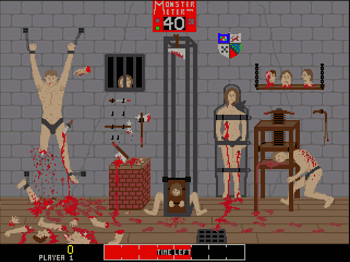 There was some controversy when the game came out, and apparently it did not sell well in the US. I think it was intended to be funny, but really it's just disturbing. And not a very good game. Still, there it is.
It took me three tries to pass Yahoo's captcha test.

I'm finding Fire
Emblem really engrossing. It's a great mix of puzzling strategy and cheesy Japanese RPG.

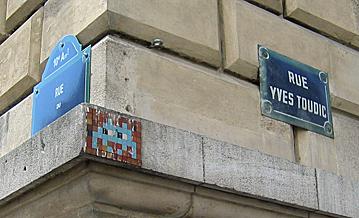
One of my favourite memories of my trip around Europe in 2001 was
discovering the art of Space
Invader. I was wandering around Aix-en-Provence and there was this
funky mural of a Space Invader character. How odd, I thought, then
moved on. Later I saw more space invaders in Genève and by the
time I saw them in Paris I knew I'd discovered something truly weird.
I've moved my blog from 63.194.75.26 to
72.36.170.170. Also switched to Apache 2. If you notice any
trouble, please let me know.
The new host is layeredtech.com. I shopped around for an inexpensive dedicated Debian host. I like layeredtech because they don't sell you management, just a host.
One of the more interesting things we did when visiting New Zealand
was go to Stewart Island.
south of the South Island. All through our trip we'd
tell locals "We're going to Stewart Island" and they'd say "really?
I've never been there". It's a tiny place, about 400 permanent residents.
Stewart Island has retained most of its unique endogenous life. Ulva Island was outstanding, a small nature refuge with lush forests and odd birds. There are hiking trails all over the island, too, seemed like a great place for a ten day trek. 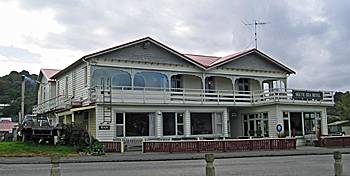 I love remote places like this. There's something very comforting about the quiet, the odd collection of people, the knowledge that there's not much to do. I enjoy being in places like this, and I enjoy knowing I'll be leaving again in a couple of days. PS: if you're thinking of visiting, do yourself a favour and take the plane. Even the locals say the ferry crossing is awfully rough.
I've been emailing on the Internet since 1990. I use the one true
quoting style when responding to emails, dating back to at least the
earliest days of Usenet. It allows people to carry on a conversation
in email.
Hello Kodos, I'm glad things are going well on Rigel 4. Thanks
for writing back, wanted to answer a few specific things.
Reading this snippet it's easy to see the conversation. Previous
relevant text is succinctly quoted with >, you can chain the >
to indicate history. This style is so ingrained in the
Internet culture I'm amazed to find myself explaining it.
>The thing I miss most about Earth is tasty human flesh.
>>I'm concerned about Kang. His antennae look sick. But it's disappearing. I frequently get emails from people now who don't understand it. They gamely try to follow my style by writing a full reply on top of my email, or inventing their own mechanisms like replying in ALL CAPS or inserting random other markup. I'm not surprised when non-tech people have trouble with email quoting. Frankly I'm glad my lawyer is on email at all, so I won't quibble. But lately I've even seen a fair number of Google employees who don't get this, either. We're supposed to be the most savvy of the net savvy! Part of the issue is cultural dilution: you can't increase the Net population 10,000x and expect the culture to stay the same. I also think it's technological. Outlook, Gmail, etc all encourage bottom quoting by starting you out in an email reply with the original message below where you're typing. Wrong choice. And modern email technology often does away with the notion of line breaks entirely, making the line-oriented > quoting mechanism fail. We need to find something that works for everyone. math owie was on
this issue back in 2001.
I'm looking forward to something fairly exciting: I'm going to be
living in Zürich for three months, starting the end of August.
I'm going to work in Google's
Swiss office.
I'm really looking forward to it, both as a career opportunity and as a way to try living in Europe for a time. I've travelled a fair amount, even lived in Budapest for a month, but this feels like a significant thing. Should be fun. I've been listening to Swiss German tapes and it's clear my high school Hochdeutsch didn't prepare me for living in Switzerland. I'm sure I can get by with just English, but it seems like much more fun to order a beer in the local language.
I love BitTorrent. Not because
it lets me steal the w4rz0rz, but because it's a really great new
transport for large downloads. I've been impressed with Bram's
stewardship of the protocol and am glad to see he's
pursuing
commercial options.
But open source protocols in hackerland are fragile, there's a danger they fragment. And that seems to be happening with BitTorrent. I'm seeing torrents now with three kinds of tracking: the standard TCP tracker, UDP tracking, and trackerless. Which client works for all? I'd been wondering why my torrent downloads recently weren't working. I think the problem is that Debian testing installs bittorrent 3.4.2-4, which doesn't seem to work very well. The 4.0 .deb from bittorrent.com works better.
IGN has just published their 2005 list of top 100
games. It's a great list, well written, with lots of interesting
editorial choices. It's also hard to understand the whole list because of the article
format. So I created a version of their list in CSV
form as well as an
HTML table. The table has the tablesort
magic, click column headers to resort. Interesting to group by
year, or publisher, or platform.
IGN is a great publication, you should definitely go visit their article. Their list includes box art and interesting editorial comments on each game. I'm only providing this list as a simple index into their articles.
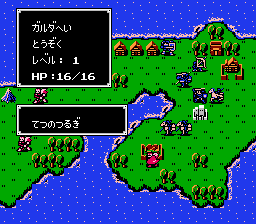
I tend to forget Nintendo is a Japanese company.
With all the popular
franchises like Kirby, Zelda, Metroid, Ninja Gaiden,
and Mario having been ported to the US, we miss the
hidden jewels like
Fire
Emblem that have never made their way here.
But now Nintendo has released US versions of
two
Fire Emblem
games for Game Boy Advance. And they're good.
One of my favourite writers about games, Greg Costikyan,
has just published slides
from his latest talk (PDF version). The slides are worth a look, Greg does a
great job arguing that the current increasing cost of game development
is going to kill creativity and we need an alternative distribution
channel to save the industry.
But I wanted to comment on some of the side-issues Greg's talk raises. Slide 9 makes an arresting argument:
Greg's post also reminds me of my frustration that games are too long. A movie is $10 for 2 hours of fun. A game is $50 for (in theory) 30+ hours of fun. But most people I know get bored of games in less than 20 hours, the rest is wasted. I'd rather games were shorter, cheaper, and more varied. But the economics of the industry make that tough. The $50 price point is fixed by development costs, and they don't get much cheaper for a shorter game. And if the consumer pays $50 they expect 30+ hours of gameplay. So we're stuck with an industry that makes long, expensive games.  Photoshop's JPEG code is bad software.
I'm a longtime Gimp user. But
lately I've been playing around with RAW images and colour profiles,
and Gimp does badly with those. So I'm giving Photoshop Elements a
free
trial.
Photoshop's JPEG code is bad software.
I'm a longtime Gimp user. But
lately I've been playing around with RAW images and colour profiles,
and Gimp does badly with those. So I'm giving Photoshop Elements a
free
trial.
I mostly like it, but its JPEG saving is insane. Not only does Photoshop not use the same 0-100 quality scale that all the other tools I know use, they have two different ways to save JPEG, with different scales. Neither work right. I have a picture, a portrait from my Digital Rebel XT. It's 3456x2304 and about 9 megs as a PNG. If I convert it to jpeg using cjpeg -q 75, the baseline for JPEG creation, it's a 580k file. OK, all well and good. If I try to use Photoshop's "Save for Web", the quality slider lets me choose 0–100. I set it to 75 and the resulting image is 1.4 megs! That's about like a cjpeg 92. OK, so they have a different scale. Fine. But no matter what I do I can't get a 580k file out of the tool. A quality of 50 yields 554k, a quality of 51 yields 677k. Why the giant jump? Shifts to 49 or 52 don't yield nearly as much a difference. To make matters worse, "Save for Web" leaves out all your EXIF data. And the tool gives you dire warnings about 8 megapixels being too big an image. Um, right. The normal "Save as.." in Photoshop is a bit better. The JPEG option has a quality slider, too, but this one goes from 0–12. Because you know, 12 is better than 10. Generating a 580k file is still impossible. Given there's only 12 quality steps that's not too surprising. But there's still a giant jump: quality 8 is 607k, quality 7 is 400k. What's going on? I guess I shouldn't be this fiddly about JPEG settings, but I'm truly mystified as to what Photoshop is doing. cjpeg gives a nice smooth quality/size tradeoff with lots of fine grained adjustments right in the middle of the sweet spot. Photoshop seems to make it impossible to control the same tradeoff. No wonder so many online images are poorly compressed.  Scientific American used to be a great magazine, but a few years back
they made an editorial decision to become
less
nerdy, more sensational, less interesting. Technology Review has
somewhat filled the gap for me, although the new editorial policy is
way more business oriented than I would prefer.
Scientific American used to be a great magazine, but a few years back
they made an editorial decision to become
less
nerdy, more sensational, less interesting. Technology Review has
somewhat filled the gap for me, although the new editorial policy is
way more business oriented than I would prefer.
The June 2005 issue had a few interesting bits in it. Larry Lessig has a good free culture essay. And Howard Anderson, of Battery Ventures, has a somewhat shocking essay on why he no longer wants to be a VC.
Ever wonder what we did for a living in early-stage venture funding? I
bet you think we spent the day searching for the next insanely great
company. But we spent most of our lives in endless meetings with
people who were lying to us: scientists who swore that their patents
were solid and entrepreneurs who insisted that they had no
competition. We lied right back at them: said our money was different.
That was the old way, and it was tons of fun, and we all made too much money. I'll miss it. But now the markets are too rational, and the returns are too small and uncertain. So, time to leave. And while it's in the July issue, I can't help but quote this zinger:
I recently began writing a Web log, or blog (under protest: starting a
blog at this late stage feels a little like developing an interest in
disco music in 1980)
Want to type arbitrary Unicode
characters on a Windows box? You have several
options. This one worked for me:
 I've been a happy user of the Ethnologue database for
years. It lists all languages of the world in a simple database form.
Just yesterday I did a search for
Malagasy
ethnologue to learn that Malagasy is a language of Madagascar.
It's a lot of fun to browse, skipping from country to language to
country as you follow immigration patterns.
I've been a happy user of the Ethnologue database for
years. It lists all languages of the world in a simple database form.
Just yesterday I did a search for
Malagasy
ethnologue to learn that Malagasy is a language of Madagascar.
It's a lot of fun to browse, skipping from country to language to
country as you follow immigration patterns.
The New York Times today has an interesting article about Ethnologue, on the occasion of the publication of the new version of the database. I had no idea the database was developed by Christian missionaries! In retrospect that makes perfect sense, just like LDS maintaining the best geneaology data. Sometimes religious fervour has practical benefits. I also didn't know Ethnologue is the source for the three letter language codes we use in internationalized software, soon to be ISO 639-3. Don't miss the NYT's visualization of language distribution. I love the NYT graphics; this one is by David Constantine.  I preordered the new Harry Potter book
months ago. I was surprised to get this email from
Amazon today:
I preordered the new Harry Potter book
months ago. I was surprised to get this email from
Amazon today:
Good news! We've just lowered the price of "Harry Potter and the
Half-Blood Prince" from $17.99 to $16.99.
You don't need to do anything to get the lower price--we are automatically
issuing you a $1.00 refund.
A retroactive discount? That's a clever way to build business. A quick search reveals Amazon is
now undercutting the other major stores on price.
In related news, you can steal the new book electronically if you like reading OCRed pages. A torrent of an audiobook version (lovingly read by a robot, one presumes) has 2000+ downloaders.  Hikaru No Go
is a great Japanese manga. It's the story of an elementary school boy
who discovers an ancient Go board inhabited by the spirit of an expert
Go player from Japan's feudal past.
Hikaru No Go
is a great Japanese manga. It's the story of an elementary school boy
who discovers an ancient Go board inhabited by the spirit of an expert
Go player from Japan's feudal past.
The comic deftly tells stories that combine the pressures of being a young kid, the nuances of the game of Go, and anime-style epic battles. It makes playing Go seem incredibly cool. The art is awesome: see some samples here. The English editions (published by Shonen Jump) are well done. My eight year old nephew just devoured one in a day. Amazon makes it difficult to find them. Here's a list of the English editions: Hikaru No Go Vol 1, Vol 2, Vol 3, Vol 4.
WarioWare
for the Gameboy was a breakthrough
game combining insane graphic design, simple gameplay, and
frenetic pacing to make a fun game. The follow-on
WarioWare:
Twisted is just as great.
The novelty in Twisted is a motion sensor in the cart. To make things happen in the game you spin your Gameboy around. It's true that this basically turns your Gameboy into an Atari 2600 paddle, but it really works. The rumble pack's tactile feedback adds a lot, little clicks and thumps that let you feel your turning. My favourite minigame so far is a balance game where you tilt the Gameboy to keep the umbrella balanced on the end of your finger. 
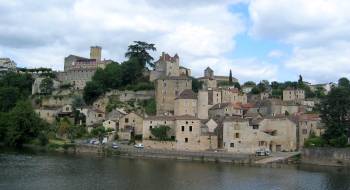
The best part of my trip to France last month was poking around the
Southwest. Carcassonne, the Lot, Perigord, the Dordogne. Beautiful,
restful, lots of interesting little towns. Below is
some of the nice things we found.
See also my
notes on restaurants from the trip and
my photos.
  rsnapshot is good software.
It's a simple Unix backup program that gives you historical snapshots,
sort of a low rent NetApp in free software. I now have views of my files from
four hours ago, and one day ago, and one week ago, and... Having
multiple versions protects you from the "I deleted some important
files two days ago" problem. Behind the scenes it's doing rsync and
hard links to keep the size reasonably efficient. What I like best
about rsnapshot is that it's very
professionally
produced and was easy to set up on my Debian box.
rsnapshot is good software.
It's a simple Unix backup program that gives you historical snapshots,
sort of a low rent NetApp in free software. I now have views of my files from
four hours ago, and one day ago, and one week ago, and... Having
multiple versions protects you from the "I deleted some important
files two days ago" problem. Behind the scenes it's doing rsync and
hard links to keep the size reasonably efficient. What I like best
about rsnapshot is that it's very
professionally
produced and was easy to set up on my Debian box.
I don't understand how anyone backs their machines up anymore. Disk is fifty cents a gigabyte. I have something like 200 gigs of data in my house and I didn't even try. Removable media sure isn't going to work to back it up: tape's too expensive and slow, CD and DVD are too small. So all I'm left to do is backup to other hard drives. That doesn't help you if your house burns down. I'd love to backup over a network (rsnapshot supports this), but I don't have the bandwidth to even back up the 5 gigs that really matter. For now I'm also making copies to a USB drive that I store outside my house.
I serve this blog from my home DSL (an increasingly dumb idea). My DSL
went to hell at 11am today. Pinging from my house
63.194.75.26 to the DSL gateway on the other end of the line
63.194.75.25 is taking well over one second. No packet loss.
It's not my router, either.
I've seen this slow link failure mode before, but never for this long and with no packet loss. Usually it's gone away on its own, a couple of times I've called for support and they "cleared the line" and things got better again. I wonder, does their router infrastructure go flaky or get overloaded? Do they monitor it? I hate not being able to get real help. Their phone support is so far removed from an actual expert that I can't say things like "I monitor the ping time on the link and it's gone from 1ms to 1000ms". At least their support script did lead to them actually detecting the problem. Argh, now my link is entirely dead. Man, sonic.net is looking better and better.
Google Sightseeing has a
Gibraltar
post today that's cool. Gibraltar is so small
that the only road in crosses
the airport's runway.
The new satellite imagery is so fine grained that you can see
cars
waiting to cross the runway. Scroll far enough east, and you can
see the
plane they're waiting on. Who knew there'd be so much drama in
satellite images?


I like Joe Kraus' blog
entry on hiring engineers, particularly the "do you have a blog"
and "do you contribute to open source" questions. I love interviewing
engineers with blogs or open source work because I can do a bit of
research and have something meaningful and in depth to talk about.
His other question, "what's your home page", made me smile. Yes, I had a start page back in 1994, but I've long since stopped using it. I use MyWay these days, but my real start page is DQSD, the fastest way to do Google searches on Windows. Joe quotes my friend Marc saying "Jedi Knights make their own lightsabers and great engineers make their own homepages." But remember how in the original Star Wars movies Yoda didn't have a light saber? That's because he was so kick ass, he didn't need one. about:blank is the start page for Yoda engineers.
Update: Marc says
I did tell Joe my "Jedis make their own
lightsabers" theory, but not in reference to engineers making home
pages (I use about:blank, myself). Instead it was in reference to the
Excel team making their own C compiler, as mentioned in
this Joel on
Software piece.
Joel's
piece is well worth a read, and some of its points overlap Joe's good
points on interviewing, to boot.
I've been totally hooked on Battlefield
2, the new squad FPS. It's got great teamplay, aided in part by
built-in voice over IP so you can talk to your teammates.
But adjusting the microphone so the gain is correct is a total pain. In addition to the in-game settings I've found at least three different audio control panels in Windows that affect it. The key is to ignore all of Creative's crap software, go to Settings / Control Panel / Sounds and Audio Devices, click the Voice tab, go to the Voice recording panel, click Volume, then boost the Microphone slider. If you click Advanced you can also set a +20dB boost which helps too. Basically turn up the gain in every setting in Windows, then use the in-game control (with feedback) to lower it back to a reasonable setting. I bet this isn't so hard on MacOS.
The packet sniffer ethereal
is essential for reverse engineering applications and diagnosing network
problems. But it's primarily an interactive tool with a GUI.
I can't figure out a way to use the Ethereal
packet analysis code as
part of a program I write.
One hack is to store packet captures to disk, then use tethereal on the command line to dump what you're interested in to ASCII. Here's a quick and dirty way to print out all the URLs that were fetched:
tethereal -r foo.pcap -R http.request |
Still, there's gotta be a better way to process pcap data with the
high level analysis Ethereal does.
ImPacket is an
interesting alternative, but it seems orphaned.
sed 's/.*GET //; s/ .*$//'
I had lunch at Aqua
recently, lovely until the dessert. I ordered coffee mouse with "Havana
cream". I expected something rum flavoured, but no, it was cigar
flavoured. I'm open minded about that, but the flavour was unpleasant:
peppery with a weird feeling in the throat. And I felt
ill for the next few hours, presumably from the nicotine. Avoid.
Ken's the family chef. He's doing the low carb thing these days. One of the substitutes he makes is cauliflower rice; you put cauliflower in the food processor until it's rice sized, then saute it quickly in butter. It's delicious! You gotta love a diet where "saute in butter" is one of your main techniques. Formal French table service includes a sauce spoon, a nearly-flat spoon with a notch in one side. (I grew up calling this a fish knife.) I thought I had it all figured out: you scoop up the sauce with it, put the spoon in your mouth, and enjoy the yumminess. So I did that on my last trip, and to my embarassment found my next two dishes were brought to me with actual spoons, not sauce spoons. Had I done something wrong? I think I was right.
Here are some notes about some of the more memorable places we dined
in France (in
addition to the
steak
frites place). I'm not a food critic, so this may be boring, but
maybe it'll be helpful for people looking for places to go in Paris or
in the Southwest.

I enjoy good wine and after several years learning about wine I think
I know something about it. But I've gotten lazy and stopped
taking notes about the wine I drink. It just seemed too much like
work.
When we were in France we had a lot of great wine, mostly from the Southwest: Bergerac, Cahors, Languedoc... But since I don't know the wines there I can't remember what we had. The only wine I thought to write down was a Languedoc, a 1995 Domaine de La Grange des Pères that was fantastic. But specifically how was it fantastic? I can't tell you now. Maybe my friend's manageyourcellar.com is the solution. It's a web application for tracking your wine cellar and tasting notes. The views of your own cellar are nicely customed: "ready to drink", statistics, recommendations. A nicely detailed database of wines holds it all together. The site has a wine blog too. Now to get some discipline about keeping notes! Inspired by this Ask Metafilter thread
Ken and I are food tourists and we eat well in France. But sometimes
we get tired of foie gras, delicate vegetables, and French menus
(just what are St. Jacques' nuts? Mussels? Scallops? Clams?)
When we get overwhelmed and want comfort food in Paris, Ken and I head to one
of several steak-and-fries places.
 The whole process is the opposite of the usual French temple-of-food experience. But it's very satisfying and, judging by all the Parisians we see there, quite popular with the locals. The restaurants are a franchise. We've been to Le Relais de l'Entrecôte in the 6th (20bis rue St. Benoit, conveniently a block from St. Germain de Prés) and Le Relais de Venise in the 17th (271 bd. Péreire). The joint in the 6th even has the same 1945 Cognac Rouyer poster I have at home! Half the blogerati have been
there too
The PC version of Grand Theft Auto: San Andreas is out, and boy is it
nice. It's just
as great as the PS/2 version, only with beautiful graphics (and,
alas, crappy controls).
But the best thing about the PC release is that it's open to modding. A bunch of mods are already out, including the Hot Coffee mod which restores a sexually explicit mini-game that the developers apparently took out at the last minute. See some screenshots to get the idea. 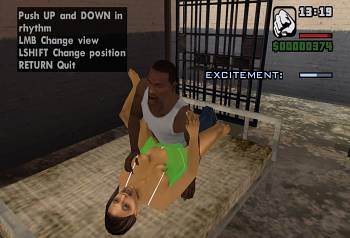  Hey there, I'm back from a nice little vacation to France. Paris, the
Lot valley, Perigord. I actually got sick of eating foie gras and
truffles: life's pretty good. But before I write up the fun stuff,
here are some reasons to hate Air France:
Hey there, I'm back from a nice little vacation to France. Paris, the
Lot valley, Perigord. I actually got sick of eating foie gras and
truffles: life's pretty good. But before I write up the fun stuff,
here are some reasons to hate Air France:
 Speaking of finishing things,
I just finished playing Jade
Empire,
Bioware's
latest epic RPG.
It's very good, albeit not great.
Speaking of finishing things,
I just finished playing Jade
Empire,
Bioware's
latest epic RPG.
It's very good, albeit not great.
The RPG gameplay is the same as Knights of the Old Republic and other Bioware games: multiple choice dialogue, a party of characters you interact with, and choices between good and evil. The big gameplay innovation is the real-time combat system, an entertaining action combat thing like Prince of Persia or Ninja Gaiden. It mostly works, although it is awfully simple. The best thing about the game is that it's set in a faux Ancient China. The æsthetic is well done, very beautiful, and refreshingly different than the usual RPG fare. I particularly liked the way Chinese philosophy linked into the story, very different from the usual chivalry-tinged stuff. The other thing that worked well was the NPC characterization. In previous games I never really cared much about the rest of my party, I think because I didn't find their backstories interesting. But in Jade Empire I found them quite compelling, particularly Sky, the man driven to avenge the daughter captured by slavers. Despite the conversation trees being very simple (and nothing approaching KotOR2's influence system), the NPC interaction was good. The romance plots are well worked too, including various alternative options. I've had enough of Bioware-style RPGs for awhile.  There's a great feeling of accomplishment at the end of May, at the
end of the mainstream TV season. All these shows finished! If by
"accomplishment" you mean "done sitting on my butt passively starting
at mindless entertainment". But I'm done with The Amazing Race, and
Survivor, and Desperate Housewives, and Lost, and 24. That was five
hours a week, heavy responsibility.
There's a great feeling of accomplishment at the end of May, at the
end of the mainstream TV season. All these shows finished! If by
"accomplishment" you mean "done sitting on my butt passively starting
at mindless entertainment". But I'm done with The Amazing Race, and
Survivor, and Desperate Housewives, and Lost, and 24. That was five
hours a week, heavy responsibility.
Java is the language for building large web applications. One reason
Java is better than C is that it's garbage collected, making
programming easier. But garbage collection isn't free, it can have
significant overhead.
Web applications have a simple memory allocation pattern. An HTTP request comes in, some work is done in a thread over a second or two, and then you're done. Unless you're using session objects heavily (and you shouldn't), at the end of a request there's really nothing more in server memory than there was at the beginning. This simplicity suggests a better memory management strategy for web applications. Allocate all objects in a zone specific to the HTTP request. Don't bother reclaiming memory during a request; when the request is done, just drop the entire zone at once. Poof. This won't work if you need to reclaim some of the working set during a request, but I think that's unnecessary for many apps. I wonder if anyone's done this? It'd be easy enough to code in a C web application framework. Impossible in Java unless you can modify the JVM. Python sort of implicitly does this, since it collects most objects as soon as they fall out of scope.
Update: thanks
to Tim for pointing out
Apache
does this in its C code.
 Bleep, the online music store for
Warp Records, is awesome. DRM free
MP3 for cheap and convenient.
Bleep, the online music store for
Warp Records, is awesome. DRM free
MP3 for cheap and convenient.
I just went there to get the new Autechre release Untilted and was surprised to see Bleep is now selling FLAC as well as MP3. FLAC, if you don't know, is a lossless compressed format. Giant files, but "perfect quality" for the audio nerds. $10 for the album on MP3, $14 for FLAC. Honestly, high bit rate MP3 is fine for me. But it's nice to have the option. BoingBoing notes that Bleep will also be selling XviD for a new video collaboration between Chris Cunningham and Aphex Twin. I'd probably never buy this video if I had to get a physical object, but I'll definitely buy a download.
Microsoft
ClearType is good software. It's a font rendering option in
Windows XP that makes things look better on LCDs. Between laptops and
good
desktop LCDs a lot of folks have LCDs. So go ahead,
turn on ClearType!
And get
the tuner while you're at it.
 Microsoft's implementation is quite robust. I was particularly impressed when I rotated my LCD 90 degrees and it still did ClearType, only in the Y axis. Still, Windows typography has a way to go. Apple's font rendering is still head and shoulders above anyone else's. I'd love to read an article that explains exactly why text looks so beautiful on a 12" Powerbook.  It took me 72 minutes to drive 33 miles home today. That's 28 miles
per hour. 31 miles are on the freeway.
It took me 72 minutes to drive 33 miles home today. That's 28 miles
per hour. 31 miles are on the freeway.
Fuck.
FlickrClient.py is
good software. It's a Python library for the 68 methods in the
Flickr API in 48
lines of code. Such parsimony! Here's the nut of it:
def __getattr__(self, method):
If you're not familiar with Python, what's going on here is a bit of
metaprogramming genius.
The __getattr__ makes it so that
FlickrClient.foo() automatically
means "invoke the Flickr API call foo", for any API call.
The method() code builds a URL out of the
Python method name foo
and the parameters the method was invoked with,
then does a GET to Flickr. Because of
the consistent naming of the Flickr REST API this all works like you'd
expect.
def method(_self=self, _method=method, **params): _method = _method.replace("_", ".") url = HOST + PATH + "?method=%s&%s&api_key=%s" % (_method, urlencode(params), self.api_key) try: rsp = xmltramp.load(url) except: return None return _self._parseResponse(rsp) Parsing the response data is done by passing the Flickr XML to xmltramp, a quick and dirty Python XML binding that does what you want. The _parseResponse() method (not shown) does error handling in four lines. I love how simple and Pythonic this is. Data is loosely typed. API calls are built dynamically. Everything is so abstract that the library code doesn't even have to be updated when new API methods or datatypes are added to Flickr. Clean, simple, perfect for scripting. It's about the exact opposite of SOAP and WSDL where you typically use thousands of lines of generated code to call the service. The WSDL approach gives you strong typing, which can be helpful, but can also be a dual edged sword.
I've never really minded the New York Times login. I only do it once a
browser and the content is good enough it's OK. But yesterday I went
to login and was told "we've changed our system and your login
nelson@santafe is no longer valid". To their credit, they did
have an easy path for changing my login, but why the change at all?
Who decided email addresses weren't valid logins?
My biggest problem with all the sites I log into is remembering my username. It has to be unique, but different sites have different restrictions. Am I Nelson (not unique), or NelsonM (ugly), or NelsonMinar (too long for some), or nelson@monkey.org (contains punctuation), or nelson+foo@monkey.org (plus is often not accepted)? By contrast I can usually use the same low security password on all these sites, because passwords have fewer restrictions and don't have to be unique. I realize I'm repeating myself, but this whole thing about having thousands of accounts on different websites is really stupid. I should use bugmenot more.
I'm kind of late to the party, I guess, but I'm still not
understanding Yahoo 360.
Every once in awhile I find a link to a blog post there.
Like in this Make:Blog
article, which links to what sounds like an
interesting
post. So I click on the link, and what do I see? "To
access Yahoo! 360° Sign into Yahoo!".
I'm supposed to log into Yahoo to read a freakin' blog article? Oh
well, nevermind.
Am I missing something?
Update:
Jeremy was kind enough
to write and say this login request is a bug, that the blog post
should be
 I finally finished
Knights of
the Old Republic 2. While I liked
how ambitious the gameplay and writing was, I ended up being deeply
disappointed by the missing
content, particularly at the end.
I finally finished
Knights of
the Old Republic 2. While I liked
how ambitious the gameplay and writing was, I ended up being deeply
disappointed by the missing
content, particularly at the end.
Apparently there's some fantastically epic story about Malachor V, the Sith training at Trayus Academy, and the triumvirate of Darth Traya, Darth Sion, and Darth Nihilius. And some cool side plots involving HK-50 droids, G0T0, Bao-Dur, and Atton or my Disciple falling in love with me. But the only way I know this was planned out is because people scraped some of the missing bits off the game image. When you actually play the game, what you get is a horribly rushed sequence of barely coherent events capped off with some deliciously epic writing that barely makes sense. And the most ambitious part of the game design was neutered. There's a complex system where you interact with the characters who join you, try to gain influence over them. You could tell the game was being designed so the end depended heavily on whom you influenced through the game, a brilliant idea. Alas, an idea that is totally absent in the actual ending. I feel cheated, like reading a novel that's missing 80 of the last 100 pages. If they had the same number of hours of content, just more coherent, it would have been great. They were just too ambitious on too tight a schedule. I wish more reviewers would punish game publishers for rushing things out the door before they're ready.
Seeing Goldman
is in New Zealand prompted me to review my notes from my trip
there. I really loved that trip.
One thing that fascinates me is the role of the Maori culture in modern New Zealand. NZ is one of the very few places where native peoples were able to survive the invading Europeans and preserve their culture. For tourists, the easiest place to see that culture is in Rotorua, in the heart of the volcanos of the North Island. The town itself is kind of frumpy, and some of the tourist kitsch is a bit much, but overall it's a good place. The highlight of Rotorua was Te Puia, a one-stop spot for your New Zealand tourist checklist. In one place you get Maori arts and crafts (including a beautiful marae), Maori feasting and dance, a geothermal valley, even kiwi birds. The center of the place is a serious school for traditional carving, so it's got some depth.We stayed at the Millenium hotel. It was OK, not great, undergoing a badly needed renovation. Dinner was at Herbs Restaurant, in the middle of the little restaurant row near the end of Tutanekai street. I wouldn't go back. I regret now we didn't do go to a traditional hangi feast. I'm told it's quite nice.
Psychonauts is a wacky new
platform game by Majesco
games, more specifically Tim Schafer, the guy behind Grim
Fandango. It's a psychedelic platform game. The conceit is you go
inside people's minds where you navigate all their psychological
weirdness. Mostly an excuse for some very wacky level design,
as you can see from the screenshots.
In the vein of Rayman or Beyond Good and Evil, only trippier.
  My mother was a travel agent. When I was eleven, I proudly announced
that I was going to get married and go on a honeymoon cruise around
the world. She looked at me deadpan and said "I'm sure I could find
something more interesting for you to do."
My mother was a travel agent. When I was eleven, I proudly announced
that I was going to get married and go on a honeymoon cruise around
the world. She looked at me deadpan and said "I'm sure I could find
something more interesting for you to do."
I just got back from a ten day cruise to Mexico. We had a good time, very relaxing, but boy was it boring. We didn't really go anywhere I wanted to see: San Francisco to Monterey, Catalina, Mazatlan, Puerto Vallarta, and Cabo San Lucas. The Mexican beach resort scene just isn't me. The demographics of the cruise ship scene aren't me either. I fear that for most of our cotravelers, baked alaska and prime rib will be the most elegant dining experience of their lives. I'm really glad that we booked with a gay travel group. We were part of a group we had something in common with and we met some nice people. Being on a cruise ship is certainly very comfortable and it was great to drop out for ten days and do nothing. I'd take a cruise again, just somewhere more interesting like the Mediterranean.  As
much as I love
Grand Theft Auto: San Andreas, I stopped playing as soon as I unlocked
Vegas. The environments were just
too
beautiful to tolerate the crappy PS2 graphics. Happily, the
PC version is
due out June
6 and is looking
good.
The screenshots
are hot.
As
much as I love
Grand Theft Auto: San Andreas, I stopped playing as soon as I unlocked
Vegas. The environments were just
too
beautiful to tolerate the crappy PS2 graphics. Happily, the
PC version is
due out June
6 and is looking
good.
The screenshots
are hot.
The one thing missing in GTA: SA is a Latino soundtrack. You're cruising the barrio in Los Santos and all you can find on the radio is is gangsta rap, crappy house, and power metal. Where's my mariachi? Where's my slow soulful Mexican ballads? Corazon, corazon. The PC version lets you create custom radio channels with your own music. There's even a new feature where they'll loop in the game's hysterical chatter inbetween your songs. All I need now is the perfect Latino mix tape.  Remember when a tank of gas cost $20? Between gas costing me
$2.75/gallon now and a new 21 gallon gas tank, a fillup for me is over
$55. Je suis Californien.
Remember when a tank of gas cost $20? Between gas costing me
$2.75/gallon now and a new 21 gallon gas tank, a fillup for me is over
$55. Je suis Californien.
But the two gas stations I go to in the Bay Area have $48 limits on credit card charges. They won't let me buy a full tank of gas. I asked the guy at Valero about this, he said the limit was set back when gas was $1.30 a gallon. Clever.  One of the beautiful things about the Flickr API is it
enables interesting things without the Flickr team
having to do the work.
One of the beautiful things about the Flickr API is it
enables interesting things without the Flickr team
having to do the work.
Flickr has no "most popular photos" page, but there's a whole "most favorites" user group. For instance, there's a recent list of the top 60 photos. The #1 photo on Flickr is a technically amazing motion shot, with 394 favourites votes since Nov 2004. It's picked up 115 favorites in five weeks. The problem with favorites lists is they're self-reinforcing. More people see the photo, mark it favorite too, and before you know it you have a boring ol' power law. "New favorites" would be more interesting. GustavoG has done some serious social network analysis. His FOAF plot shows two major clusters that are only sparsely connected; another view shows distinct clusters that seem consistent with the history of Flickr. He's also drawn the social center of Flickr, a scatterplot of who has lots of mutual contacts, and an interesting graph that shows the imbalance of incoming vs. outgoing links. That last graph shows lots of aspirational linking to Caterina and Stewart, the Flickr founders, and points out popular people I should know about like lightpainter. There's a wealth of data in Flickr. The API enables all sorts of volunteer analysis.
Hey, something I did made the Google
Blog! It's a picture of where people were drawing maps for a
day. I love doing little visualizations like this, and Google Maps is
particularly cool.
 I'm just getting into Knights of
the Old Republic 2, and boy is it great. A Star Wars RPG, sequel
to the great
KotOR of last year. Playing it is like being part of a really
great, if long, movie.
I'm just getting into Knights of
the Old Republic 2, and boy is it great. A Star Wars RPG, sequel
to the great
KotOR of last year. Playing it is like being part of a really
great, if long, movie.
You don't sit back and read the story, you are part of it, you influence it. Do you want to save the fledgling government of Dantooine, or do you want to overthrow it? Do you want to follow the light side and restore the Jedi order, or relish in the evil powers of the dark side and smash the Jedi forever? Given that the game really has a fixed, linear narrative, this feeling of choice is quite an acomplishment. It's a shame this narrative experience is missing from online games. The big innovation in KotOR 2 is not only do you control your own destiny, but you can influence the fates of your companions, too. I find myself playing the dialog with my party members very carefully, trying to make them my friends while turning them to the dark side. The writing is good enough to make this quite compelling. The best RPGs for the last few years have all been written by Bioware and Obsidian / Black Isle. Alas, even they fall prey to game industry demands. It's widely believed that content was cut from KotOR 2 to meet their very aggressive release schedule.
Firefox's Tools / Page Info dialog is good software. It has tabs to
show you lots of data about the page, particularly what it links to
and what media it has embedded in it. Very handy!
 My friend Peter's new
book just came out: Practical Common
Lisp. I haven't seen the hard copy yet, but the
online version looks
great. Lisp is an important language to understand,
from the core
abstraction to the
elegant things it can do.
It's great to
see a modern book describing using Lisp for practical things like
web applications
and
managing
MP3.
My friend Peter's new
book just came out: Practical Common
Lisp. I haven't seen the hard copy yet, but the
online version looks
great. Lisp is an important language to understand,
from the core
abstraction to the
elegant things it can do.
It's great to
see a modern book describing using Lisp for practical things like
web applications
and
managing
MP3.
I
love the
(?P<foo>) named regexp groups in Python. They make the
code so much more readable! But are they slower? Not much.
timeit.py -r 50
The named groups version is about 6% slower. Consistent, but not very
significant.
-s 'import re; r = re.compile("foo (?P<x>bar)")' 'm = r.match("foo bar"); g = m.group("x")' 100000 loops, best of 50: 3.34 usec per loop timeit.py -r 50 -s 'import re; r = re.compile("foo (bar)")' 'm = r.match("foo bar"); g = m.group(1)' 100000 loops, best of 50: 3.14 usec per loop
I live in the
unhip
part of San Francisco, the vast residential southwest that's full of middle aged
people, single family houses, abundant parking, and
practically
no restaurants. I love it for its sanity and comfort.
Nothing captures the frumpiness of my neighbourhood better than the local newspapers published four times a year, full of columns from nervous women advising having the water department test your pipes for lead and crotchety men rambling about how they hate being retired. This restaurant review from the West of Twin Peaks Observer (no website, of course) is a great example: One of our newest advertisers is the recently opened Taylor's Taqueria and Breakfast in the Diamond Heights Shopping Center. It has taken over the spot formerly occupied by Burger King, but it still serves great and varied burgers. I had one of their American-style breakfasts that the new restaurant features, and I have to tell you, it was terrific. Food is prepared exactly the way you order it, portions are large enough to satisfy any appetite and the prices are moderate. In addition to the breakfast menu (which is availalbe all day) Taylor's, named after owner Thong Le's young daughter, also serves traditional Mexican fare such as Tacos, Burritos, Nachos, and Quesadillas, and they even have gourmet teriyaki plates, along with salads for those who are seeking lighter dishes.Burgers as good as Burger King, large portions for little money, and a bafflingly syncretic menu of American, Mexican, and Japanese food cooked for you by a Vietnamese family. What's not to love?
My camera doesn't have raw output, but it does have three JPG quality
settings. I just tested empirically to see how they correspond to the
JPEG Q parameter:
 The
Battlestar
Galactica remake finished on the SciFi
channel, and I have to say it was great. I loved the original
show as a little kid, but it's unwatchably cheesy now. The new show
somehow is also cheesy, yet somehow uses that cheesiness without being
obnoxiously hipster ironic. Instead it's gritty, sexy, clever,
and fun.
The
Battlestar
Galactica remake finished on the SciFi
channel, and I have to say it was great. I loved the original
show as a little kid, but it's unwatchably cheesy now. The new show
somehow is also cheesy, yet somehow uses that cheesiness without being
obnoxiously hipster ironic. Instead it's gritty, sexy, clever,
and fun.
My favourite part of the show is the grimy sexiness of it all, overlayed with the anachronism. Everytime Starbuck lights up a cigar on the hangar deck next to the fuel depots I smile. It's absurd and yet so TV-realistic. But then that's all tempered with the religious stuff, which seems both hokey and moving at the same time. The best improvement over the original show is Gaius Baltar, who manages to be evil, batshit crazy, and sympathetic all at once. He's a center of the sexy, too.  I like Norton AntiVirus. The
UI is OK, the protection is strong, and it doesn't get in my
way. But its worm
blocking doesn't play nice with
FileZilla, the FTP client.
When I'm uploading thousands of little files via FTP the worm blocker goes nuts.
I like Norton AntiVirus. The
UI is OK, the protection is strong, and it doesn't get in my
way. But its worm
blocking doesn't play nice with
FileZilla, the FTP client.
When I'm uploading thousands of little files via FTP the worm blocker goes nuts.
I think the problem is that FTP still uses the awful non-PASV mode, where the server opens a socket back to my FTP client. Dumb, but that's the way FTP works. The worm blocker sees the incoming connections and assumes we're under attack. Fortunately it's easy to disable on a per-program basis with "Program Control" in "Internet Worm Protection". I see I've also disabled the checking for Half Life 2 and my X server. Guess this worm blocker doesn't like anyone opening connections to it. The blocker is slow too. After I disabled it my FTP upload of lots of little files was 10x faster.  While I've
admired
Flickr for awhile, I wasn't much of a user.
Until now. Now
I'm totally addicted, checking it eight times a day. What's so great
about Flickr?
While I've
admired
Flickr for awhile, I wasn't much of a user.
Until now. Now
I'm totally addicted, checking it eight times a day. What's so great
about Flickr?
The most compelling part of Flickr is the social network. Flickr is not just photo hosting, it's a whole community system. And it's not just a social network site, it's a photo site. I share my photos with friends, they share theirs with me. I join groups. I look at strangers' photos and comment on them. I see what photos my friends like, and the photos of my friends' friends. There's always something new and a social context for what we're sharing. Another key innovation of Flickr is the tasteful use of metadata. Flickr tags are awesome. And thanks to the Creative Commons licensing Flickr is full of photos ready for reuse. Very handy. The technical execution of Flickr is excellent. The UI is clean and fun, if a bit like a maze of twisty passages. There are RSS feeds everywhere. They have a great API; see Clay's notes for more. There's blog integration with badges and automated blog posting. And something I overlooked at first: updates happen instantly. You upload a new photo and it is immediately visible on every tag, group, and contacts page where it should be. It's not easy to make real time updates work at this scale. Here's the addictive part. Flickr is a game, an MMOG * . There's the explicitly playful aspect, groups like squared circle and clock works. There's also an exploratory aspect to being on Flickr, where you go from photo to tag to photo to person to group to tag to photo, picking up images along the way and sharing them with your friends. And there's lots of interaction to keep you coming back, your recent activity and the group discussion boards. It's all quite compelling.
Want to know how many people are reading your blog from the hosted feed
readers BlogLines, Yahoo, LiveJournal, NewsIsFree, and NewsGator
Online? They're all kind enough to put some stats in their User-Agent
string when they fetch your blog. I wrote some code to
scrape the data out of Apache logs. Here,
take it.
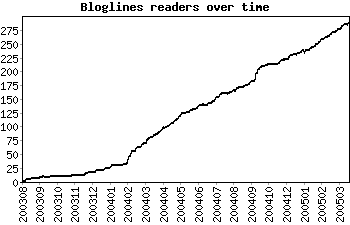 Thanks to Marc for some info on this topic
 My new car yielded a
nice surprise;
Bluetooth
phone support. Basically the car is one giant hands-free headset.
I just step into the car with the phone in my pocket and I can make
calls from the dashboard. It even synced up my phonebook. I feel like
1985 James Bond.
My new car yielded a
nice surprise;
Bluetooth
phone support. Basically the car is one giant hands-free headset.
I just step into the car with the phone in my pocket and I can make
calls from the dashboard. It even synced up my phonebook. I feel like
1985 James Bond.
When I was at the Media Lab I used to mock Bluetooth. 1996, 1997, 1998, 1999, they kept saying "cheap low power wireless is just on the horizon" and it never happened. But it finally happened. Bluetooth is to wireless what USB is to wired connections; simple, autoconfiguring device interaction. Now if I could just play music to my car stereo via a Bluetooth MP3 player and if I could get a Bluetooth camera to sync photos to my PC, I'd be set. Oh yeah, and I need wireless power.
Now that the news is finally
out,
congratulations to both Flickr and Bloglines on being acquired! They
are the best web startups I've seen in the last year. Great products,
well executed, plugged into the blogosphere publicity engine without
pandering to it. They both showed that a small company with the right
people can build out a major service in a year. And if you believe the
rumours, they built a lot of value quickly.
I think it's interesting they chose to be acquired instead of going
the venture capital route.
Two of the best talks at ETech were Stewart on Flickr and Mark on Bloglines. Both of them gave direct, honest descriptions of how they built their companies and what social and technical challenges they faced. Great information if you're of a mind to start your own business, along with Marc's VC funding for geeks.
On the heels of ETech, Ken and I spent a few days in Santa Monica.
Ken's a
pilot
so it's easy to pop up and down the west coast. Particularly around
LA where the municipal airports are so
convenient.
We stayed at the Fairmont Miramar, a nice big hotel. Too expensive for what it was, but you can't beat the location right next to the beach and the Third Street Promenade. Santa Monica in general is pretty nice. A bit scungy on the edges like all beach towns, but lots of mellow good feel and a compact enough center you don't really need a car.  The ostensible reason to go to Santa Monica was to visit the Getty. It's a pretty amazing museum. Not so much for the collection on display, which I found sort of pedestrian except for the impressionists. But the architecture is fantastic. Brand new, luminous yellow limestone, views from every angle and a huge complex. Also very friendly. Well worth a visit. If you drive, do yourself a favour and stay off 405; take Sunset Blvd instead. See also some Santa Monica photos.
The phrase the long
tail is now officially overexposed.
I'm a sucker. I show up for my flight an hour and a half early, as
ordered, even if the flight is only an hour and I know that SJC
security takes three minutes. But I'm on my way to ETech, and I've got
a beer and wireless, so life is good.
The wireless is $7 at San Jose airport. Someone should really fund this for free, you know? Still, cheaper than the "special juror rate" of $9 that the San Francisco courthouse tries to press on its citizen-juror-volunteers. And it's money well spent. I love how airport bathrooms are designed so you never have to touch a surface.  The fooferall
around AIM's recent change in terms of service reminds me
how the cypherpunks
movement has failed.
Email is still not encrypted.
The fooferall
around AIM's recent change in terms of service reminds me
how the cypherpunks
movement has failed.
Email is still not encrypted.
It's been at least twelve years since the gauntlet was thrown down. Untrusted networks and servers gives individuals the need to protect their privacy. Cryptography gives us the means. And yet despite the efforts of projects like PGP/GPG email is still unencrypted. Ashcroft knows who all is reading your email. The problem is the cryptonerds have always focussed too hard on getting things exactly correct at the expense of usability. A big part of the problem is key exchange. PGP deliberately exposes the details of key exchange. This protects you against man in the middle attacks, but at the cost of no one ever using PGP. Contrast to Trillian or Skype which gloss over key exchange niceties. You may be vulnerable to a man in the middle attack, but on the other hand at least you're using some crypto. I think the thing that will force an email crypto solution is spam. Authenticated senders are strong spam protection. Once you have the infrastructure for authentication the encryption is easy. But that infrastructure is going to be too centralized for my tastes.  Car buying is a crazy process. The salesmen are unpleasant,
the negotiation process is at best shady, you can't get the car you
want, and a lot of money is involved. Why isn't buying cars more like
buying groceries, clothes, or consumer electronics?
Car buying is a crazy process. The salesmen are unpleasant,
the negotiation process is at best shady, you can't get the car you
want, and a lot of money is involved. Why isn't buying cars more like
buying groceries, clothes, or consumer electronics?
This is the third car I've bought and this time I used a broker: Hammer Auto. I was going to buy direct from the dealer but the salesman didn't seem particularly interested in helping me find what I want. So I called the broker, paid them a fee of a few hundred bucks, and let them find me a car and negotiate a price. I ended up with the car I wanted at a better price than I would have gotten myself, even got a better deal on the trade-in than I hoped for. But the best thing was the convenience. No strong-arm negotiation tactics, no bait and switch, no "let me talk to my manager" crap. There was a bit of weirdness with the broker, but in the end I think it was all an honest mistake. Basically the broker's working for you, not the car company. It's a good thing.  The APC Back-UPS ES 500 is good
hardware. It's a $60 uninterruptible power supply, quick battery
backup for when the power dips or dies. Think of it like a better
surge protector, good when you're in a
neighbourhood with flaky power.
The APC Back-UPS ES 500 is good
hardware. It's a $60 uninterruptible power supply, quick battery
backup for when the power dips or dies. Think of it like a better
surge protector, good when you're in a
neighbourhood with flaky power.
The battery is small. I've plugged in way more than I probably should, so I only get two minutes of battery life. But that's about one minute and fifty-five seconds more than I really need. It's nice to have the "smart" UPS: plug the USB cable into your Windows or Linux box and you get a log of outages, automatic shutdown on power failure, etc For Linux, you need apcupsd to do the work. APC makes a huge variety of UPS products from these cheapo power strips to megawatt scale datacenter power units. The ES line is nice for home use because of the power strip form factor. If I were buying another one, I'd pay the extra $20 for the beefier battery in the ES 725.
 I just quit playing World of Warcraft. I really enjoyed the game the
two months I played it, it's a nicely put together MMOG. But I get
bored of games once I learn how they work, and I have other things to
do with the time, so it was time to quit.
I just quit playing World of Warcraft. I really enjoyed the game the
two months I played it, it's a nicely put together MMOG. But I get
bored of games once I learn how they work, and I have other things to
do with the time, so it was time to quit.
I went out in style. I gave away all my herbs to the first nice person who offered to help me and all my money to my guild. Then I went home, to Thunder Bluff, launched a bunch of fireworks, and jumped off the highest cliff with nothing but my guild tabbard to clothe me.  The other interesting thing is player vs. player combat. WoW was designed from the start to really feature PvP. Alas, the game as launched today doesn't really do it right. If they get the battlegrounds and honor system right it could be a truly new thing.
The trailer
for the film of A Scanner Darkly is online. Looks good on
Yahoo, or try this
direct download.
 I worry about the cast. Keanu Reeves, Robert Downey Jr., Woody Harrelson, Winona Ryder. If they just add Christian Slater they'd have the Asstastic Five. But it could work. via BoingBoing
 I didn't think it was
possible, but the Michelin Guide Rouge is coming to the US!
Reviewing 500
restaurants in New York, starting 2006. Finally some
serious restaurant ratings, the perfect antidote for the tiresome
populism of Zagat's. Sounds like
they might dumb down the Guide a bit for the US market. I can't
imagine photos adding anything and I sure hope they don't try to
disguise being French. Still, good news.
I didn't think it was
possible, but the Michelin Guide Rouge is coming to the US!
Reviewing 500
restaurants in New York, starting 2006. Finally some
serious restaurant ratings, the perfect antidote for the tiresome
populism of Zagat's. Sounds like
they might dumb down the Guide a bit for the US market. I can't
imagine photos adding anything and I sure hope they don't try to
disguise being French. Still, good news.
 Photocopiers don't let you photocopy money. Modern scanning and
printing computer tools don't work with money either. How do they know it's money you're
scanning? It's the EURion
constellation, a magic pattern of five dots that says "do not copy
me". Details in Markus Kuhn's
analysis and these
images.
Photocopiers don't let you photocopy money. Modern scanning and
printing computer tools don't work with money either. How do they know it's money you're
scanning? It's the EURion
constellation, a magic pattern of five dots that says "do not copy
me". Details in Markus Kuhn's
analysis and these
images.
It's like a talisman, a symbol with mystical powers that is feared but not understood. The fear is built into copiers and scanners. Adobe went along too so you can't work with currency images in Photoshop, although the feature it detects is not EURion.
I bought a cheap toner cartridge for an old printer. Look at
the lovely packaging!

We can never forget the tragedy of September 11, 2001, with the
terrorist attacks upon the nation. We were all affected by what
transpired that day, and as we remember, our hearts and souls will
stand forever frozen in time. We as a nation will never stop being who
we are, for even through our toughest adveristy, we will be strong,
and we will be free!
Nothing says "honor those killed on 9/11" quite like an
unauthorized HP Laserjet 4P cartridge named
American
Spirit. I wonder if the toner contains actual
ashes from Ground Zero?
Through the design of this box, we honor the men & women of the Armed Forces, Police Departments, Fire Departments, Rescue Workers and all the people volunteering to keep this country safe. We will donate a portion of the sales from this product to the American Red Cross. We thank you with all our hearts. Keep America's Spirit thriving! This is even tackier than Liberty Goldfish.
Ellen
Ullman has a great opinion piece in today's NYT,
The
Boss in the Machine:
Distraction is built into the fabric of today's electronic world.
Icons on the PC toolbar flash; ads on Web pages shimmer and dazzle;
software companies send e-mail messages to say your software is out of
date; word processors interrupt to correct your spelling; Web pages
refuse to show themselves until you update a plug-in; lights on
laptops blink at you every time the hard drive whirs into motion
We need to do more work designing calm user interfaces. Desktop
appliations should take a hint from computer games, which in general
have learned to replace the clutter of 15 toolbars and status displays
with a more immersive, simple interface.
 Open Office is good software.
At least the 2.0 previews
I've been using.
Open Office is good software.
At least the 2.0 previews
I've been using.
I used to openly mock StarOffice: ugly, clunky, Java where you don't need it, incompatible, slow. Then again I used to make fun of Firefox, too, and look how wrong I was about that. I've been using OpenOffice 2 exclusively on my new computer, particularly the spreadsheet. And it's quite good! Basically, well, it works exactly like Excel. No better, but just as well and it's free. If anything, it seems even faster than MS Office. I've only run into one problem importing from Excel. Some of my own spreadsheets have some funky formula that work in MS Office and not OpenOffice. On import they get replaced with #NAME with no hint what the broken formula was, so I can't fix it. But that seems unique to my crappy spreadsheets, documents from others have worked fine. It'd be nice if I could say OpenOffice were better than Excel, but it's not. At least for the simplistic things I do. Well, there's one improvement: the UI doesn't jump around confusingly when I type a space in a formula, trying to let me pick cells by the keyboard. It just lets me type. Nice.  After bragging about
hacking my new router I learned that World
of Warcraft doesn't work with the WRT54GS v1.1. It only fails in
WoW, and only on v1.1 routers. I got as far as analyzing a packet
trace and finding some corrupted data packets, then gave up and exchanged the wrt54gs for a wrt54g. Almost the same thing but
without the WoW problem.
Coming on the heels of
being offline
entirely (my Netgear RT314 flaked out), I'm sick of routers.
After bragging about
hacking my new router I learned that World
of Warcraft doesn't work with the WRT54GS v1.1. It only fails in
WoW, and only on v1.1 routers. I got as far as analyzing a packet
trace and finding some corrupted data packets, then gave up and exchanged the wrt54gs for a wrt54g. Almost the same thing but
without the WoW problem.
Coming on the heels of
being offline
entirely (my Netgear RT314 flaked out), I'm sick of routers.
These little routers are amazing: $80 for RAM, CPU, wireless radio, ethernet, power supply, case, and software. But if it breaks or flakes out even a bit, no one's going to help you. It's particularly bad with a problem like "I think the router is corrupting packets from this one application, but only after an hour". Your only hope is to exchange it for something different and hope for the best.
I just bought a new router, a Linksys WRT54GS,
solely because the thing is
so
hackable. Linksys based their firmware off Linux and politely
followed the GPL,
making the firmware source available. A bunch of smart hackers then made
custom
firmware that lets you log into the router, tweak wireless power
settings, install network tools, etc. You basically get a little solid
state Linux box with lots of network ports for $80. Great deal, and
smart of Linksys.
The tweaked firmware that got things going is sveasoft. But those guys are assholes, trying to sell the GPL code for money. So I installed the brand new HyperWRT 2.0. It's a very lean tweak of the core firmware that gives you more control over the radio, more routing and QoS options, and a shell with a basic BusyBox setup. You can install batbox on top of HyperWRT for more features. I love tinkering. I'm the kind of guy who spends half a day tweaking his video card settings for max framerate, then resets it to factory default because overclocking is stupid. I probably won't do much with my custom firmware except boost the radio and maybe install some monitoring on the router. But it's important to me to be able to tweak things.
Update: the
WRT54GS v1.1 may
corrupt packets.
.jpg) I buy absolutely everything I can from Amazon. Books, music, gifts, software,
hardware,
cooking
supplies, everything. It's not just because
Jeff
Bezos is
a nice guy. Amazon's service is truly fantastic. Good prices,
reliable, and I don't have to drive somewhere in San Francisco to buy
something. Lazy consumer.
I buy absolutely everything I can from Amazon. Books, music, gifts, software,
hardware,
cooking
supplies, everything. It's not just because
Jeff
Bezos is
a nice guy. Amazon's service is truly fantastic. Good prices,
reliable, and I don't have to drive somewhere in San Francisco to buy
something. Lazy consumer.
The inflection point for me was when Amazon started offering free shipping for orders over $25. I stopped worrying about the friction of buying things, just ordered what I needed and waited. And thanks to Amazon Prime, I don't even have to wait that long. Now that I'm in the club I get everything I want sent to me in two days. It's a brilliant move on Amazon's part. I was surprised at first you can share your $79 membership with family members, then realized that's the viral part. Now my whole household will buy everything on Amazon. I wonder how many more sales they made when they started the free shipping option? Prime can only increase their business.
Sorry about the blog outage; my DSL at home has been out for 36 hours.
It's amazing how awful this feels. A whole Sunday with no Internet?
How do I get my email? How do I check in at work? Do we have to
shudder use dialup?
I remarked how silly it felt that we were already so dependent on Internet access that its absence seemed a crisis. Ken's retort: "yeah, they used to feel that way about electric lights, too". A big raspberry to SBCGlobal, who took my initial query about 40% packet loss and turned it into four hours of level 1 outsourced tech support hell asking me time after time "which operating system do you have"? (Uh: Windows XP, Linux, MacOS, and a Netgear router). On Sunday they killed my link entirely, and when I finally got a knowledgable tech I learned why; they changed my gateway from 63.194.75.30 to 63.194.75.25. Why? How? Beats me. I'm now looking into alternatives: sonic.net and speakeasy.net.
1up has written an amazing piece, the essential 50 video
games. Excellent catalog of the significant
milestones in video game history. The individual game articles are
well written, good combination of history and critique.
Video games are our culture's newest medium, as significant as the development of film. We're in the 1930 stage right now; a lot of the craft has been defined, but we're still trying to figure out the narrative form. But movies are easy to see, even eighty years later. By contrast video games require complex and idiosyncratic machines. I think only half of the games on this list are playable today unless you have the original hardware lying around. Here, go play the original spacewar on a Java applet PDP-1 emulator. Brian actually typed in the code listing from a printout. As seen on Joystiq
OK, OK, I finally switched to Firefox at home.
I've liked MSIE ever since 4.0, but I like Firefox for one
simple reason: tabs. Ctrl-click is my friend. The fact that Ken and I
spent nine hours exorcising CoolWebSearch
that came in through an MSIE security hole also colours my thinking.
Firefox has a brilliant extension architecture. Here are the extensions I find essential.
I've really been enjoying the new Binary Zoo game Mono. It's
frenzied Robotron-style gameplay with some beautiful æsthetic
and gameplay twists. The graphics are amazingly hypnagogic, lots of
tracers and bright colours. Simple, free, and quite fun.

More on MetaFilter
I've been doing a lot of MySQL hacking in Python. And like all Python
projects I do, I start by stuffing data into anonymous lists and
remembering "oh yeah, foo[3] is the name of the wine, and foo[1] is
the year". This doesn't scale well, and fortunately MySQLdb has a
better way.
import MySQLdb, MySQLdb.cursors
The code snippet above is using dictionaries everywhere; both forming the
query and handling the response. This lets me name parameters so
that if I add a new condition to the where clause or a new field to
the select, the rest of my code doesn't break.
db = MySQLdb.connect(db="wine") c = db.cursor(cursorclass=MySQLdb.cursors.DictCursor) c.execute(""" select name, type, year from wine where color = %(color)s and year < %(year)s """, { "color": "Red", "year": 1972 }) for row in c.fetchall(): print row['year'], row['name'] I'm taking advantage of two MySQLdb features that go beyond the standard Python DB API. The first is simple; the magic query construction of execute() handles dictionary style substitution just like you'd expect. The second is more subtle. MySQLdb supports different cursor classes that extend the basic "tuple of tuples" datatype you usually get from fetchall(). I'm using DictCursor, which builds a dictionary from the names in the description field of the cursor. There are also server-side cursors for efficiency with large result sets. It's all implemented via mixins for flexibility. I'm particularly looking forward to Andy's 2.0 plan to have a "row object that can behave like a sequence or a mapping (dictionary)", giving you the best of both worlds. Combine that with iterators and you could really have something. PS: if you search for MySQLdb docs, you quickly land at the obsolete module docs. I used these docs for two years! The MySQLdb project has moved to SourceForge and the MySQLdb docs are nicely hosted there.  I had a nice dining surprise last night. After spending twenty minutes
driving around the Inner Richmond looking for a place to park, we gave
up and drove back towards home, me grumbling about how SF is choking
on itself. On the way back we stopped by
Chou Chou, a
newish restaurant
near the Forest Hills Muni stop.
I had a nice dining surprise last night. After spending twenty minutes
driving around the Inner Richmond looking for a place to park, we gave
up and drove back towards home, me grumbling about how SF is choking
on itself. On the way back we stopped by
Chou Chou, a
newish restaurant
near the Forest Hills Muni stop.
And miraculously they had a parking place, and a table. And best of all, it's a a great little neighbourhood bistro. Friendly, busy, nicely decorated, good staff, good wine list, great menu. I had escargot (tender, and with a flavour more interesting than just butter and garlic) and a seafood stew (fantastic, quite spicy: almost like an etoufee). Ken had foie gras mousse and a lamb daube which looked rich and delicious. Happy all around. My part of town is outside what most people even think of as San Francisco. I like it that way, quiet and relaxed neighbourhood. But sadly lacking in good restaurants. Chou Chou is a nice addition. They were packed, too, so I hope they are doing well.
I usually pronounce "URL" like a word, rhymes with "hurl". Most of my
tech geek friends do too, probably because it's the shortest
pronunciation. That means I say "an URL". But if you pronounce "URL"
"You Are Ell", then it becomes "a URL". Which is more common?
"A URL" is more popular. Google has 8,320,000 results for "a URL" vs. 658,000 for "an URL", the new MSN search is 5,086,962 vs. 1,107,446. Yahoo search seems to treat the two queries the same. These are rough estimates, but it gives you an idea. Too bad search engines are case sensitive: curious the difference between "URL" and "url".  I don't talk much about work on my blog, but I wanted to brag a bit.
My project at Google
launched!
I've been working on an API to AdWords
that allows advertisers and third parties to write programs to manage
AdWords campaigns. Lots of interesting work, I plan to summarize some
of what I've learned at the
ETech
conference in March. See the
AdWords API Blog for
occasional updates.
I don't talk much about work on my blog, but I wanted to brag a bit.
My project at Google
launched!
I've been working on an API to AdWords
that allows advertisers and third parties to write programs to manage
AdWords campaigns. Lots of interesting work, I plan to summarize some
of what I've learned at the
ETech
conference in March. See the
AdWords API Blog for
occasional updates.
AOL announced they will
no
longer be carrying Usenet (MeFi
thread). What's saddest about this announcement is how few
people will care. Usenet is dead.
"Imminent death of Usenet" was a big joke in the heydey of Usenet, in the early 90s. The store and forward network obviously couldn't scale and it had no purpose you could justify on a budget, and yet we all knew that it was hugely vital to the growth of the Internet culture. So it survived. Then, in the mid 90s, it became irrelevant. We got an explosion of communication technologies: web sites, email lists, message boards, instant messaging. And the culture became diluted as the Internet stopped being the elitist haven for a few nerds. And so Usenet died, but no one really noticed. There are still a few useful pockets, and a couple of vestigal communities. But Usenet's main purpose these days is as a giant distribution network for pr0n, music, and warez. The community is gone, subsumed into a larger Internet.
-- ogicse!reed!minar
 The referer spam on my blog has gotten awful. Twenty
sites a day show up as supposedly having linked to me.
Somehow I don't think prozac.best-buy-site.poker.xxx.tk
is really legit, though.
The referer spam on my blog has gotten awful. Twenty
sites a day show up as supposedly having linked to me.
Somehow I don't think prozac.best-buy-site.poker.xxx.tk
is really legit, though.
One of the spammers is adminshop.com. They advertise a product named "Reffy", which for $50 (PayPal, natch) offers "mass referrer marketing". Even better, it "comes with a pre-generated list of 3047 active blog websites". Including, presumably, mine. I guess this is my punishment for having an automated referer backlink two years ago, before nofollow. Dear Reffy author. Your use of my site is not authorized. And because you're advertising access to my site as part of your package, I expect a license fee. I'm a reasonable guy: $5 per sale will do it. Just email me for payment instructions!  Ken does all the cooking. I feel guilty about that, so from time to
time I try to make something myself. And having seen Marc turn out an
excellent home-made pizza, I figured I'd try making one.
Ken does all the cooking. I feel guilty about that, so from time to
time I try to make something myself. And having seen Marc turn out an
excellent home-made pizza, I figured I'd try making one.
Following my new life of buying everything through Amazon, I set myself up with a pizza peel, a baking stone, and a copy of the pizza nerd book American Pie. And read, and it seemed simple enough. And so it mostly was. Two things tripped me up. I have no intuition for bread dough, so it was a surprise to me that it's not like clay. You can't just fold it up and start over; the gluten structure won't let you do that. Scratch one doughball. The other problem is that Bad Things happen when the dough sticks to the peel. Note to self: more flour, and don't press down on the raw pizza, ever. End result was fairly good, especially the second one. Not great, but fairly good. More practice needed.  I played Half Life 2 for a bit, then got tired of it and forgot about
it for other things. John Sullivan's letter in the Feb 2005 PC Gamer
sums it up nicely for me:
I played Half Life 2 for a bit, then got tired of it and forgot about
it for other things. John Sullivan's letter in the Feb 2005 PC Gamer
sums it up nicely for me:
Every puzzle, every stop point in the game, has one solution. There's
only one way to play the game, only one way to interact in any given
circumstance. ...
City 17 is unpopulated and unexplorable. NPCs are non-existent except
for the indestructible main characters ... There's a lot to like or
admire ... but beyond that, it's just a console railed shooter.
Half Life 2 is a good rail shooter with superb art direction.
But in the wake of games like Deus Ex or
Far Cry it's
hard for me to enjoy a game with no real player choice.
 I'd forgotten how nice old game music can be. Great crunchy synth
sounds and surprisingly lyrical melodies.
Check out
Silent
Light, from Chrono Trigger: ogg
or original
RSN.
I'd forgotten how nice old game music can be. Great crunchy synth
sounds and surprisingly lyrical melodies.
Check out
Silent
Light, from Chrono Trigger: ogg
or original
RSN.
This music is still available thanks to the preservation efforts of the emulator scene. Folks have ripped the music code from the cartridges and published it as files: rsn or spc for SNES, nsf for NES. So you get the original music, not a recording. You'll need a player / sequencer. I recommend NotSoFatso for NES and SNESAmp for SNES, both WinAmp plugins. Archives of music are readily online. Zophar has a good store of NES music (beware: popups), and SNESMusic is great for SNES. There's a lot of music out there. Some useful guides are Skytopia's list and cly5m's list. I like Earthbound, Chrono Trigger, Super Metroid, and the original Zelda.
When is ten actually eight? When it starts with zero.
$ python -c 'print 010'
Base 8 notation is a
bad left-over feature from the old days of 12 bit words when
programmers only had
eight fingers. Yet it persists in our modern
computing environments, where almost everything has a magic rule that
if a number starts with 0, it must be in octal.
8 The problem is people sometimes left-pad numbers with zeroes so they line up nicely. For instance, the wonderful ISO date format is written like 2004-09-15. If you're not careful and you try to convert that '09' into an integer, you may get an error because 9 is not a valid octal digit. It's worse with IP addresses: what does '063.194.075.026' mean? Well, that depends on who is reading it. Octal is the cause of all sorts of contemporary bugs for modern ten fingered programmers. Even Javascript has this holdover from the old days, causing confusing errors when users type numbers into fancy forms. The only place I've ever explicitly wanted octal was setting file modes with chmod. Because Unix permissions come in groups of 3, base 8 is convenient shorthand that's now deep in my brain. Ironically, chmod doesn't require a leading 0. chmod 600 secret.txt is implicitly assumed to be 0600, or 384.  I love The
Amazing Race. Like Survivor, it's a well edited show. And even
more than Survivor, it enables us to indulge our base desire to
watch people in all their awfulness.
I love The
Amazing Race. Like Survivor, it's a well edited show. And even
more than Survivor, it enables us to indulge our base desire to
watch people in all their awfulness.
This season has been blessed with a truly hideous couple, Jonathan and Victoria. They're billed as "entrepreneurs", always a bad sign. Jonathan is actively abusive, belittling and physically hurting his wife. And Victoria is whiny and useless, although she gives the abuse right back. It's hideous and hysterical and entertaining all at once. Of course these portrayals are fiction. The situation is artificial and the reality is heavily filtered through the editing process. Only it turns out that in real life, they're just as awful! Yes, Jonathan and Victoria have a web site. And while they were nasty and mean on the show, in real life they're SoCal nightmares. Jonathan runs a day spa that "creates the physical manifestation of an epiphany". But really he's a film maker. Victoria is a Playboy model (NSFW). But really she's an artist, making paintings of Beanie Babies. From the bios we learn that Jonathan's favourite colours are "wheat and hunter green" and the question he's asked most is "are you really 42 or 24?". Victoria's ideal date is "sushi, sex, and starbucks" and thinks "the secret to success is always choosing the same thing". Remember, they chose to write these things about themselves. No editors. This is the joy of reality TV: you can't make this stuff up. On the TV show they're awful and abusive, caricatures of aggressive entrepreneurship. And on their web site they're awful and self indulgent, caricatures of SoCal sybarisis. I give them credit, they've constructed an amazing image.
Looking back on my trip to New Zealand,
Queenstown was my favourite
place to tourist. That's easy to say, since Queenstown is the tourist
center of NZ. But it's a lovely spot in the middle of the
Southern
Alps and the tourist infrastructure is welcome. Lots to do.
 We also took a great helicopter tour to Milford Sound on the west coast: beats the 10 hour bus ride, and the views of the glaciers from the air are amazing. And we enjoyed a leisurely boat cruise on the Earnslaw, a steamboat that was improbably built, disassembled, carried by train, then reassembled to be trapped forever in the lake. And there are a lot of wineries to visit south of Queenstown in Central Otago, an up and coming pinot noir area. Akarua was my favourite. Queenstown also has the best restaurant concentration we found in New Zealand. We had a fantastic tasting menu at Wai, a great seafood place. We were somewhat disappointed by The Bathhouse; eccentric service, OK but not great food. But the best dinner we had was at The Bunker, a tiny little hidden place with amazing preparation. I ate a lot of lamb in NZ, this was by far the most succulent and with the best flavour. We found most of these things thanks to the help of Lavinia, our host at the Evergreen Lodge. A wonderful little four room hotel about two miles out of town, up on the hill with a great view of the lake. Great hospitality, the kind of place where you enjoy talking to the host and the other guests. It was good to be out of Queenstown itself, much quieter, but still a quick cab ride into town for dinner. Well recommended.
Many thanks to Uche for his
thoughts and
code responding to
my
frustration working with XML in Python. If you're reading this because
you want to write good XML code in Python, read
his stuff! He knows
much better than I. And he gives clear guidance: use his Amara if you want
something Pythonic that can deal with XML.
But reading Uche's posts confirms my main point. There are too many XML choices in Python. And the obvious ones aren't right. Apparently PyXML isn't what I'm supposed to be using (despite it being the default when I type import xml on my Debian box), and if you use it the way the docs say to you're wrong. Urgh! And while I like what Uche says about Amara, is this the easy way to say "parse an XML document"?
from amara import binderytools
He explains why all this is necessary for this
example (Amara by default doesn't support
XPath attributes), but it's just this kind of complexity that frustrates me.
Python's strength is that there's a clear, obvious way to do simple
things. But not with XML.
rule = binderytools.preserve_attribute_details(u'*') doc = binderytools.bind_file("foo.opml", rules=[rule])
See this response
from Uche, with lots of good samples and comments.
 I'd thought Queer
Eye for the Straight Guy had passed entirely into irrelevance, but
the third season premier for
Ray
S. (ep. 153) was excellent and heartbreaking. The episode is about
a 37 year old soldier about to be shipped out to Iraq. The Fab 5
swoop in to lift him and his woman out of their bleak apartment lives,
help them quickly get married, and set up Ray's wife for the year and
a half he's about to be gone.
I'd thought Queer
Eye for the Straight Guy had passed entirely into irrelevance, but
the third season premier for
Ray
S. (ep. 153) was excellent and heartbreaking. The episode is about
a 37 year old soldier about to be shipped out to Iraq. The Fab 5
swoop in to lift him and his woman out of their bleak apartment lives,
help them quickly get married, and set up Ray's wife for the year and
a half he's about to be gone.
Queer Eye is usually a silly show, with howlingly bad fashions (from both sides), Rip Taylor dialogue, trivial consumer indulgences, and some sappy sentimentality that doesn't work. But here we have a guy who's about to go to Iraq, some truly generous and thoughtful gifts, and an emotional honesty that's rare on TV. Maybe the show has some life in it yet. It seems appropriate that the show was not overtly political. There's one small "gays in the military" joke, but no comments about what's going on in Iraq, just lots of sympathy for the situation the soldier is in. But you can't watch the human scale of this, this poor guy being taken away to fight a disastrous war started under false pretenses, and not get angry. At least, I couldn't. But the Queer Eye team was smart and stayed away from that. Let their viewers draw their own conclusions.  I was having trouble ripping some badly manufactured CDs on my new CD
drive, a Sony DW D22A. I think 48x is just too fast, particularly
since the CPU can't possibly keep up and so things buffer in weird
ways. But slowing the drive down to 12x seems to have fixed things
nicely. The rip/encode cycle is just as fast, but it's quieter and
more reliable.
I was having trouble ripping some badly manufactured CDs on my new CD
drive, a Sony DW D22A. I think 48x is just too fast, particularly
since the CPU can't possibly keep up and so things buffer in weird
ways. But slowing the drive down to 12x seems to have fixed things
nicely. The rip/encode cycle is just as fast, but it's quieter and
more reliable.
AudioGrabber has a bug where you have to open the
"Settings" dialog for each rip to have it set the CD speed.
And switching from "buffered burst
copy" to "unbuffered burst copy" helped reliability with no speed
cost.
I hate working with XML. It's easy to extract data from simple text
files or CSV files, but XML is all nested, and has entities, and lots
of pointy brackets. Regexp just doesn't cut it, you really need an XML
parser. And for some reason Python is not so great at XML.
Python has too many XML choices. There's the stock Python install, which barely does anything. Then there's what you probably should use, PyXML, which has an ugly hack to confusingly install on top of the default Python libraries. But if you follow the advice of Python's most visible XML expert, Uche Ogbuji, you may think there's something wrong with PyXML and install 4Suite instead, which is the same as PyXML only different. Or should you use Amara instead? Then there's ElementTree which is brilliantly fast and simple to use, but limited, or xmltramp, which is even more hacky. On the other extreme there's libxml2, which is fast and powerful but has an awful API. Mind you, this is all for the basic stuff, like parsing XML. There's lots more Python XML options too. But what's missing is a clear single simple library to use. PyXML seems the most standard, but it seems very slow and it tries to be more DOM-like than Python-like. I hate DOM. All of this is a long-winded preamble to my attempt to do something simple with XPath in Python.
I listen to an audiobook a month. The online audiobook market is being
sewn up by audible.com, which
has aggregated lots of books and periodicals and presented them in a
uniform web site. You can buy recordings outright for regular
audiobook prices. Or for $15 a month you get one book and one
subscription a month.
Sounds pretty reasonable, except.. you don't get MP3, you get some screwed up DRM encumbered format that only plays on certain devices. You're allowed to burn a CD, but you can't turn the recording into an MP3.
Audible uses security technologies, including encryption, to protect
purchased programs. While the more typical MP3 files contain the same
kind of audio data, they are not protected in this way. You will not
be able to convert the Audible format to MP3 because of this
encryption. The measures taken by Audible are required to protect both
the intellectual property rights of our Content Providers as well as
the Authors. Audible's secure distribution system prevents a customer
from passing along duplicate digital audio files to another listener.
Why would I want to buy some crappy format whose main purpose is to
restrict my usage? After 10 minutes on the web site I still can't
figure out whether your book-a-month is owned by you to listen to in
perpetuity or if you only get to listen to it for the month you rented
it. Who wants the uncertainty? I'm going to keep buying CDs and
ripping them to MP3 myself.
Todd tells me the
books apparently don't expire.

Enron style accounting comes
to the White House. The chicanery is all about "meeting" a Bush
campaign promise to halve the deficit. How do you do that?
Administration officials have decided to measure their progress
against a $521 billion deficit they predicted last February rather
than last year's actual shortfall of $413 billion.
By starting with the outdated projection, Mr. Bush can say he has
already reduced the shortfall by about $100 billion and claim victory
if the deficit falls to just $260 billion. ...
You start with a fake target, then you exclude enormous costs that are
a direct result of your policies. I really don't understand how this
kind of lying happens in plain sight with no one caring. I guess the
only accountability is the voters, and the electorate ain't too good
at the numbers.
Administration officials are also invoking optimistic assumptions about rising tax revenue while excluding costs for the wars in Iraq and Afghanistan as well as trillions of dollars in costs that lie just outside Mr. Bush's five-year budget window. ... The budget is also expected to exclude Mr. Bush's goal to replace Social Security in part with a system of private savings accounts, even though administration officials concede that such a plan could require the government to borrow $2 trillion over the next decade or two.  I had a great time at the circus yesterday, the
Pickle
Circus, a new-style circus that goes back 30 years in SF. Like the famous
Cirque du Soleil, the
Pickle Circus focusses on artistic presentation and human performance,
eschewing the creepy animal acts and tacky carny crap that's the
usual
American circus experience.
I had a great time at the circus yesterday, the
Pickle
Circus, a new-style circus that goes back 30 years in SF. Like the famous
Cirque du Soleil, the
Pickle Circus focusses on artistic presentation and human performance,
eschewing the creepy animal acts and tacky carny crap that's the
usual
American circus experience.
My favourite act was Sandra Feusi and Sam Payne's vertical tango, a Chinese pole act that was astonishingly graceful and sexy. Chris Lashua's German Wheel act was also excellent, and I liked the juggling and the contortionist. This review describes the show well. Alas, you probably missed it: Sunday the 2nd is the last performance.
Thanks to Seth
whose comment got me to see the show
 The Dell
2001FP is good hardware. Nice, simple 20" LCD, 1600x1200
@60Hz. Great picture quality, very bright, mine doesn't even have any
dead
pixels. And good features, it rotates to portrait mode, has a 4
port USB hub, takes composite and S-Video inputs as well as DVI and
VGA and can even do picture-in-picture display. $800 retail, although
you can usually get a better deal out of Dell. Dell has always sold good
displays. Somehow they seem to do more than just rebrand someone
else's displays.
The Dell
2001FP is good hardware. Nice, simple 20" LCD, 1600x1200
@60Hz. Great picture quality, very bright, mine doesn't even have any
dead
pixels. And good features, it rotates to portrait mode, has a 4
port USB hub, takes composite and S-Video inputs as well as DVI and
VGA and can even do picture-in-picture display. $800 retail, although
you can usually get a better deal out of Dell. Dell has always sold good
displays. Somehow they seem to do more than just rebrand someone
else's displays.
I had held off getting an LCD because I was afraid running a game at lower resolution and scaling it up would be ugly. But it's not bad, at least with the Radeon's video card scaling. Slightly blurry, but the sharper picture and colour from the DVI more than makes up for it. And the pixels are fast enough (16ms) to genuinely draw 60 frames a second; more in this AnandTech preview for how significant that is.  For New Year's last night I stayed at the Harbor Court Hotel, a
medium sized hotel on the Embarcadero
just
south of the Ferry Building in the
YMCA Building.
Nice place. Not cheap, and the room was pretty small,
but the location is fantastic and the place was
good. The top floor view of the Bay Bridge was great.
For New Year's last night I stayed at the Harbor Court Hotel, a
medium sized hotel on the Embarcadero
just
south of the Ferry Building in the
YMCA Building.
Nice place. Not cheap, and the room was pretty small,
but the location is fantastic and the place was
good. The top floor view of the Bay Bridge was great.
This hotel is part of the Kimpton Group, a nice line of modest sized upscale hotels. I can also vouch for the Hotel Vintage Plaza in Portland and the Pacific Palisades in Vancouver. |
|||||||||||||||||||||||||||||||||||||||||||||||||||||||||||||||||||||||||||||||||||||||