Postcards
Today’s our last day in Paris. Guess which kind of postcard writer I am?
The one drawback is the place is very expensive. 110€ per person for the big tasting menu, and precious few bottles under 100€. (Note: this is much higher than listed on the web site. Hmm.) The non-smoking room was about half Japanese tourists and only one French table, I suspect their prices generally keep the locals away. Still, we had a perfect meal, so money well spent.
In the cathedral vein, I just finished a very good tour of Sainte Chapelle as guided by Vicki-Marie Petrick. Ms. Petrick is a PhD student of middle ages art with a bit of thespian flair. She did an excellent job of explaining the role of the church and its relics in bolstering Louis IX’s claim to the throne. She also gave a good explanation of the stained glass, in particular the Book of Judith window with its proto-feminist story. Her expertise was generously shared, I definitely suggest you take her tour if you are in Paris.
A good source for walking tours of Paris is Paris Walks. It’s a fairly casual outfit, interesting and entertaining and with a wide menu of possible tours. I took two, one in the Marais and one in the Left Bank. The guide deftly wove together history specific to the streets we were on with a general view of how the neighbourhood fits into modern Paris. Entertaining, a bit bookish, and a very satisfying 90 minutes. If you’re planning on visiting Paris take a look at their schedule and pick a couple that sound interesting. Then just show up and go for a walk, couldn’t be easier.

Paris has a zillion crêpe joints, but only a select subset are serious authentic Bretagne places. Like the Crêpe Dentelle, a casual little weekday joint in the 2nd near the charming market street Rue Montorgueil. The delicate buckwheat crêpes were deliciously buttery. The homemade salted caramel made for a delicious dessert crêpe. The cider by the bowl wasn’t my favourite. But for 11€50 you can get a full meal of three crêpes served by smiling pleasant people. What’s not to like?
On a friend’s recommendation we made a special trip to have dinner at l’Abbaye Saint Ambroix, a well regarded restaurant in the restored ruins of an old church. The food was good and the adjoining hotel was fine and I can definitely recommend it to any travellers in the area. But the whole evening felt a bit off. The music was loud and grating. Our drinks were wrong (really, does “mojito” sound at all like “amaretto”?). The food was rushed. Good butter but no butter knives made for awkwardness. The staff noisly started clearing the unused tables before the guests were done. Etc, etc. I’m being picky, but Ken and I enjoy a good restaurant experience so much that we’ve become aware of when it’s just not quite right. Either the Hotel Mercure chain buying the hotel has removed whatever owner took personal pride in the place or else Wednesday night is his night off. Either way it lacked the personal hospitality that can make French places so wonderful. Now I appreciate that personal service all the more.
All that being said, Bourges is a lovely town. It’s about 200km south of Paris, midway between the Loire and Burgundy, an old Roman town that was a wealthy power in the 17th century. It’s still a lively and healthy city. Too many modern buildings to be entirely beautiful, but the old city center is nice and the impressive cathedral has some excellent 13th century stained glass. And we found an excellent lunch at Le Bourbonnoux with the personal service and comfort we enjoy so much.
Given the number of horrible people milling around inside Paris’ most famous
cathedral talking into their cell phones, they ought to rename the
place Notre Dame du miracle du téléphone portable.
Here’s a small list of hotels that I know to be agreeable. Rates are very approximate for a basic double room; in Paris demand pricing is practiced with fervor.
To be fair, a lot of American hotel sites have stupid “experiences” too. But in France even the informational sites are lousy. For example, Mappy, the main French map site (now obsolete, thanks to Google). Marvel at that front page, with 16 separate text entry areas.
But the king of awful websites is the SNCF, the online train booking. The have a site in English, which is awfully nice, only about a third of the links don’t work and give you French error messages. Here’s how to book a train:
I’m sure there are some wonderful French web sites out there, and I personally know some great French web designers. But the examples I keep finding are just awful.
As nice as Paris is, my favourite experiences in France are in the
smaller towns and countryside. Life outside the big cities in France
is still quite sophisticated with excellent food and art and life.
But you also get some rusticness and relaxation.
I made a special trip to Chartres for a guided tour from Malcolm Miller. Mr. Miller is something of a legend; he’s made a life’s study of the famous cathedral and has been giving guided tours for nearly fifty years. His book about the cathedral was a revelation for me. It explains in brisk detail the iconography of the stained glass and sculptures. He argues that the cathedral is like a library; now I have a hint of how to read the books. The windows are no longer a blur of red and blue with funny faces to me, I now see the narratives and the artistic imperative. His tour was excellent, a 90 minute sampler of his life’s work interpreting the cathedral delivered with delicious humour.
The tour alone was worth the trip, but Chartres turned out to be a revelation. The river is beautiful, the Saturday market is impressive, and Le Grand Monarque is a great old road hotel with excellent food. All in all a very pleasant overnight excursion from Paris. The train’s only an hour, you could go just for the day. But better to settle in a bit and enjoy the rhythm of Chartres life.
As usual, I took some photos.
The promise of SOAP and WSDL was removing all the plumbing. When you look at SOAP client examples, they’re two lines of code. “Generate proxy. RPC to proxy.” And for toys, that actually works. But for serious things it doesn’t. I don’t have the space to explain all the problems right now (if you’ve seen my talks at O’Reilly conferences, you know), but they boil down to massive interoperability problems. Good lord, you can’t even pass a number between languages reliably, much less arrays, or dates, or structures that can be null, or... It just doesn’t work. Maybe with enough effort SOAP interop could eventually be made to work. It’s not such a problem if you’re writing both the client and the server. But if you’re publishing a server for others to use? Forget it.
The deeper problem with SOAP is strong typing. WSDL accomplishes its magic via XML Schema and strongly typed messages. But strong typing is a bad choice for loosely coupled distributed systems. The moment you need to change anything, the type signature changes and all the clients that were built to your earlier protocol spec break. And I don’t just mean major semantic changes break things, but cosmetic things like accepting a 64 bit int where you use used to only accept 32 bit ints, or making a parameter optional. SOAP, in practice, is incredibly brittle. If you’re building a web service for the world to use, you need to make it flexible and loose and a bit sloppy. Strong typing is the wrong choice.
The REST / HTTP+POX services typically assume that the clients will be flexible and can make sense of messages, even if they change a bit. And in practice this seems to work pretty well. My favourite API to use is the Flickr API, and my favourite client for it is 48 lines of code. It supports 100+ Flickr API methods. How? Fast and loose. And it works great.
To be fair, SOAP can be forced to work. Using SOAP didn’t really hurt adoption of the APIs I worked on. But it sure didn’t help either. So what’s the alternative? I’m not sure. Right now I’d probably go the HTTP+POX route while trying to name my resources well enough that the REST guys will invite me to their parties. But XML itself is such a disaster and AJAX is starting to show the cracks in HTTP (like, say, the lack of asynchrony).
Truly, none of this protocol fiddling matters. Just do something that works.
I no longer work for Google; these opinions are very much my own.
It’s a straight-up brasserie, lots of closely set tables and a menu with food options from oysters to fresh fish to steak to my pasta with tandoori chicken. Many of the locals were eating seafood, including an enormous fruits de mer platter, so maybe that’s there special thing. The lunchtime crowd is fun, a bunch of Parisians enjoying a good meal without much fuss. And the service and food are a notch above the usual brasserie. Recommended, particularly if you’re in the area and want something truly Parisian.
Auberge is French for “inn”, traditionally a homely little
place where you could get a room for a night and a home cooked meal.
There are precious few auberges left anywhere in France, let alone
Paris, so the name now implies “restaurant with cozy food”. Such as
the Auberge d’Chez Eux, a lovely casual little
place near
the Eiffel Tower in the 7th.
The southwest cooking is strongly on the “hearty” side, not sophisticated. But it’s delicious and honest, paricularly the homemade charcuterie and desserts. Our dinner last night included an assortment of homemade salads, a fantastic salade gourmande with cured duck breast and foie gras, an impressively rich stew of deer, and a whole pheasant cooked with morels and girolles.
The hazard of this place is they love serving way too much food. My first time there I ordered the charcuterie sampling, which ended up being 12 kinds of dry sausage, 6 kinds of hot sausage, and a little fresh boudin noir to finish it off. That was the appetizer; my main course of two duck legs was to come. This kind of excess is atypical for France, and frankly a bit unwelcome, but it’s done out of a generosity and joy of serving customers good food to make them happy. So you go with it, and just eat what you want, and it works out.
The wine list is surprisingly good; we had a lovely 1995 Madiran. And my friend Richard was crazy enough to finish his meal off with a glass of flaming prune eau-de-vie, a remarkably theatric presentation that ended up nearly burning his lips off. Everyone laughed, we ate a bit more dessert, and enjoyed the pleasure of a friendly auberge. It’s no wonder Chirac took Putin here for dinner.
It’s not all elegant dining in Paris; today’s lunch was a hamburger, fries, and
coke at Restaurant
Quick, the French take on McDonalds. It’s expensive
by US standards at 5€90 for the basic burger meal.
How is it? Nominally a little
better than McD’s but nowhere near In-n-Out quality.
But what prompts me to document this ignominious meal is the current “Say Cheese” campaign. Special meals include a hamburger with three slices of cheese, the intense raclette, and some nasty looking goat cheese burrito. Yes, in a land with a fantastic variety of local artisinal cheeses, “now with more goo!” also sells.
One of the best known places there is Chez Marianne. It’s an overgrown traiteur; their primary business is selling premade salads, deli foods, etc. But over time it’s evolved into a restaurant with table service and is now quite popular at lunch. My assortment plate had hummus, tzatziki, roasted peppers in oil, feta, and a meatball. And some excellent pita bread. Way too much food, but good.
On our first visit to Au Plaisir Gourmand we had no idea what to expect. We had the nicest time. The woman who runs the place has a wicked sense of humour and knows when to use it. The crowning moment was at the end of the meal when she brought out a pat of butter with a birthday candle in it to both honour Ken’s birthday and tease him for asking for extra butter earlier in the evening. That kind of appropriate familiarity makes us very happy. Not to mention the great food, the 1947 Clos de l’Echo, the lovely cheese, or the 1953 Coteaux de Layon dessert wine.
So we made a plan to go back, in part to have a good meal and in part because we heard there was some danger of the restaurant being sold. Jean-Claude Rigollet’s cooking was as good as before; the veal with morels was absolutely perfect, my roast pigeon was excellent, good scallops with zucchini, a lovely lobster salad, etc. All perfectly prepared without being too fussy.
Sadly they were out of the 1947 Chinon, but the sommelier M. Bournand was kind enough to dig in the cellar and find a few bottles of Olga Raffault Chinon for us: a 1955 white, a 1955 red, and a 1959 red. The Loire is not as famous as Burgundy, Bordeaux, or the Rhone. But with expert help you can find excellent wine there. And a 50 year old Chinon wine can still be in great shape. The good aged whites tend to be sweet, coming full round in their age to an intensely mellow, elegant flavour that’s not intense like a Sauternes but more rich like a Burgundy. And the reds hold on remarkably well, more fruit than an old Burgundy or Bordeaux but still with that old books flavour that makes truly old red wine such a pleasure.
The best part of an experience like this is the expertise of the staff. The sommelier at Au Plaisir Gourmand knows more about his wine than pretty much any American sommelier I’ve ever encountered, despite his being well under 30 years old. The wines were in perfect shape, excellently selected, and reasonably priced. All five ~50 year old wines were great; a remarkable event. I’ve given up ordering old Burgundy in a fancy three star restaurant; I can’t enjoy something knowing it’s $20 a sip. But a good restaurant in the Loire, a careful wine list, and friendly staff mean you can enjoy a long fine meal with great wine.
Chinon is a lovely part of the Loire valley, both for its own history (lots of Jeanne d’Arc) and for being in the middle of chateau touring and wine. The Hotel Diderot is a fine inexpensive hotel in town with a charming building and fantastic homemade jams. Or for a luxury experience, my favourite place in France is the Chateau de Marçay;. You can get a cab to take you the 10km into Chinon for Au Plaisir Gourmand, but by all means eat at the Marçay too!

It’s been cold, so last night Ken and I went for fondue at Assiette aux Fromages. 15€ gets you more melted cheese than you can eat along with a nice bit of ham and salad. There’s lots of other things on the menu, some even not cheese-themed, but it’s clear you come here for fondue or raclette. And they do fondue well. We’ll go back if we have time.
PS: the blog title comes from an awful marketing campaign by the American Dairy Association. The theme was that any food could be made into a delicious meal just by adding cheese. I can’t think of a more succinct summary of the American approach to food.
My spamassassin setup clearly no longer works. What can I do? I’m currently using spamassassin with the baysean filter, Vipul’s Razor, pyzor, and nightly sa-update runs. Both Thunderbird and Gmail seem to do a better job filtering spam than this setup, so I must have something wrong.
We started in Marseille, the ugliest French city I’ve ever seen. Crazy Mediterranean traffic and nasty 1950s concrete buildings combine to make a beautiful bit of landscape quite unpleasant. It is an interesting old port though, and the Hôtel Passédat - Le Petit Nice was great with a truly fantastic restaurant. We also had a traditional bouillabaisse at Chez Michel, a hardcore fish place. Excellent, even if eating a quart of liquid, 4 fish, and a pint of mayonnaise as a side is perhaps a bit much.
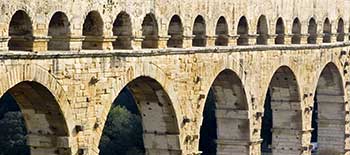
But Ken and I love the countryside more, so we went off north to Castillon du Gard, a tiny restored hilltop town near the Pont du Gard. Ken found us another great hotel / restaurant there, Le Vieux Castillon. Despite the place being only about 5% full (ie: two parties) we were fed and treated very well.Along the way we visited the 12th century fortress ruins of Les Baux de Provence, the Roman aqueduct of the Pont du Gard and about twenty little Provençal villages. A very pleasant few days, and perfect weather in November.
There are constant strikes in every non-entrepreneurial industry in France. I’m sympathetic to workers’ rights, but there’s something galling about the persistance of strikes in a country with 35 hour work weeks, relaxed service expectations, significant social programs, and a huge unemployment problem. And for visitors it’s particularly frustrating to randomly find the Louvre is closed because there are no ticket takers or the Pompidou is closed for some mysterious reason. Are museum workers really so oppressed?
Apparently there were 482 strike notices for the French trains in a year. Don’t miss this blog’s sidebar for a list of other upcoming strikes. I hope you’re not having a baby after November 20!
One remarkable thing in Paris is the quantity and quality of
street art.
I don’t mean crappy tag vandalism, but thoughtful and beautiful art
by folks like
Jèrôme Mesnager,
L’Atlas and
Space
Invader. Walking around Paris is fun for all the beautiful old
buildings, but look closer at some of the new stuff illicitly stuck to
the walls, too.
Flickr is a good place to find images of Parisian street art. The Paris street art group is good, as are the photos of yoyo (and his website), tofz4u, chais, vitostreet and others. But I’m really enjoying stumbling into them myself. Many of the installations are quite big and ambitious; the nights must be quiet.
I’ve been taking photos of street art when I can. I’m particularly taken by the Kufic stylings of L’Atlas; Arabic calligraphy is beautiful, and somewhat provocative in Paris. And I recently stumbled into a beautiful gallery at 23-25 rue Ramponeau in the 20th. There’s an artist workspace nearby, so I imagine this was semi-authorized.
Generally in Paris if you find a place where the staff cares about what they’re doing, you’ll eat well. As it was at L’Enoteca. My strongest memory is of the pasta with duck. Excellent fresh tagliatelle, shreds of duck nicely peppered. Simple, elegant, perfect. The Italian wine list is excellent and modestly priced to match the menus. It’s clear the owner has pride, and that translates to a good experience.
I started with the assortment of cured pork; some ham, rillettes, blood sausage, and dry sausage. All excellent, particularly the ham. Ken was happy with his wild boar terrine but the best starter was the simple lentil salad with bits of bacon. Perfectly prepared. For a main corse we had duck breast and sausages, all served with aligot. Aligot is a riffe on mashed potatoes, mixed thoroughly with hard cheese to an elastic consistency. Hearty simple fare, very satisfiying. We’ll be back.
PS: I’ve rolled the food posts back into my normal blog. No need for two feeds anymore.