Some Bits: Nelson's weblog

Learning to break the rules

When I was a young boy I played cards with my friend and his Sicilian father. Dad would cheat. He’d palm cards, fudge the score, take extra turns. When I got to age 9 I realized he was cheating and I was so mad. Cheating was wrong! I realized much later that he was teaching us a lesson. That while it might be wrong, sometimes people will cheat you. He taught us to recognize being cheated.

When I was 15 I applied for a job at the local grocery store. Part of the hiring process was a test for produce codes. I had not memorized them, I went to the beach instead. I was screwed. But someone else had brought a cheat sheet and offered it to me. I was shocked, cheating was unethical! I declined and I did not get the job.

The finale of Heartstopper has a nice moment of queer solidarity. Charlie can’t get permission from the school to start an LGBT club. His art teacher offers to help and says “historically, us queers have never asked for permission to exist.” It’s an important lesson in surviving as an oppressed minority.

When I was 16 I started having sex with other guys. That was illegal in Texas then. Not so much my age (although maybe that too) but the fact that two young men loving each other was a crime. That was a law I joyfully broke as often as I could.

The US is currently falling into fascism because of a political movement empowered by its willingness to cheat and corrupt. I’m not advocating for that kind of wholesale ignoring of ethics. But it’s important to recognize when you are being cheated. And to know when you yourself can break the rules a bit, whether to get an advantage that harms no one, or for civil disobedience, or just to get laid in a place that has made you an outlaw.

Dry January

I’m planning to do Dry January again this year: no drinks for the month. Last year was the first year I did it and I found it really helpful.

The main thing I learned last year is I could drink less. It’s the longest I’d gone without alcohol in a long time and I wasn’t sure at first I could. It helps that the goal was simple and short term.

I felt better pretty much immediately, more energy. And the calorie reduction was welcome, although I did end up eating more instead. Sometimes I felt like I was missing out on some fun. But mostly I found I could socialize, including a weekly happy hour at a bar. It also gave me new perspective on how much alcohol changes social interactions.

One thing that helped in the evenings was having fancy non-alcoholic aperitifs on hand for the ritual. I quite like Ghia, a bitter soda. NYT has a lemon tonic I like making. Non-alcoholic beer has also gotten very good, it tastes just like regular beer.

I find myself looking forward to doing it again this year.

Overhead shower drips

Do you have an overhead rain shower? Does it drip cold water on you when you’re not using it? It may be water trapped in the pipes. A plunger will temporarily fix it.

We have a fancy shower with an overhead rain shower and a ordinary wall sprayer both controlled by the same thermostatic valve. There’s a diverter to control which head gets the water. Every time we used the sprayer the overhead would drip a tiny bit of cold water on us. Annoying!

We assumed it was a leaky diverter valve, had it replaced. Didn’t help. There’s a zillion websites wanting to sell you plumbing parts that suggest a valve is the problem. But this discussion explained the real culprit.

There’s water trapped in the pipe leading to the overhead shower. Weirdly there’s some water above the tiny holes in the showerhead, held there by air pressure. Running a hot shower in the same area changes the air pressure / flow enough that a little cold water manages to leak out.

You can test this theory by running your finger over the holes in the overhead showerhead; for me that was enough to express 10mL of water or so. To really get the water out I took a plunger to the shower head. No tight seal needed, just want to force air in and water out. I think I got 200+mL out that way.

It’s a temporary fix, next time I use the overhead the pipe will fill again. I wonder if someone sells a showerhead with some sort of permanent fix? A release valve would work but be fiddly.

Toto C5 Washlet power usage

I got a fancy bidet toilet seat. It works fairly well and having water for washing is great. But I don’t love some details, see notes below. Mostly I wanted to share how much power the thing uses.

About 80 Watt-hours a day, or an average of 3 watts. Note this is without the seat heater. About ¼ of the power was from using the bidet actively once a day; the rest was just having it plugged in unused.

That’s very little power, like one hour of an old fashioned lightbulb per day. Or about 3 cents a day. Most bidet functions take just a few watts when operating: the pump, the fans. It uses less than a watt on standby. The big power consumption is anything with heat: the water heater, the blow dryer. Those use 200W when active but that’s not very often, the water tank seems well insulated. In theory the device can draw up to 500W but the most I saw was 250W. But then I never used the seat heater.

I don’t like the compromises involved in having the bidet be built into the seat. It’s great for retrofitting an existing toilet but it makes it bulky and the seat is uncomfortable. Having the water supply and bidet sprayer integrated into the toilet bowl must work better. I wish I at least had an elongated toilet; the washlet blocks a fair amount of the bowl.

Toto washlets come in a dizzying array of options; see here for a breakdown. Honestly all I want is warm water and an oscillating spray, the other features don’t seem so important to me. (For awhile I use one of those cheap $30 cold water doodads; it worked pretty well.) I think an instant heater is probably worth the upgrade price though; the C5 tank runs out fast and while it’s well insulated, heating on demand would be better.

My work at early Twitter

I worked at Twitter part-time starting June 2007. I’ve never talked much about this in public. I’m revisiting it because of the complete disaster Elon Musk has made of Twitter. His sabotage of the company has felt personal to me. It hurts to watch him destroy something I helped create. The recent API debacle particularly stings.

Early Twitter was chaotic without enough experienced engineers. I acted as a management advisor. I helped the engineers organize and the executives work better with engineering. I did some good but I’ve always wished I could have done more. In retrospect, I should have committed more time. I did enjoy a long insider relationship with some of the leadership and was of some help that way.

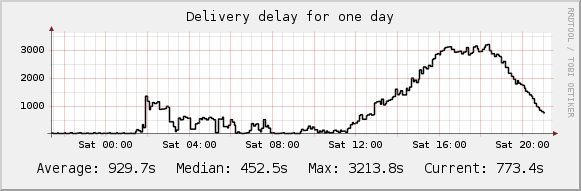
The most useful concrete thing I did was what we called “Nelson’s graphs”. I made some simple measurements of performance like tweet delivery times. Post a tweet to one account and see when it shows up on another account’s timeline. (Note this graph shows an average of 15 minutes!)

Simple but useful. It was a clear view of whether the site was working and ended a lot of arguments. These days we’d call this basic devops but in 2008 it was still a novel idea. My graphs kept running for several years even after they leaked to the press.

I grieve for Twitter now. I grew to love it over the years and was an enthusiastic user. Musk has ruined Twitter both culturally and technically. I suspect Twitter will survive in some new smaller, crueler form. But I’ve moved on to Mastodon and that’s working for me.

Class action employment suits

Google has agreed to settle a gender discrimination suit brought by employees. Congratulations to the plaintiffs, suing your employer is a difficult and stressful thing. But while the $118M headline looks big it works out to only $7600 per employee, less after the lawyers’ generous cut. The harm was "the company paid female employees approximately $16,794 less per year". It's hardly restoring equity.

I faced a similar tiny settlement amount in the 2010 antitrust suit when it was found that Google, Adobe, Apple, Intel, Intuit, Pixar, Lucasfilm, and eBay were all colluding to not hire each others' employees to illegally suppress wages. The first settlement "my lawyers" agreed to was so low that the judge threw out the agreement saying they should do better. The final amount was still just a few thousand dollars for each employee.

I was mad enough I wrote a tart letter to the court when I opted out of the settlement.

I am unimpressed with my nominated attorneys. The fact that Judge Koh ruled the original settlement was “below the range of reasonableness” suggests my attorneys are poor negotiators and have not represented the plaintiffs effectively. ... I’m irritated that they cannot even do class members the courtesy of answering email.

As an unnamed class member I had nothing really to do with the suit, so this letter was my only personal involvement. At least when Gilardi & Co saw this letter to the judge they finally answered my email.

Class action lawsuits are the American way of resolving harm to groups of ordinary people. I understand why the lawyers are well paid for them. But they're seldom a good tool for monetary equity. There is value in getting the company to admit to its bad behavior and make changes.

My surprise brother

I learned a few years ago I have a brother. No one knew, my mother gave birth to him in 1959 and immediately gave him up for adoption. My mother died two decades ago so details are hard to come by. My brother worked for years to find us. I'm glad he succeeded! And I feel sad for my mother's story.

I also feel guilty for my initial reaction. A stranger called me out of the blue and told me he was my brother and in that moment it felt wrong. I went with my gut and told him I thought it was a scam. I still feel bad for my rejection. Fortunately he was persistent and talked to other family members and about a year later I got back in touch and we confirmed with a genetic match. Our first talk felt strange because there's no normal way to have that conversation.

My mother never told anyone. She was 21 when she had my brother. She married my father five years later. No one knew about her secret child. Not her sister, not her best friends, not my sister or me. I don't even know if she told my father but I hope she trusted him enough to. Her parents knew but not her grandparents. This secretness makes me so sad for her, she bore this difficult thing without support.

We found a small cache of memorabilia that makes sense now. Mementos from a summer in New York. A letter from Elizabeth Arden (!) saying what a bright young woman my mother was and how nice it was that she visited her health spa in Maine. Just after the birth, I'm curious whether Ms. Arden was a regular host for young women in trouble.

It turns out that unintended pregnancies and complex family trees are way more common than we acknowledge. Ken's family is full of surprise cousins and grandchildren being raised as children. My mother and her generation treated birth out of wedlock as a source of shame. My generation doesn't quite know what to think. With genetic testing now keeping things secret is much, much harder. I feel no shame but even here I'm avoiding names, for privacy.

We know who the birth father is but my brother has been cautious about approaching him, disrupting his life. I would love to know more, he was in my mother's social circle and I would like to imagine young love or at least a summer fling. Instead all I know is the evidence of her shame and suppression.

But now I also know my brother! He's an interesting and successful man and a pleasant part of my life. I'm glad to know him.

Seven slaves, a marker

I’ve written before about learning that my ancestors Leonard and Melvina Ward owned a slave. Today I learned there were more, at least seven.

This marker comes courtesy of Find-a-Grave. It’s on a small family cemetery near Bagwell, TX. I’m not positive but I think the land is still in the family. I’m curious who put the marker there, it looks like the same style as one placed in 1969 for a named family member.

One thing that makes it hard to grapple with the mass crime of slavery today is the distance in time. But it’s really not that far away and there is documentation to be found with enough work. I keep thinking how there’s no names of the enslaved people on the marker, nor the census records I have. I would like to know more.

California green power

I’ve gotten interested in lowering my carbon footprint. That’s led me to do some light research on a couple of consumer power topics.

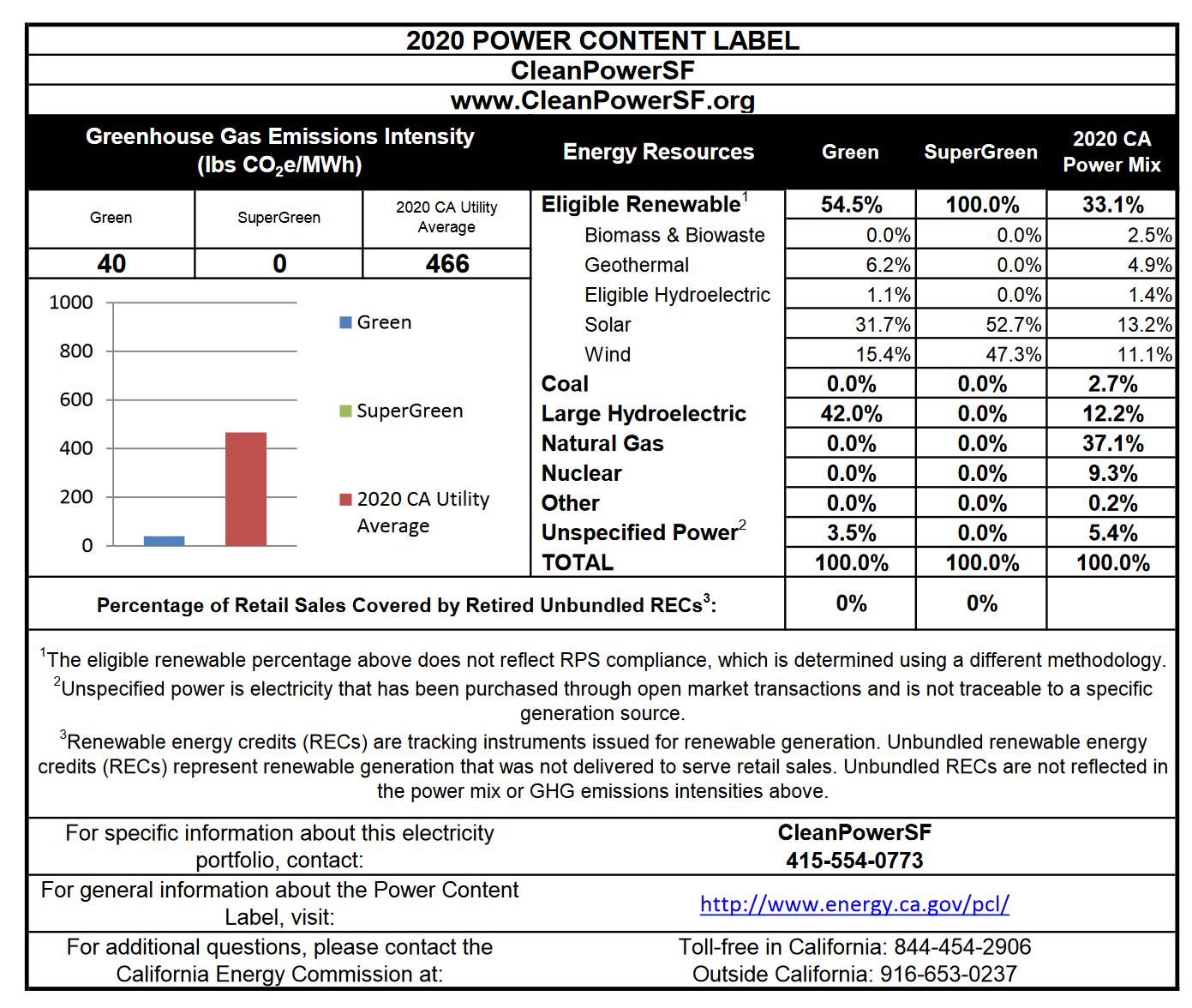
CleanPowerSF is San Francisco’s green energy program. Basically PG&E operates the grid but CleanPowerSF gets the power from green sources. Surprisingly, there’s no real extra cost for typical users.

The image above is their Power Content Label, a national standard for reporting where your power comes from. The Green program is at least 97% fossil-fuel-free. Note that large hydroelectric does not technically count as "renewable" on this label for political reasons. Here’s a list of other power content labels in California for comparison. Ordinary California power is 40% fossil fuels. Pacific Power in the the north is over 75% fossil fuel.

The California Climate Credit is a carbon tax thing. The big power generation companies pay a carbon tax to the state for greenhouse gas emissions. Some of that tax is given directly to consumers; $50-$200 a year for each customer. I don’t understand why it’s set up that way.

I’ve been doing other power related stuff, too. I’m getting solar installed, that makes good financial sense if you can afford a 7 year investment horizon. I also changed my investment strategies to avoid fossil fuel companies; that’s really just a cost to me but I feel better about it.

Sleep Apnea treatment

My life has significantly improved in the last month thanks to a CPAP machine treating my obstructive sleep apnea. If you are tired all the time or think you are having trouble breathing when you sleep, please read this post. Sleep apnea is a dangerous condition that ruins your quality of life and may lead to early death. You might be able to greatly improve your life with simple treatment. If you’re looking for more information, Apnea Board has been helpful to me.

For the past year and a half I’ve been really tired. Sleeping 8 hours a night and a 90 minute nap in the day, still falling asleep in my chair. I chalked it up to Covid lockdown or something and ignored it for awhile. As far as I knew I was sleeping fine; Ken said I was snoring a lot and sometimes struggling for a breath but he didn’t seem concerned. Finally it clicked and I realized it was not normal. Now I’m using a CPAP and I’m sleeping well and am full of energy.

Diagnosis starts with your doctor, who refers you to a sleep specialist, who listens to your story and takes a look at your airway and orders a sleep study. You can do the study at home, you just borrow a small monitoring kit for a night and they collect and analyze the data. It’s very simple, they produce a score called AHI which quantifies any breathing problems. Most insurance will cover the testing.

Before the test I learned a lot myself with a pulse oximeter that records my blood oxygen every few seconds. It showed me my oxygenation was dropping very low every 50 seconds, all night. That is not normal. Then I took a video of myself sleeping and saw that basically I was not breathing at all normally, just getting the occasional gasp of air. It’s a wonder I’m still alive. The sleep test confirmed severe OSA.

Treatment comes after diagnosis. There’s a bunch of treatment options; my doctor recommended a CPAP machine. These work by pumping higher pressure air into your mouth and nose; the pressure keeps your airway inflated and lets you breathe. A simple CPAP is not a ventilator, it’s not breathing for you, but it’s similar. You turn on the machine, put on a mask sealed to your nose (and mouth if needed) and sleep.

I’ll he honest: a lot of people have a hard time with CPAP, there’s like a 50% rejection rate from people who hate the idea or find the machine uncomfortable. I was highly motivated and literally from the first night the improvement was so enormous that I’ve taken to it enthusiastically. I sleep fine with it, much better actually. My blood oxygen is now well above 90% all night and I have very few breathing incidents any more. I don’t love the thing; the mask is a nuisance, there’s some mild side effects like more farting. But I dislike suffocating in my sleep a lot more than the hassle.

Benefits for me were immediate and enormous. Literally the first morning I was dancing to music while making coffee. I can read in the afternoon without falling asleep. If I take a nap it’s a 10 minute snooze, not a 90 minute snorefest. My blood pressure is lower. (OSA basically creates panic all night and is a terrible strain on your body.) No luck on weight loss yet, that’s a benefit many OSA sufferers report. More energy to exercise though. One thing I’ve noticed in CPAP users; they tend to get very attached to their machines and can’t imagine going a night without them. I didn’t understand that before. Now I do.

Equipment was a bit of a mystery to me at first and the medical system is not great at advising patients. By far the best CPAP machine for basic OSA is the ResMed AirSense 10 AutoSet. The "AutoSet" is key; the machine automatically adjusts to its sensing of your breathing so you don’t have to guess at the right pressure. It’s a really nicely designed piece of equipment. If you’re data-minded be sure to put in an SD Card and get OSCAR to get very detailed second by second info on your breathing while you sleep. The AutoSet goes for about $800 now. Insurance should cover it but they are notoriously a pain in the ass about it. Do not let your insurer bully you into getting inferior equipment. For me it’s the best $800 I’ve ever spent.

The other half of the system is the mask. My first mask was the AirTouch F20, a basic full face mask. It has worked great. After my first month I switched to a smaller AirFit F30i, the way the hose comes out of the top of your head is a big improvement. Note these are both full face masks; if you don’t breathe through your mouth (much) you can probably use a much smaller nasal mask or pillow. A full mask kit is about $150 and again should be covered by insurance.

The medical system wants you to buy all this stuff from a "Durable Medical Equipment supplier" and the quality of those vendors varies enormously. Some are outright scams, including doctor kickbacks. I ended up skipping insurance and buying from CPAP Direct. In theory my insurance will reimburse me but so far that hasn’t worked out. The big pieces require a prescription but you can buy a lot of components and replacement parts, on Amazon without a prescription for much cheaper.

Maintenance is a bit of a hassle. I have to refill the humidifier tank every day. Also clean parts of the mask, other parts need weekly cleaning. The mask is intended to be replaced on a regular schedule; every month for the "pillow" (the part in contact with your face). That’s where ordering cheap replacements on Amazon can save a lot of money, maybe even if you have good insurance.

Conclusion I can’t emphasize enough what an improvement to my life CPAP treatment has been. Obstructive sleep apnea sucks. I encourage anyone reading this who wonders if they have a breathing problem at night to talk to their doctor, or maybe try a pulse oximeter on their own, or address it somehow. CPAP treatment isn’t so hard! It works! I’m enthusiastic enough about it to be writing this blog post and am glad to discuss it privately with anyone who asks.

PS: a special thank you to Obama and the ACA for making it possible to treat and discuss this problem without rendering yourself uninsurable.

Post-vaccination vacation

On March 20 I got my one and only J&J Covid vaccine shot. On April 13 I was on a plane to Florida for a two week vacation, a re-entry into the world. The trip was great! It also felt a little strange! I’m fairly early for returning to normalcy, I hope sharing my experience is useful to other folks.

It felt great to be out in the world again. I’m pretty introverted and didn’t find staying at home and being online this last year too awful. But even I was going crazy missing socializing with people, going out, etc. On my trip I went to all sorts of bars, restaurants, gatherings and it felt great. A bit strange the first day or two but I quickly got used to it. In fact I came to resent having to wear a mask anywhere, particularly to meet Florida’s silly requirement you have a mask on when you enter a bar even though no one was wearing one once inside.

I picked Florida to see family, friends, and the gay community in Ft. Lauderdale. But mostly I picked it because Florida has been relatively open all through Covid. Bars open, indoor dining, lots of people congregating. I’m a smug and cautious Californian and all through this last year was troubled by what I saw as irresponsible behavior in Florida. But now that I am vaccinated, that’s exactly what I want to be part of! (And to be fair to Florida, despite their policies their outcome is about the same as California’s).

I’m glad I went all-in on my trip. One danger of this lockdown in the past year is it creates unhealthy psychology where we become afraid to be around people beyond what is rational. There’s an analogy here for the AIDS crisis and gay men’s sexuality. I worry that kids are growing up afraid to hug their friends. I decided to act as if my vaccine gave me 100% immunity and I could go right back to old behavior; hugging, sharing a sip of a drink, being in crowded bars, sharing a hot tub at the hotel. It was great. Particularly drag night at Spencer’s where the bar was packed and no one masked or distancing in any way. Except for the glamorous hostess, a seven foot tall drag queen (heels to hair) with an employee’s plastic face shield. That evening felt entirely normal and healthy and profoundly good for me.

About halfway through the trip a bunch of articles about breakthrough infections were published and I had a brief moment of realization that I was not, in fact, 100% immune. (About 100 of 20,000 vaccinated patients got Covid in the four months of the big J&J study.) But I decided to be OK with my decision to live life as normal. The vaccine makes getting Covid less likely and nearly eliminates severe illness. That’s how it’s going to work going forward: strong but not perfect protection for most of us means the disease stops rampaging. I may have jumped the gun by a few weeks; waiting for 80% vaccination in the country would be safer. I’m not sorry I didn’t wait.

I predict many Americans who are vaccinated will act as I did, returning to normal with enthusiasm. (Not all though; there are plenty of vaccinated folks I know still being much more cautious.) I’ve written before about American selfishness and how it has harmed our public health in the last year. The good news is the #1 step we can take to protect ourselves, vaccination, also protects the people around us. It’s a win-win. The absolute latest guidelines from the CDC seem to agree. Very few restrictions recommended for vaccinated people, and the few that persist (masks indoors) are mostly for proecting people who have not yet been vaccinated.

I do hope our country takes two long term lessons from this nightmare year. First, I want people to wear masks or stay home if they themselves are sick with a cold, a flu, anything. That’s the norm in Asian countries and it should be the norm here. Second, I dearly wish the US would invest more in public health infrastructure. If we were prepared and responded aggressively, like Australia, we might have saved 400,000+ lives last year.

Anyway, in conclusion; get vaccinated! If you’re fully vaccinated and feel ready, go out and have some fun! Within your comfort zone of course, maybe you’re happier avoiding crowded indoor places for awhile longer. Some precautions are still advised. And we still don’t have a good solution for children. But it’s getting better in the US and we are being freed from the terrible limits we’ve been living under this last year.

One Medical’s vaccine misinformation

My doctor’s office, One Medical, continues to mislead its patients about Covid vaccine availability.

At the end of February One Medical got caught violating vaccine priorities in California and in Washington state (at least). The allegation is they allowed clients to skip the line and get vaccinated before they were eligible. They deny any deliberate wrongdoing but the story has blown up enough there’s a congressional investigation.

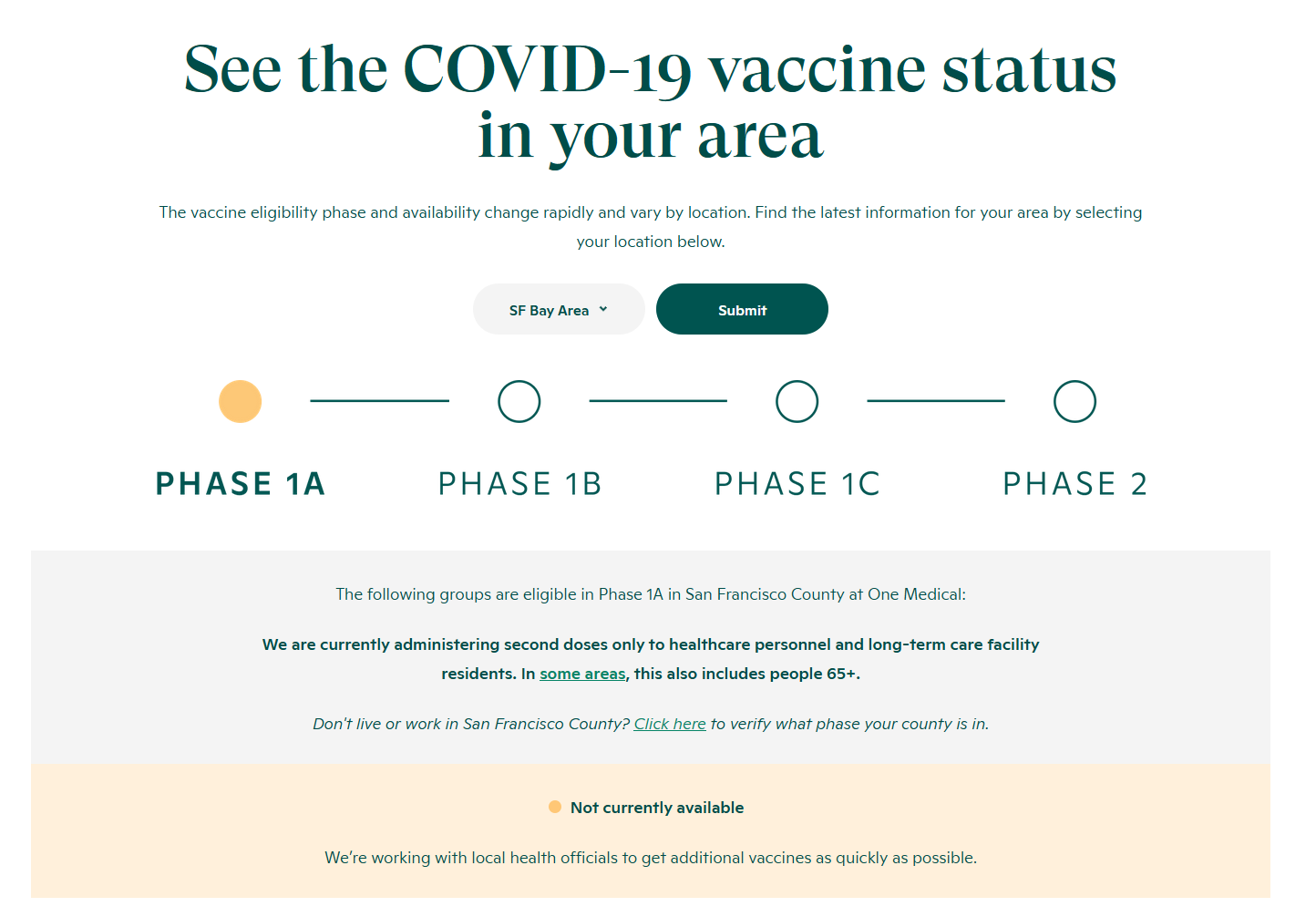
The problem for One Medical patients is that states have turned off the vaccine supply to their clinics. And the company’s response to that reality has been terrible. Nowhere on their website can you find a clear statement that they cannot source vaccine for their patients. If you go to the vaccine page they deliberately misinform their patients:

Note how this page implies the SF Bay Area is in Phase 1A. It’s not. It’s in Phase 1C, and has been in 1B for weeks. They do this because 1A is all One Medical can vaccinate. But they don’t explain to their patients why they are so far behind and do their best to hide the fact they are behind.

I guess their hope is their patients will just patiently wait for One Medical to sort out their legal problems. I wonder how many patients will die because of that delay?

The ethical thing for them to do is to proactively own up to their problems. Admit they have no vaccine supply and encourage all patients to seek out alternate sources for vaccination. They do obliquely help a litle; buried on this page are links to alternate vaccination sources. But nowhere do they just say "we aren’t going to be able to vaccinate you soon; you should seek alternate sources".

As the old saying goes, "it’s not the crime, it’s the cover-up".

Charities please publish your EIN

Please, if you run the website or a development office of a tax-exempt charity, place your EIN, address, and 501c3 status prominently on your website. It will make it much easier for me to give you money.

All too often I hear about a neat charity that deserves support. Then I go to the website and I find a form that includes a donation link run by a third party. Which is great for a quick one off credit card donation. But sometimes I’m trying to give a larger donation from my Donor-Advised Fund. Which means I have to look up the business on my bank’s website and often it’s not easy. Many charities operate under one name then raise funds via a separate company, often an umbrella parent company that handles the tax logistics. I want to be triply sure I get the right company!

The EIN makes this simple. It’s the tax ID code that uniquely identifies businesses. Every DAF makes it easy to look up a charity by its EIN. It’s also very helpful for finding a company at a charity research site like Charity Navigator or Guidestar. Having your legal business street address easily findable also helps. It makes it easy to verify that you’re paying the right company, and in a pinch you can often look up a business by its address.

1979 Christmas Atari

I ruined Christmas in 1979 with an Atari 2600 gift. I was 7 years old.

The Atari was all I wanted. I started asking for one around Hallowe’en. My single Mom couldn’t possibly afford it. We weren’t poor, but all the money we had went to mortgage and school and we never had much extra for fun stuff. She told me there was no way she could buy it. It was $200, or about $800 in today’s dollars, and by that age I already understood what that meant.

Early December my sister, my older should-have-been-wiser sister, tipped me off that our mother had bought me the Atari. That it would be my Christmas present. I didn’t believe her, so she told me where it was hidden. In a gross dusty back closet in the garage. So when Mom wasn’t home I snuck into the closet and very, very carefully peeked and there was the Atari under some musty old polyester blanket.

I kept the secret for about three days. But I couldn’t contain myself. It was already bought and in the house! Even if Christmas was weeks away, surely I could go ahead and have it now and play it now? What would be the harm? So by my 7 year old logic I told my Mom I knew about the present. And informed her that since I knew about it, she might as well give it to me right then.

That was the second time I can remember my mother outright crying. The first time was two years earlier, when my father died. The third time was a few years later when I was 12 and so upset I told her I hated her and she’d ruined my life and honestly meant it in the moment.

But there in early December 1979 she burst into tears of anger and frustration because her big Christmas plan was ruined. She was so, so mad at me. Of course I couldn’t have my present. In fact since I’d been so naughty I was getting no present at all. She was going to return the Atari and give me nothing.

Sure enough, I had no presents under the tree. A day or two before Christmas she relented, a couple of small boxes appeared. I tearfully asked what had happened to the Atari. "It’s gone. I got you some underwear because, well, you need underwear anyway. You can open it on Christmas Day". I was no longer in a rush.

I felt so terrible. I knew how happy my mother was to have been able to buy that gift for me, how much it must have cost to have saved the money aside to be able to afford it. And then all that generosity and joy was ruined because I peeked at my presents.

So it was a pretty glum Christmas morning. I mean we had our stockings (with an orange in the toe), and candy, and nuts. There were a few boxes under the tree for me. I’d picked out my presents for everyone and they were ready to give, but I didn’t get much joy from that. I was just sad for my lost Atari.

Finally it came time to open presents. And my Mom handed me a small box, a cube, and told me to open it first. Inside was an Atari 2600 joystick! That confused the heck out of me. Then I opened the second box and it was a Combat game cartridge. Then another joystick, and an RF adapter, and then finally my mother took pity on me and hauled the last box out from where it’d been hidden; the Atari console itself, wrapped separately to hide what it was.

Best Christmas ever.

Prescription drug prices

Prescription drugs: they save your life but have completely crazy pricing in the United States. I take a slightly uncommon medication daily. I have insurance with Anthem CA. The medicine costs me $4/day at Walgreen’s. That seemed expensive so I shopped around and found my way to GoodRx, which gave me a coupon for $1/day at the same Walgreen’s. 75% off WTF?

GoodRx has an article explaining how it works. They are a marketing middle-man, a comparison shopping site. They work with several Pharmacy Benefit Managers to get pricing for drugs. Then they pick the PBM with the best price and you use their RxGroup pricing code at the pharmacy. Presumably GoodRx gets a kickback. My Anthem insurance has a PBM that should be getting me good pricing, but GoodRx did better. The drawback is my insurance didn’t even see the purchase, so it does not apply to my deductible. I might be able to fix that with a letter.

A key part of this is that the drug I take is available as a generic. There’s a lot less price flexibility for drugs still under patent. OTOH this exact same generic I take is available from a Canadian or Indian pharmacy for $0.50/day, so US pricing is still unusually high.

Blink Health is a competitor to GoodRx, I have a friend who works there. I think they operate similarly and they have similar pricing for my drug of interest. They really want you to log in though; as near as I can tell my usage of GoodRx was an anonymous coupon with no identifying code.

This post isn’t exactly an endorsement; the whole prescription drug market is so spooky I don’t trust anyone. The real problem is the US’ insane health market, where we pay more for worse outcomes than civilized countries.

My Family’s Slave, Texas 1860

My grandmother’s great-grandparents owned a slave. The slave schedules record that they owned a 13 year old girl in 1860.

Leonard and Melvina Ward were born in central Tennessee and early in life moved to East Texas. They had six children. They lived to old age, here is their sweetly romantic gravestone. I think they were farmers and lived pretty well. At least well enough to own a person.

Here is what I know about the person they enslaved. She was 13. She was Black (as opposed to “mulatto”). She was not a fugitive, she had not been freed, and she was not deaf, dumb, blind, insane, or idiotic. That’s all Wm P Cornelius recorded in his census. I don’t know her name, where she was born, have no easy way to research her further. All I know is she was 13 and was enslaved by my 3rd great-grandparents.

I like to imagine she’s what my grandmother called “a domestic”, cooking and doing housework. The census records no slave houses, so maybe she even lived in the family house. I’d like to think she lived another 5 years to see her emancipation, then got far away from her captors and lived a happy and comfortable life. That would be about the best outcome for a 13 year old slave girl in Texas in 1860. More realistically she was probably impoverished and lived with little freedom in rural Texas.

Today is Juneteenth, a day of national celebration for the end of slavery. Emancipation was a complicated process that took several years to be enforced. Followed by decades of indentured servitude, poverty, and deprivation for many African Americans. The legacy of slavery lives on, it is one of America’s original sins. I own a piece of that legacy.

“I like your blog”

I’m at the State of the Map conference. Two different people here said “I like your blog!” on meeting me. It’s so nice to hear it! It’s a nice compliment, and encouragement for the writing I’ve done, and also establishes context for the following conversation.

It also felt terribly retro. The other half of that conversation was “Well it’s been awhile.. I don’t use RSS any more and with Twitter..” Yeah, I get it, personal blogs are a dying medium.

I’m really on the fence about what to do with this blog. I want to keep it, but I don’t post often. I set too high a bar for content quality so I don’t post often. (See my secret work blog for what badly edited stuff looks like.) Also the design is depressingly outdated now, not to mention the software. Part of me wants to abandon it entirely but meeting people who like my blog keeps me motivated.

Basic stock option questions

It’s common for tech industry employees to be compensated with stock options. Stock options are complicated and many engineers I know are terribly naïve about how they work. But options are often the most valuable part of an employee’s compensation! This engineer’s guide to stock options is good reading.

Here are some basic questions every owner of stock options should ask their employer. With these answers an accountant can work out the value of the option package and plan a tax strategy.

  1. How many shares of the company will I own?
  2. How many shares of the company exist?
  3. What percentage of the company will I own?
  4. What is the strike price of my options?
  5. What is the fair market value of the stock today?
  6. Can I early exercise my options?

Many companies are reluctant to answer #2 and #3 (they are equivalent). Trying to keep an employee in ignorance about this is bullshit. Knowing what percentage of the company you own is the only way to evaluate your option package. Companies will generally answer this question if you press hard enough; if they refuse, it is a very bad sign.

Tax strategy is important for several reasons. Early exercising could save you ~20% in taxes later on. But even more importantly, early exercising could save you 100% should you leave the company. Most option agreements include a clause where your options disappear 30 or 90 days after you stop being an employee. If you quit and can’t afford the taxes to exercise those options, you can lose everything. Planning ahead matters.

Anthem customer contempt

California’s biggest individual health insurer, Anthem, treats its customers with remarkable contempt. This blog post is boring, but I think it’s important to occasionally document poor behavior from powerful companies.

I received a letter December 9, “INTENT TO NON-RENEW”. They said I owed them $6.89 and had three weeks to pay up or they’d cancel me, a ten year customer. Except I didn’t owe them money. I pay all those bills automatically, the correct amount had been sent. The exact amount is for “pediatric dental insurance”, something they tacked on this year when they realize they screwed up the ACA requirements. I’m guessing their billing system failed to post one month somehow.

What is so contemptuous is the communication. They go straight from “minor problem” to “we are cancelling your health insurance”, in an officious letter, with no followup. Their customer service is terrible. I finally got through (two separate automated phone systems) to someone who could only vaguely say I look paid up and they have no idea why the letter was sent.

Anthem has a remarkable online bill pay system, BTW. Or rather they don’t, they outsource it to Princeton eCom, a site that looks like a clumsy phishing attempt. It requires a separate login. Your password is limited to 8 characters. For the billing site. Of a health insurance company.

Cancelling health insurance is a big, scary threat. Anthem appears to casually do that because of random billing errors, with no humane communication. I dread what the process will be like if I ever have a significant claim.

Donors Choose

This week I had a great experience with charitable giving thanks to Donors Choose, a charity that gives money through to teachers for classroom needs. Right now is a good time to give with school starting soon. And the way Donors Choose works feels personally meaningful.

The site lets you browse projects that need funding: $115 for classroom organizers for a kindergarten in Louisiana, $70 for planters and seeds for a garden in Oklahoma, $1300 for iPads in Washington DC, or heartbreakingly $239 for fans for kids in juvie without fresh air. The requests vary widely and the schools are all over the US; you can choose what speaks to you most. Or just give some money and let the organization figure out where to send it.

I ended up spending several hours choosing projects a few bucks at a time. I used the map view to focus on poor, rural areas where the parents weren’t going to be able to raise money with a bake sale. Mostly places I had some connection to, rural Texas and New Mexico near where I used to live. Places I used to drive through thinking “thank God I didn’t grow up here, I’d be stuck”. I don’t know that a copy of The Maze Runner is going to make all the difference to help a kid in Gallup, NM access the wider world around him, but if a Teach for America teacher thinks it’d help then that’s probably a good use of $7.

One of the sad but inspirational things I learned looking through the site is that the teachers themselves are often donating. As if taking an oath of poverty to become a teacher isn’t enough. If you’re in an industry that pays well, consider chipping in a few bucks as thanks for whatever teacher gave you the education to get you where you are today.

Me in the summer of 1991 or 1992

A photo of me in the summer of 1991 or 1992, at a Queer Nation happening at the Portland Rose Festival parade. The photo is courtesy of my friend Tommy Strong, one of the QN/PDX founders. From a time when loudly saying “I’m queer and proud” was a shocking, radical act. It gets better.

Wisdom and intuition

In your heart you know it’s flat

I love this phrase, the motto of the Discordian Flat Earth Society (early source). It neatly characterizes the problem of so much common sense knowledge, intuition, wisdom. Of course we know the Earth is flat; just look at it!

The older I get, the less patience I have with woo-woo people who praise intuition and folk wisdom. From child killing anti-vaccination superstition to muddled thinking about the dangers of cell towers, GMO foods, and nuclear power to the simple underinvestment in discovering how the universe actually works. In the words of Neil deGrasse Tyson, “The good thing about science is that it’s true whether or not you believe in it.”

Google Play has no order cancellation

I got excited about Google’s new product Chromecast and quickly placed an order on the Google Play store. They said “will ship by August 2”; plenty of time to cancel the order if I found it elsewhere for cheaper or sooner. And so I did on Amazon; same price, delivers today for free. Yay!

Only there’s no way to cancel a Google Play store order. I see my order, Status “Pending”. I click “Cancel” and I’m told “We could not cancel your order at this time. Please try again later” with a link to this support page which says “it has already been packed”. Only without any promised delivery date, so I’m assuming it’s still weeks away.

Google has a decent phone support option. The nice American lady told me that there was no way to cancel the order and my best option was to refuse delivery. Except the package is being delivered at an unknown future date with instructions to leave without a signature. She had no explanation for why it was impossible to cancel an order that had not yet been billed or shipped. To be fair to Google I vaguely remember seeing a warning when I purchased saying “you may not be able to cancel this order”. Frankly, I ignored that, it seemed so improbable. Next time I just won’t order from Google Play.

Order fulfillment is hard. Google’s not making enough money on $35 hardware sales to be worth doing a good job of it. So why are they even trying? I guess it’s to compete with Apple. But they should consider how good the experience is buying hardware online from Apple.

Jason Kottke, tastemaker

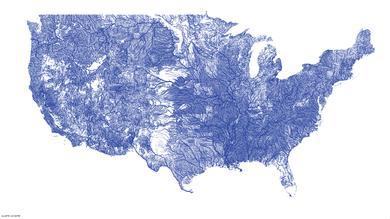
It’s been a good week for my river project. A lot of exposure on the Internet, 100,000+ viewers from Gear Junkie to a NASA Twitter account to that fine example of British tabloids, the Daily Mail (Online).

I owe the new attention to Jason Kottke. He ran a blog post on my map and the traffic exploded, not just directly from his site but into the minds of other people. I’d actually gotten a lot of attention on Reddit MapPorn last month, but it didn’t go further than that. Kottke has a lot more reach, from BoingBoing to Reddit again to Popular Science to Wired Design to some traditional print publications that haven’t come out yet (if they ever do). I’m guessing Jason found my map from Mike Bostock’s talk at Eyeo, that’s a real kind of legitimacy you can’t buy.

It’s a funny sort of brief fame for a little work print I did as a 45 minute aside on a much bigger project. I think people like that one picture because it’s easy to understand and looks cool, particularly the natural complexity of the earth. I feel bad I didn’t spend more time explaining this better. It’s not really a map of rivers at all, it’s flowlines, which may just as easily be seasonal streams or arroyos or drainage canals.

A bunch of folks have asked about a poster version. I’d like one too and it’s not too expensive, so I may give it a go. First I need to fix those nasty rectangular artifacts; apparently an artifact of digitization on USGS quads.