Some Bits: Nelson's weblog

iPhone software for international travel

I feel pretty lost without my iPhone, doubly so when traveling. Here’s some of the iPhone apps I found useful on a recent trip to France. Many of these apps cache data on the phone, both to save on roaming charges and for responsiveness.

MapsWithMe ($0): street maps. Caches vector data from OpenStreetMap and then renders maps on the phone. I used to use OffMaps but their raster tile approach just takes up too much space. With MapsWithMe I could download super-detailed maps for all of France with no sweat.

Navigon ($20 – $100): turn-by-turn driving directions. No need for a standalone GPS, the voice prompting and routing is good enough to drive all over France and Norway. Shop carefully to avoid their random pricing; right now it’s $65 for all of Europe, or $90 for just France. TomTom is a strong competitor. Bring a car charger.

Wiki Offline ($10) and AllOfWiki ($10): cached copies of Wikipedia. Really great for research. The 5GB data dump is text only and has some formatting issues, but it’s usable. Both apps work well and you only need one; I think I slightly prefer the Wiki Offline UI.

Accio French-English ($5): translation dictionary. There’s better language software out there, Accio is cheap and good enough for quick lookups.

Photogene² ($1): photo editing. Photogene makes it easy to crop, correct exposure, and upload. iPhone 4S photo quality is great and I really like uploading photos on the fly during a trip; I’ve been home 3 weeks and still haven’t gotten to the 200 photos on my “real” camera.

Twitter ($0): social networking. Tweets are the Internet’s postcards. Particularly good with photos. I’m still looking for a way to archive all my tweets into a journal; here’s a Storify view of my trip to France.

Traboules ($1): Lyon sightseeing. Only useful if you’re going to be in Lyon, I’m linking it here because it’s remarkable. The tourist office commissioned an augmented reality iPhone app; you look through the iPhone screen to see the world with overlaid markers for the Traboules, a hidden bit of Lyon.

iPad for daily reading

I did an experiment using my iPad for my two hours of daily reading of the Internet. It didn’t go great, mostly because of UI limitations. But it’s definitely workable.

I’ve got a daily list of things I read online. RSS feeds in Google Reader, a few community sites like Metafilter and the AOPA forums, Twitter and Facebook, and some random image blogs (notably Chan4Chan NSFW). Doing a full read takes an hour or two and I consider it time well spent. Reading those same sites a second, third, fifth time the same day still takes about an hour and becomes procrastination. So I thought I’d shift that work to my iPad, leave my desktop for real work.

The good things.. It’s nice having the iPad in your lap in a comfy chair. The touch scrolling and navigation is comfortable for casual reading. The display is beautiful; bright, high enough resolution, and generally fast enough except for the monster chan4chan page.

The main bad thing is the single-tasking user interface of iOS. I’m surprised how much multitasking I do when reading the net. Metafilter opens up into a forest of 20 tabs, sometimes several new windows as I explore sidelines. Google Reader URLs get copied and pasted into Delicious for linkblogging. Forum responses get written, sometimes over 30 minutes as I research related things. Videos are watched in the background. Task switching is possible on the iPad but it’s awkward. App switching is clumsy and cut and paste is a real chore.

In general I like the idea of single-tasking interface. But my random daily reading is something that seems best suited to a multitasking windowed UI. What I really need is to be able to write code on my iPad. Only that too is multitasking: an editor, the software itself, docs, version control.

The iPad is best at single task focus, like games or videos or books. (Related: I have a Kindle for sale.) It also seems to work better with new custom apps like Reeder or Twitter; traditional web sites like Metafilter don’t quite fit the iPad as well.

AT&T iPhones in Europe: a survival guide

For our recent trip Ken and I took our iPhones. It’s nice to stay in touch back home and I’ve become pretty reliant on my iPhone for getting around. Here’s some tips on using an iPhone internationally for Americans stuck with AT&T. (There’s a whole alternative of unlocking the phone and using a European SIM; not discussed here). See also AT&T’s iPhone travel tips, they’re pretty useful.

AT&T’s roaming is pretty unreliable. Half the incoming phone calls I know about never arrived, not even to voicemail. Caller ID doesn’t work. SMS messages disappear. Rates are outrageous, something like $2/minute. It’s a bit cheaper if you set up “AT&T World Connect” on your account for $4/month before you leave. But who cares about the phone, you really want your iPhone as an Internet terminal. And it works pretty well for that in Europe, provided you either find free WiFi or else you don’t mind paying through the nose.

If you don’t buy the “Data Global Add-On” you will be paying $10/mb for data from the cell network (EDGE or 3G). That’s absolutely hideous pricing. You can pre-order a chunk of 20, 50, 100, or 200 mb/month at roughly $1 / megabyte. That’s still outrageous but bearable. Note: you can order the data for just a few weeks and cancel. Overage is $5/mb.

How much bandwidth do you need? If I was being careful, it was 2 mb/day. That was enough bandwidth to catch up on email and Twitter twice a day, maybe get a couple of web pages or upload a photo. Then I had one bad day where I looked up a few maps and restaurants and blew through 10 megabytes. You really have to be careful.

How do you be careful? #1 way is to find free WiFi. There’s a lot of free WiFi in Europe, more-so than the US. Public town squares, train stations, and busy cafes are good bets. Sometimes the cafe WiFi is password protected, just ask and they’ll give you a password. Hotels are hit and miss. A lot of my rooms only had wired Internet, I regretted not bringing a little WiFi router.

If you’re stuck with using cell for data, the #1 option for being careful is to turn off “Data Roaming” in Settings. If you do that, you’ll use no bandwidth. You’ll also not be able to use the Internet. Geolocation won’t work well either. I found it really irritating to have Data Roaming off all the time. So instead I configured the phone to be lean by turning off Notifications and “Mail / Fetch New Data” in Settings. I also reset my Usage counters to track what I was using in Europe.

iPhone apps will still use a lot of bandwidth when you launch them. The real killer is Google Maps, a total hog. OffMaps is a nice alternative with cached maps in offline mode. Expect to pre-load 500-1000mb of maps for a long trip, you really want the finest grain detail when walking around. Apple’s Mail app is reasonably network efficient, particularly compared to Gmail in Safari. The New York Times app is great for caching a bunch of news articles on WiFi then reading them later. And Twitter is a great low bandwidth way to keep in touch with people, although apps like Tweetie are not particularly network efficient.

AT&T’s data roaming charges are ridiculous and it’s a real pain watching your bandwidth. But it’s totally worth it, the iPhone makes a great little companion while travelling. I particularly liked being able to use Twitter as a travel diary complete with photos, it was a lot of fun seeing responses from people to what I was doing that day.

iPhone roadtrip apps

I took myself and my new iPhone 3GS out for a two night road trip. The iPhone really is a perfect travel companion. Here’s some travel-specific apps (and hardware) I used:
Tweetie: Twitter app
There’s nothing travel-specific about Tweetie except that it’s a really great Twitter app. And Twitter is great when travelling solo. Keeps you from getting lonely, lets your friends know where you are, good place to ask advice. The photo and GPS/maps integration are great for travel notes.
TripTrack: all-in-one travel diary
After my last trip I wanted a geotagged photo diary. Sadly, TripTrack isn’t good enough. The photos are 240x240 toys, there’s no way to put text annotations in the log, no support for links to hotels, etc. The automatic geotagging is a little handy, though, and I like the Web presentation. You can see my trip (access code is “p”).
MotionX GPS: GPS tracker
The most full-featured of the various iPhone GPS apps I’ve seen. It works great but the GPS tracking mode kills the battery in 90 minutes. What I need is an app that does one GPS sample every 10 minutes.
Nearby, Where, Geopedia, Yelp: geosearch
All of these apps answer the question “what are some interesting things near me”? It turns out the quality of the database is much more important than the app itself and so both Nearby and Where are mostly useless. Geopedia is pretty good in pointing out nearby Wikipedia articles and Flickr photos, although the new Geolocation API means that Safari will do this itself soon. The Yelp app is the big winner, Yelp’s data about restaurants and hotels is quite good.
Offmaps: caching for offline map viewing
Surprisingly useful; you cache maps when you’re on a good network, then view them offline no matter how crappy the AT&T service is wherever you happen to be. A full detail map of San Francisco is 130 megs. Like many mapping iPhone maps the data is from OpenStreetMap since the Google Maps licensing doesn’t allow caching.
Griffin iTrip Auto FM Transmitter with SmartScan
FM transmitters are totally sucky, but if your expensive luxury car doesn’t include a $1.99 line-in jack on the car stereo it’s the only practical way to play music from the iPhone. The iTrip seems to work particularly well as long as you’re not in a big city; good display, easy to use scanner, and the cable doesn’t amplify GSM chatter. Just ignore the dire warnings about airplane mode and incompatible with the iPhone, it works fine.

iPhones and Twitter at conferences

I was at the fantastic Start Conference yesterday. I noticed something; for the first time, as many people were using iPhones when ignoring talks as were using laptops.

At tech conferences the geeks have their laptops open and are paying more attention to web surfing than to the speakers. At Start08, half those geeks (me included) were looking at their iPhones instead. In part that’s because the Wifi didn’t work very well. But also the iPhone is capable and more convenient than a big ol’ computer.

One of the best uses of a laptop at a conference is participating in the IRC backchannel chat. iPhones don’t do IRC (or do they now?) but we have an alternative: Twitter. Specifically, a Twitter search for a conference specific tag. I really enjoyed refreshing that page on my phone during a talk and seeing the commentary. It’s also nice that the Twitter backchannel is persistent, non-anonymous, and archived.

I’ve always hated how many people at conferences (or in meetings) ignore the speaker and focus on their computers. Isn’t the whole point to be together in person, to communicate face to face? But I get bored during talks too. The iPhone is a nice compromise; small enough to be discreet, limited enough capability to capture a bit of partial attention without drawing you in entirely.

iPhone is cheaper, now $40 more!

You have to give AT&T and Apple marketing credit; they’ve managed to palm off a price increase as a discount. The headline is “$199 iPhone, half the old price”. Then buried in the details is that the data contract now costs $10/month more, so over the two year lifespan of the phone it ends up being $40 more.
I know, I know, the new phone is more capable and the 3G network will be faster. Yeah, I want one too. But you have to admire the simple old carny marketing trick.

What I find most odd about the new price plan is it seems to bring the iPhone closer to AT&T lockin. I’d been hoping Apple would move away from a single carrier. I sure hope Android or something else provides some viable competition to the current market.

It is the future now

On my way across the Bay Bridge today we hit some traffic. So I took out my phone, clicked the “show me a map of where I am now” button, and looked at the real-time traffic overlay. There was a bit of a delay getting on the bridge but things after were fine.

Two iPhone annoyances

A few months into our relationship and I still love my iPhone. Mostly because it’s a cell phone with a decent UI. Having mobile email and Web is nice too, although EDGE is awfully bad in SF. But like any relationship, after a few months some things bug you...

The “Recents” UI makes me constantly call people by accident. You get this nice list of recent calls, so you click on one of the names to find out when they called you, see their number, maybe text them a message. Only clicking the name in that list immediately calls them back. Oops! You have to click the little right arrow on the side for all the other actions. That’s backwards from how the contact list works and causes mistakes daily.

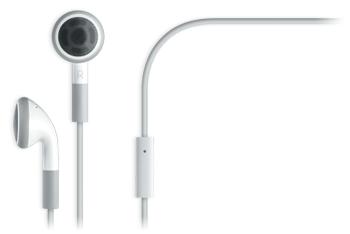
I love the hands free headset on the iPhone. Great sound, good mic, fits in the pocket. But the microphone has a terrible flaw; sharp corners. See the edges in the picture above? The microphone is just at the height of my shirt collar, so it’s constantly catching when I walk. It’s a small thing, but Apple often gets the small things right and their hardware design is why you pay the premium.

iTunes steals my computer

A few days ago I plugged in my phone to the USB to charge it. Charging my phone causes two programs to start running; photo import and iTunes. This time charging my phone also resulted in Apple downloading yet another software update. Which demands yet another reboot.

And now two days later my .mp3 and .mov files are suddenly playing in Apple’s software again. Despite my deliberately configuring my computer to use other applications and explicitly telling iTunes not to steal my file associations. Each new iTunes update I have to go back to Preferences / Advanced and uncheck “Use iTunes as the default player for audio files” again. Of course by then it’s too late, the damage has been done.

This behaviour is beyond a simple bug; I think it’s Apple’s deliberate unfair competition. Apple pushes the 1.1.2 iPhone update to prevent people from unlocking the phone, to protect their artificial monopoly. And as part of that meaningless upgrade they also “accidentally” enforce other artificial monopolies on video and audio.

I don’t want to use the Quicktime player. It artifically refuses to play videos full screen unless I pay Apple, so I use VLC. I don’t want to buy music from iTunes. I want to use WinAmp and buy my music from Amazon. And yet because I own an iPhone, every few weeks Apple’s hostile software forces me into their products. It’s wrong.

Update: I was mistaken, the update wasn’t 1.1.2 firmware but some other mysterious change I don’t want or need.
Update 2: several readers have pointed out that Windows Quicktime now allows full screen viewing in the free version. I still don’t want Apple stealing my .mov file association, though.

iPhone voicemail download

I like how my iPhone downloads voicemail for local playback. Instead of talking to some horrible AT&T phone robot to get my messages the audio files are right on the phone to play with a nice UI. There’s a slider for going forward or back, you can store messages, and you can undelete them. All very easy to use.

There are drawbacks. It takes about 60 seconds for the message to download, so if I just miss a call I have to wait a bit to listen to the message. Not a big deal. And I think I’ve lost the ability to play back my messages from a normal land line; I can’t figure out how to get to the AT&T voicemail robot for my account.

I wonder what it took to get this feature built? I’ve never heard of a cell phone doing this before; did AT&T build a custom voicemail system just for the iPhone launch?

Update: Thanks to my loyal readers I now know this feature is called visual voicemail. And yes, AT&T built it custom for the iPhone. The voicemail robot access is still available; call your phone and press * while listening to your greeting. It even syncs your message deletion, etc with the phone’s versions. Nicely done.

iPhone road trip

I drove down to LA for the weekend with my fancy new iPhone. It makes a pretty good companion on a road trip.

The most amazing change was having a little Internet terminal in my pocket with me. Every driving break I took was a chance to check my email, update my Twitter account, read some RSS feeds, check where I was going on Google Maps. This is a mixed blessing; I love staying connected to the net but the iPhone also isolates you from your local reality. Part of the fun of a road trip is being where you are right there, no matter how odd or dull or uncomfortable or totally cool. I was staring at the Internet so much I was ignoring my surroundings.

It is possible to read email and web pages on the iPhone while driving on a quiet road, but it is not a good idea. Under no circumstances could you reasonably type on the thing while driving.

Connectivity is still a problem. First you have to hook the music output to the car stereo. Thanks to consumer-hostile car manufacturers my only option is an FM transmitter. There aren’t any certified iPhone FM transmitters yet; unshielded wiring picks up the GSM tower chatter. But if you’re willing to live with a little occasional noise most of the iPod adapters work. The Apple store guy recommended the $80 Monster Cable transmitter. It worked fine, but the construction quality is awful. I’m going to return it and wait for an iPhone approved cradle.

Battery life is a problem. I think the iPhone can survive a full day of occasionally playing music and trying to keep up with far away cell towers, but I was glad to have a way to charge the thing while in the car.

The iPhone Bluetooth is mostly compatible with my Audi A6 builtin handsfree microphone/speaker. Incoming calls correctly paused the playing music and my car picked up the call. There’s an annoying noise for two seconds before the call starts. And the Audi has a problem where it only downloads contact info from the SIM card, not the phone memory. Since the iPhone doesn’t really store contacts on the SIM I’m left without my phone book in the car UI. Only a minor nuisance.

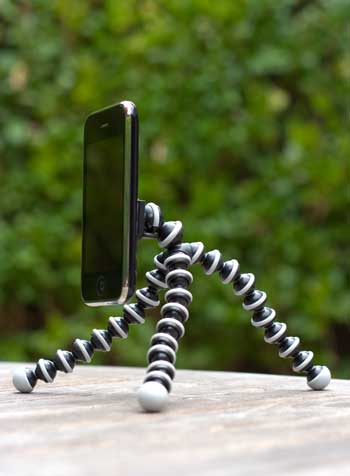
The iPhone metal case is too slippery and easy to drop. I bought an thick ugly rubber cover so my sweaty hands won’t fumble the phone while pulling it out of my pocket. I’m hoping to find a form fitting skin that’s only 1mm thick and not ugly.

Overall I really enjoyed having the iPhone with me. It really is a good enough Internet terminal that it replaces a laptop for most functions. I’m still a bit uneasy about being connected all the time; travel should be a time to go offline. I think once the novelty wears off I’ll be good about keeping the thing in my pocket unless called for.

Three way calling

Ever since I was a kid I was fascinated by the idea of three way calling, talking to two different phone lines at once. I fondly remember in 1985 being hacked into some phreak conference call that also had chains of three way calls hanging off it, I felt so cool.

Thanks to the magic of iPhone three-way calling is easy enough that I can actually use it. Most cell phones have been able to do three-way for years but I’ve never figured out how to do it with a traditional awkward phone UI. I’m always afraid I’ll hang up on someone rather than flash the hook or I can’t figure out how to rejoin the calls or whatever. It’s just too hard.

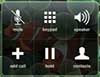
Three-way calling couldn’t be easier on the iPhone. During a call the screen has a bunch of buttons on it. Tap the “add call” button to put party #1 on hold and call party #2. Now there’s a button “merge calls”. Tap it and now everyone’s talking. The screen even shows you the contact names of both parties.

Amazing how easy things can be when you have visual feedback and more input mechanisms than almost hanging up on people.

iPhone’s silent switch

While the sleek touchscreen defines the iPhone’s design, one of the things I like about it are the simple mechanical buttons on the side. There’s a dedicated volume rocker which instantly makes the iPhone a better music player than any iPod. But even better is the silent mode switch, an old fashioned mechanical two position switch. Slide it away, feel a satisfying click, and your phone is now in silent mode. There’s even an orange dot visible for visual confirmation.

You can measure the disaster of cell phone UI by how many button presses it takes to silence the damn ringer. My first Nokia phone took 2, the Ericsson took 3, and on the RAZR it’s like 17 button presses. You don’t need silent mode often, but when you do you need it quickly and without a bunch of screen reading distraction. The physical switch for that is lovely.

My Star Trek PADD

Remember in Star Trek where the unnamed ensign would walk up to Captain Picard or Sisko and hand him a datapad to quickly look at the day’s orders for a quick approval? Not Kirk; his unnamed ensigns were foxier but all he got was a busted old aluminum clipboard. I mean the PADD, the Personal Access Display Device, the super futuristic thinscreen tablet computer thingy that served the role of notepad in recent Star Treks.

My iPhone is exactly like that.

My early morning coffee + newspaper + cat ritual now has a new addition, my PADD. Quick email check early in the morning with my super futuristic iPhonePADD. There’s something very appealing about the smooth face of the device and the great screen that makes it welcome even in a bleary eyed morning.

Props to goldman for his lightning nerd memory of the name PADD

iPhone “applications”

I’ve noticed a curious word usage on the Internet; the discussion of iPhone “applications”. As in, “iChess is a great iPhone application” or the iPhone “can do mass storage and IM with help from other apps right now.”

News flash: you cannot add applications to your iPhone. Apple has made the hostile decision to keep the platform closed. You can load web pages with Javascript, however. And sometimes a web page feels like an application.

It’s still awfully early, but there are already a lot of iPhone webapps out there. What’s emerging is an iPhone webapp has a page that looks good at 320x480, automatically navigates to an internal anchor to scroll the viewport past the address bar, uses iPhone style graphics and fonts. And most importantly, loads a lot of content in a single page so you don’t have to keep going to the slow network. The Digg iPhone page is a good example of these principles.

I’m delighted there are good webapps on the iPhone. But they are not real iPhone applications. They can’t access the cell phone, or SMS, or your music, or the camera, or your contact list, or your notes, or your calendar, or your photographs. They’re just web pages. Users should demand better from Apple for their $600 phones.