Some Bits: Nelson's weblog

Travel postcards

Major new product in the Nelsonsphere: my travel postcards. Our recent cruise to Italy, France, and Spain is a good example to start with. I plan to keep updating this going forward.

I collected social media posts for 41 different trips I’ve taken in the last fifteen years. I think of each post as a postcard: a little thought in the moment, hopefully an image. When collected each thread becomes a diary of a trip and the collection as a whole is a summary of much of the travel Ken and I have done. It’s a lot, some 1900 photographs!

I started tweeting travelogues back in 2009 or so but only got intentional about these as a sort of diary a few years ago. So the newer ones are better written.

I’ve got technical notes on how I built this using AI coding. It’s pretty straightforward with the recent Mastodon threads, it’s basically just a thread unroller. But for older posts I had to do some heroics with heuristics to identify travel tweets. And lots of image recovery involving using the Wayback machine and Flickr and Google Photos archives to find my originals. I might have managed the basic unroller on my own but I never would have done all the archive retrieval without an AI’s help.

Angkor Wat resources

I took an amazing trip to SE Asia last month, including Angkor Wat. I had a hard time finding good reading or other resources to learn from before I went, in part because Amazon is awash in AI garbage. Here’s some books and podcasts I found useful about the Khmer empire in general and Angkor in particular:

Ancient Angkor by Michael Freeman and Claude Jacques. The closest thing to a coffee-table book to preview what you will see. The practical information is outdated but the pictures and descriptions are good.

Empire Podcast #185: The God Kings of Angkor Wat by William Dalrymple and Anita Anand. An entertaining and fully detailed account of the Khmer empire. It’s basically an excerpt from Dalrymple’s new book The Golden Road: How Ancient India Transformed the World.

Fall of Civilizations Podcast #5: The Khmer Empire by Paul Cooper. Another history, not quite as magically well told as Dalrymple but full of good information.

Angkor and the Khmer Civilization by Michael D. Coe. A highly recommended history of the Khmer region. Honestly I found this very dry and too detailed, but I did learn from it.

Lonely Planet Pocket Guide: Siem Reap & the Temples of Angkor. We didn’t use this much but it seemed like a useful practical guide. OTOH it dates to 2018 so things have changed.

My other advice for visiting Siem Reap and Angkor is: go. It is amazing. Plan for at least two full days of touristing there. Hire a private guide and driver if you can, it is absolutely worth it. (Email me for a recommendation.)

The Transcantábrico Train

We recently took the Transcantábrico, a week long luxury train trip across Northern Spain. It was great! Like a cruise but on a train. We did something similar in India in 2015 and it’s an interesting way to travel. Some photos here.

The Transcantábrico goes across a part of Spain a little off the usual tourist track. From Santiago de Compostela through the mountains south of the coast to Donostia / San Sebastián. Along the way we saw towns I never would have gone to on my own: Gijón, Potes, and Santillana del Mar were particularly memorable. Also some beautiful nature including Cathedral beach in Gallegos and Hermida Gorge in the Picos de Europa. The excursions from the train were well organized with a very nice bus and guides.

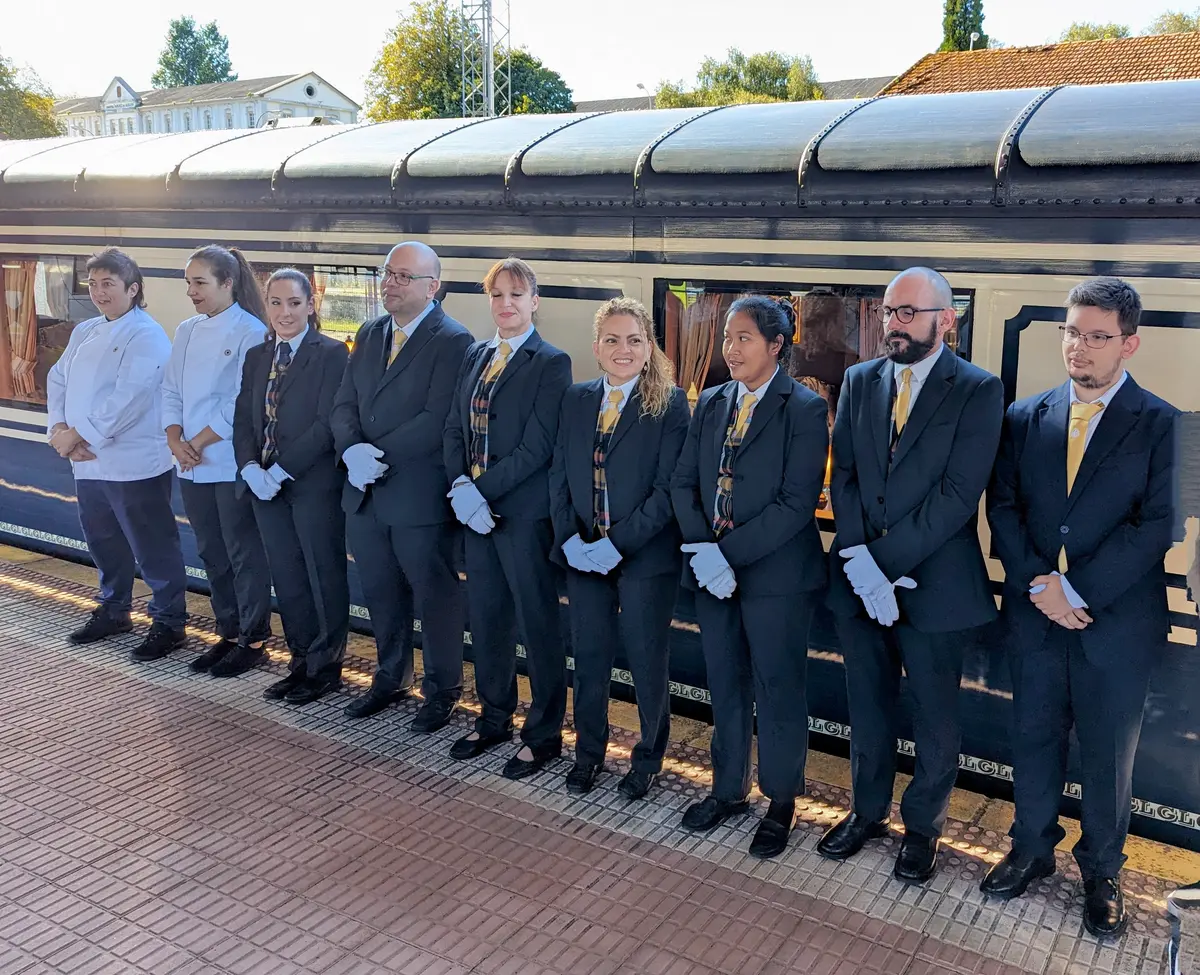
The hospitality on the train was terrific. Our “cruise director” Cristina was particularly amazing, friendly and knowledgeable. All the staff were great and very accommodating. Maybe 12 people helping 25 guests. Meals on the train were excellent and comfortable. Most days breakfast and dinner were on the train, lunch was out. The restaurants were all high quality but variable and honestly just too much food. The highlight was El Corral del Indianu.

Living on a train has its limitations. The private shower was very nice with lots of hot water but you’re still washing in a telephone booth. The queen size bed was comfortable but in a very tight space, we wished we’d booked two single beds. And getting around the train was difficult (you have to move sideways in the corridor), particularly when the train was moving. After a week I was ready to be back in a normal hotel. OTOH it was beautifully furnished and it was great being unpacked and taken care of so well.

I’d definitely do another luxury train. But maybe fewer days. The key thing is the itinerary, the places to go. That was amazing in India, a week long trip from Delhi to Mumbai. Spain was beautiful and I appreciated going slowly through a place off the beaten track with knowledgeable local guidance. Rewarding trip!

PS: if you want to see more, Mighty Trains S04E02 is about the Transcantábrico.

Austria 2022

Ken and I just got back from a 23 day trip exploring most of Austria. We had a lovely time although we did get a little worn out and ready for home after a couple of weeks. Along the way we stayed in Vienna, Graz, the Wörthersee, Zell am See, Innsbruck, Salzburg, Hallstatt, Linz, and Dürnstein. A nice mix of cities and countryside. I tweeted a bunch of postcards, easily viewed here and here.

My favorite places were the town of Graz and the countryside in the south from the Wörthersee through Zell am See to Innsbruck. The drive over the Grossglockner Alpine Road was a particular highlight and the lush green alpine valleys of Styria, Carinthia, and Tyrol were just a delight. Salzburg was also a very good visit. Linz was an industrial disappointment and Hallstatt was tourist hell; skip it unless you are very interested in the archaeological story.

We ate very well on this trip; Austrian cuisine is more interesting than the schnitzel-and-boiled-beef that was my stereotypical view. Lots of fresh fall ingredients. The pumpkin cream soup was particularly good. Enhanced with Kürbiskernöl, pumpkin seed oil that's deliciously nutty and green tasting. And of course plenty of fantastic sweets; the French call pastry viennoiserie for a reason. The single best meal we ate was at Pfefferschiff in Salzburg.

Smithsonian African American museum

I went to DC a few weeks ago and visited the National Museum of African American History and Culture. It is an excellent pair of museums, I strongly recommend anyone visiting DC make it a priority. It’s still free and still a hot ticket but easier to get in to than before. If you’re going in summer reserve tickets three months in advance for your best experience. But you can also get same-day tickets and walkups, particularly outside of peak season.

The museum is clearly designed as two separate sections. Downstairs is history, upstairs is culture. The bottom half of the museum is a fantastic history of African Americans from the earliest days of slavery, through slave uprisings, emancipation, Jim Crow, and the Civil Rights era. It’s ambitious. It will leave you exhausted at the end with no energy for the other half of the museum, the cultural museum. Which is also fantastic, a celebration of African American cultures. Food, textiles, sports, music, TV. I mean, they have the goddamn P-Funk mothership! It’s a lot of fun. Definitely also worth a visit, but plan a break for lunch or something in the middle.

I approached this museum from the background of having visited a lot of German museums about Nazi history. I was wondering how the Smithsonian would deal with America’s enormous crime against humanity. Thoroughly and honestly, but very differently from the German museums. The Nazi memorials tend to a direct documentation of how the genocide and other crimes were conducted. They are focussed on a recent history in living memory, and one that is meticulously documented in precise bureaucratic detail. By contrast formal American slavery is 150+ years old and there’s precious few direct records of, say, individual slaveholders and their daily abuses. The historical distance demands a different telling. Also the Smithsonian has made a decision to tell as uplifting a history as possible; in every room details of African American resistance, strength, and heroism are highlighted. I think that’s admirable but it doesn’t leave a lot of room for documenting the horrible abuses. Those are documented, but only as one facet of the whole museum.

So I was a little conflicted. Honestly I think America needs a fully uncomfortable museum about slavery where the abuses are the focus. How American people and government worked to subjugate other Americans, to keep them and their children in slavery. Far too many people still think that slavery wasn’t really that bad, or wasn’t really Americans’ faults, or that slavery is over so what’s the big deal now? The German museums exist to ensure that no German can be at all confused about what happened in the Nazi regime and could never consider even slightly lionizing that era. Plenty of Americans still celebrate Confederate "heroes" and do not admit to the horrible abuses of slavery, not just in its time but the echoes of it today. I fear in softening the message the Smithsonian does not do enough to communicate how horrible American slavery was. There are a couple of museums that are more focussed on the mechanisms of abuse which I need to visit; the Whitney Plantation near New Orleans and the Lynching Memorial in Montgomery.

One other thing I can’t let go… Nazi memorials in Germany are in no way museums of Jewish culture. They are museums of German history. The Smithsonian has chosen to put museums of both Culture and History together in one place. I think they’ve done an excellent job of it. The separation of floors makes for a separation of concerns. And I like the uplifting message in the history section, the story of how African Americans shall overcome. So the combination works, but it still makes me uneasy.

Mexico City restaurants

Mexico City is famous right now for its food culture. From the temples of fine dining like Pujol to casual street tacos people love to eat well in CDMX. I made thorough notes on all the places we ate on a short trip. My favorite places were Carmela y Sal, Corazón de Maguey, and Taqueria Califa.

Cafe Tacuba for lunch. Our tour guide suggested this as something near the Cathedral. I really liked it, a funky throwback cafe with a nearly ossified traditional Mexican menu. Honestly the service was a bit off and slow, but that was offset by the place being so retro and comfortable. I liked my chile rellenos quite a bit although I would have traded one of the two enormous chiles for a more complex sauce. Ken’s enchiladas tapatías were good.

Carmela y Sal for dinner. We told some of the hotel staff we were going here and they were all very excited; apparently chef Gabriela Lugo has made quite an impression in town. Us too, this felt like the exciting, trendy, yet comfortable kind of place that everyone says Mexico City is great for. The highlight dish for us was the "liar’s tostadas", a vegan preparation of coconut doctored up to taste like crab pork. Delicious on their own merits even without the hilarious cooking trick. My Poc Chuc was also fantastic, as was Ken’s creamy canneloni. Great wine list too. This restaurant was where we figured out Mexican portions are huge, we ordered way too much food. As dining mistakes go that’s not so bad.

Corazón de Maguey. Our tour guide took us here for a mezcal tasting; they are serious about mezcal here. Which was great, it’s interesting to taste a bunch of mezcals against each other. Nice restaurant too, good basic Mexican vibe with a leaning towards Oaxacan cuisine. I loved the Coyoacán neighborhood this is located in, the restaurant is right on the lively main park / square that defines the neighborhood.

Capital Grille. We decided we might want some familiar American food one night, and who doesn’t like a good steak? They delivered well here, although other than a couple of Mexican cocktails we could just as easily have been in Duluth or Miami or Toronto. Was nearly empty on Saturday night other than a lunch party that’d started 7 hours before; I suspect this is a businessman’s dinner kind of place. If you want a US steak at US prices go here, otherwise go somewhere Mexican!

Taqueria Califa. Casual and fast tacos but in a nice well lit place with table service. Certainly a good choice for gringos who want street food but are nervous about it. My favorite here was the classic tacos al pastor; with fresh onion, cilantro, and pineapple setting off the roast pork so well. Great place for a quick snack or casual full meal.

Porfirios. Dinner at a hilariously trendy / fancy restaurant. I think every single table had at least one tableside preparation, whether molcajete or something set on fire or the lady wheeling around a street corn sign. Great looking grilled steaks and shrimp, but we stuck with simpler chiles rellenos (good) and enchiladas mole (too sweet). This seems to be a place wealthy locals go to celebrate. The lighting in the restaurant is tragic though; so dark all the waiters have flashlights handy for reading menus but then also a super bright TV in the bar annoying everyone having dinner. On the balance I think the theater of it overcame the quality of the food. It was fine, but I wouldn’t go back.

Restaurante Meztli. Not in CDMX but rather right next to the pyramids at Teotihuacán, a good spot for thirsty tourists. Margaritas, micheladas, good guacamole and enchiladas. I can’t say it’s anything special but for the middle of a tourist zone it was quite good. The owner was super friendly, too.

Zanaya restaurant at the Four Seasons. Traditional Mexican, not great. Dinner felt more like an obligatory hotel restaurant than a place someone was running with love. Absolutely beautiful outdoor patio in the hotel’s magnificent garden courtyard. Sadly we had to sit inside which is not nearly as nice, despite the cool retro tile. Good cocktail list but the food seemed a bit ordinary, certainly not elevated. Definitely would not make a trip to dine here. (Breakfast here was good, but is a whole different thing.)

So those are all the places we dined. In addition I polled friends for places to go, here’s a list sorted by popularity: Pujol, Azul, Lardo, Tetetlan, La Clandestina, Alba in Roma Norte, Quintonil, Casa Hevia, Brassi, Dulce Patria, Casa Virginia, La Docena, Chureria El Moros, Rokai, Elilsito, La Capital, Lucerna Comedor, Rosetta, Masala y Maiz, Contramar, Maximo Bistro.

Mexico City

For my birthday this year we visited Mexico City in early March. It was great! I enthusiastically recommend it to anyone who’s interested in going to a big city that’s vibrant and has a long great cultural history. Also relatively inexpensive for American wallets. We went for four days and that was a good taste of the city. But there’s so much to do and enjoy I could see spending much longer, particularly if you start getting into neighborhoods and enjoying daily life.

There’s some photos here on Twitter. I didn’t do as good a job taking pictures this trip as I usually do.

I have to confess this trip was a bit of an education for me. I grew up in Houston with severe prejudice, so much that "Mexican" sounds like a slur to me, not a description of nationality. I think I’ve grown past the outright bigotry but my brief tourist jaunts across the border and on the coast didn’t really cure me of the idea that Mexico was somehow lesser. Mexico City is a whole different thing, a sophisticated international city bustling with life and excitement. Sure some taxis will rip you off and as a visitor you probably shouldn’t drink the tap water. But it’s a home to 21M people, fully modern, and full of excitement and modern culture and history and great food. Also people seemed very friendly, relaxed, and welcoming. I’m looking forward to going back.

We stayed at the Four Seasons which treated us very well. This hotel’s rooms all front on an enormous central courtyard so it’s quiet and beautiful. Service was excellent. Didn’t love their casual Mexican restaurant for dinner although breakfasts were great.

We booked this trip with a tour guide and driver via Journey Mexico for four full days. It was great; we saw a lot more than we would have on our own and understood more about what we saw. It was also exhausting and I think next time we’ll probably plan half days, stop at lunch. It’s an expensive way to travel but you can get a lot of the same value by hiring tour guides day by day and taking Uber everywhere. Here’s what we did:

Day 1: City Centre. The Templo Mayor museum, the Diego Garcia mural at the National Palace, and a quick visit to the San Juan Market. (We were supposed to see the Cathedral and the Palacio de Bellas Artes too, but skipped them). The museum offered us a remarkable view of historical Mexico City, the way the new city was built right on top of the old Aztec temple center. And the Diego Garcia mural is phenomenal, you can get something of a view of it here. I wish we’d spent more time just walking around the streets and less at the Templo Mayor, but we were moving slow. Fun retro lunch at Cafe Tacuba.

Day 2: Rivera/Kahlo/Trotsky and Coyoacán. The highlight here was visiting the Casa Azul, a privately run museum about Frida Kahlo at her home. The exhibitions were quite good and personal. Huge line to get in, even with advance tickets. We also visited the Rivera and Kahlo studio which was interesting architecturally but the exhibits are not so exciting. OTOH the Trotsky museum was fascinating; I had no idea Trotsky lived in exile in Mexico City and met a dismal end with an ice axe stuck in his head by a Soviet assassin. All these sites are near each other in the southern part of the city in the absolutely charming Coyoacán neighborhood where we had a great lunch and mezcal tasting at the Corazón de Maguey.

Day 3: Chapultepec Castle and the Anthropology Museum. The castle is a walk up a big hill but the views and exhibits are worth the effort. A preserved vestige of Hapsburg and French meddling in Mexican politics, the brief-lived Emperor of Mexico. Unfortunately that left us without enough energy for the anthropology museum, one of the best in the world and the very best for Mesoamerican history. I want to go back to Mexico City just to spend a couple of days slowly working through its treasures. For lunch I had the best tacos al pastor of my life at Taqueria Califa.

Day 4: Teotihuacan. An hour drive NE of the city, Teotihuacan is an enormous archaeological site of a city that lived from 150 BC to 600 AD. At its height it had some 200,000 residents, making it one of the largest cities in the world. It’s totally worth the drive to visit, particularly to see the reconstruction of the 2.5 mile long Avenue of the Dead and the scale of the Pyramids and Temples built alongside it. There’s also a lot of beautifully preserved original carving and painting on-site to see and a small museum of artifacts. If you want some companion reading this recent museum exhibition catalog is very up to date and has both great text and photographs. Lunch was nearby at the surprisingly good Restaurante Meztli.

In the evenings we went out mostly to fancy restaurants. See my companion blog post for more, but our favorite was Carmela y Sal. Our trip was a nice mix of ancient history and recent. If I had to pick three highlights off the list, I’d say the Diego Garcia mural, the Casa Azul, and the anthropology museum. What I wish we’d done more of was just getting into the town, walking around and enjoying neighborhoods and cafes. But that takes more time and local knowledge (not to mention language) than we had this first visit. But I’m sure Mexico City is a place I will happily return to, enjoy and experience more.

The Späti

One of the conveniences of Berlin city life is the Späti or Spätkauf, the local convenience store. It’s like your corner bodega in New York, a little market that sells essentials and is nearby and open late. Beer, newspapers, fresh baked goods, condoms, a couple of cooked meals, some minimal groceries. There’s one on nearly every block.

It’s particularly useful in Germany because laws and customs strictly limit how late stores can be open. For instance almost no one is open on Sundays, including grocery stores, without special exceptions. But somehow the neighborhood Späti is open every day, often 6am to 11pm or some even longer. The name literally means “late store”.

In nice weather the Späti often have a couple of tables outside. And there’s no rule against drinking beer outside so they become a low cost alternative to going to a bar. There’s even Späticrawls where people spend the evening wandering between their favorite Spätis drinking beer on the way.

One other handy thing about the Späti, they often double as a formal package receiving service. My local has a deal with Hermes where a package can be delivered to them and they’ll hold it for a week. Fairly serious system for pickups too, an ID check and a signature and a record made. Amazon is happy to deliver to these so it’s easy to buy things from them in Berlin.

Portland

I had a nice two week visit to Portland. I have fantasies about moving back there so I indulged that for a couple of weeks renting a house like I dreamed about when I was in college right near Hawthorne & 39th (now Cesar Chavez). My Wanderings app captured where I went.

Mostly a lot of hanging out in SE, with a couple of trips to downtown and once out to NE. A lot of the activity is dining. Some of the best places I went were Teote for beer in the back garden, Pok Pok for fantastic Thai, and Coquine for fine dining out by Mt Tabor. Also nice experiences at Xico, Afuri, Tasty ‘n’ Alder, Han Oak, The Imperial, and of course the Rum Club. The food and beverage situation in Portland is really great and has been for a few years now. The economics are such that restaurants can do interesting things without having to charge outrageous amounts for it. Lower risk for everyone = more interesting food and drink.

It’s great fun to visit Portland and see all my old and new friends. I’m amazed how many people have moved there; only about ⅓ of the folks I know in Portland were from my college days. I still can’t really move back to Portland, too many roots in California. But I like the idea of visiting and staying in AirBnBs in SE more frequently. Particularly in the four months of the year the weather doesn’t suck.

German elections 2017

The big surprise from the German elections was how bad Merkel and the ruling CDU did, and how well the deplorable far-right Alternative for Germany (AfD) party did.

Berlin is a lovely city, very optimistic and international. It also has little patience for AfD bullshit; I saw no AfD signs anywhere until two days before the election, and those only way up high out of reach on poles. There was a big demonstration last night in Alexanderplatz after the election; the AfD were having their party there so a few thousand Berliners turned up to, um, help them celebrate.

Some links that may be of interest

Now for the coalition negotiations. It’s not clear to me if the SPD saying they won’t join one with the CDU a negotiating tactic or if they mean it.

Berlin after ten days

Ken and I are in Berlin for a few weeks, sort of working vacation. Been here about ten days now and have some impressions.

I’m really liking daily life in Berlin. We have an apartment in Prenzlauer Berg near Kollwitzplatz, a bougie neighborhood in former East Berlin. It’s all leafy streets and 1920s buildings and is totally charming. The nearby streets are full of cafés and restaurants and Kollwitzplatz itself is home to a terrific weekly farmer’s market. It feels worlds away from the inhuman scale 1960+s architecture you see in so much of central Berlin.

One thing I particularly enjoy in Prenzl’berg is how international it is. New York bagels, French cheese shops, English laundry, Vietnamese restaurants, Russian cafés, yesterday I had an Argentinian empanada in a repurposed 19th century brewery. I mean it’s still Germany, there’s a 100 year old kneipe just across the street from us serving Rinderouladen and Pils. But it’s also global and progressive. Which not only makes it easy for an American to get by but also makes it fun and not a historical museum like sometimes Paris can feel like.

I also appreciate being in a city with working public transit. And without thousands of dangerously insane people living on the streets. Having a bit of insulation from Trumpism helps calm the nerves. Big parts of life function better in Europe.

I’m also feeling a little unsettled, a phase I go through every time we do these long visits. A struggle between the feeling I should go out and be a tourist every day, consume the city in the short time I have. Against my desire to sit at home on my comfortable laptop and do my regular daily routine just like I would at home. Of course the happy medium is in the middle, some of each.

One goal I set myself for this time in Berlin was to learn more about older history. So much of Berlin is dominated by 20th century history, the Nazis and the Soviets. And that stuff is important and well represented. But I feel like I understand it from previous visits, so this time I’m looking for traces of 19th century Germany, of Prussia’s great gay king from the 18th century, of the very old city back when Cölln was a separate town. Learning the city from the time the waterways were the travel routes, not the U-bahn lines.

Urban Nation in Berlin

A new “urban art” museum just opened in Berlin: Urban Nation. Judging by their opening weekend show it is a fantastic collection of modern street art. I put a few photos of the works I saw on Flickr.

The event had an “art mile” with some temporary sculpture installations. Also some magnificent large scale street art works on Bülowstrasse itself, hopefully those will last awhile. I particularly liked Zezão’s alien calligraphy forms. Also liked some of the wildcat street art, I think a few lesser-known artists got some unauthorized paint up.

The museum show had a really thoughtfully selected overview of the best of modern streetart. C215, Deih XLF, Dalek, the obligatory representations by Banksy and Invader and Fairey. It’s terrific a museum is collecting these from all over the world; whoever is curating seems very plugged in. I wonder who’s funding the building and collection; the website only mentions some city of Berlin funding.

London and Portugal

Ken and I went to Europe a couple of months ago. I spent a few days alone in London, then we spent a couple of weeks together in Portugal. So really two trips, but here in one blog post. As always Twitter has my memories and photos: here’s a Storify collection from London and another from Portugal.

My first time in London and I enjoyed it, would love to go back. I spent two full days at the British Museum. The part I remember best is the Enlightenment Room, a collection of miscellany presented as if you were in an 18th century library. It perfectly captures the optimistic spirit of the Enlightenment. The best part of Empire, when British scientists felt they could understand everything but collecting objects from all over the world and studying them. A good place to start a visit before seeing the grander “transported” treasures in the galleries. (My favorites of those: the Assyrian galleries and the Aztec masks.)

Portugal was great. We spent a week in Lisbon and Porto and another week poking around the countryside. Porto was my favorite place; a small city with beautiful topography and a lot of youthful optimism. I becamse fascinated with azulejo, the painted tile that’s a centuries-long tradition. Our visit to the smaller towns wasn’t as successful; Portugal still is a relatively poor country and the vernacular of food and accomodation is variable. But I’m glad we go to see some of the more remote monuments and the countryside was quite pleasant.

Oktoberfest crowd tricks

Oktoberfest is a remarkable event; 100,000+ people together drinking heavily, and yet few problems. It’s crowded though, so crowded your neighbor’s back rubs gemütlichkeit against yours at the beerhall. If you can find a place to sit. I don’t love crowds, here’s how we coped.

Go when it’s less busy. It’s not complicated: weekdays and earlier in the day are quieter. Monday early afternoon was pretty mellow, by which I mean the tents were only 75% full.

Consider a small tent for dining. After drinking our fill at the Augustiner tent (population 8500) we wandered off and found a tiny restaurant tent that sat 200. Most of which were staff on break from the Ochsenbraterei tent next door. It was still festive but plenty of room to have a comfortable lunch.

Drink wine! When the crowd got too much we found our way to the Weinzelt tent. It’s a big tent but an odd one, serving mostly wine. It’s a bit smaller, maybe 2500 people. Best of all instead of back-to-back benches, everyone sits at their own booths for 8-10 people max. Way more comfortable. Great music and party too! The drawback is that it’s expensive; 75€ for a bottle of wine instead of 11€ for a liter of beer. But it’s a good choice if you want to trade off money for comfort.

Scotland 2016

Ken and I took a lovely tourist trip to Scotland. Here’s a Storify of photos and comments; I tend to use Twitter like postcards while travelling, it works great for that. Scotland is a nice mix of modern European city and remote coastal landscapes. And so green! (And rainy.) Our trip broke down into two kinds of experiences: cities on either end, and lots of driving around the west in the middle.

We started in Edinburgh, a wonderful city. Highly recommend 3+ days in that city, it’s just beautiful and lots to enjoy. We ended the trip in Glasgow, which was also great. They say Edinburgh is the pretty sister. But Glasgow is the sister you’d want to hang out with in the pub. More of a regular city but a vibrant one with lots to offer. Also a city on the upswing.

Our countryside trip started with a couple of nights in Inverness. There’s not much to the town but it’s a convenient base for travelling to Speyside in the east and Loch Ness and the Great Glen to the southwest. Culloden made a big impression on us, the historical monument there is very well done. Loch Ness was a bit of a letdown, it’s just like all the other beautiful lakes in Scotland only this one is full of tourists so you can’t park to see anything.

The Isle of Skye is primary recommendation if you want some remote countryside tourism in Scotland. It’s beautiful and the northern parts feel very remote and sparse, the landscape reminded me a bit of the Faroes. Only there’s lots of hotels and restaurants and decent enough roads. The Clan Donald visitor center made a good impression too, much smarter than you’d expect a family-funded history museum to be. Most of the western part of the trip was just driving around remote roads from beautiful site to site. Lots to enjoy.

We stayed in some fantastic hotels along the way, see the map link above for details. Also ate at some great restaurants. The finest meal of all was at Martin Wishart in Loch Lomond, excellent Michelin star level food and service that executed perfectly. For less demanding dining we very much liked the Scran & Scallie in Edinburgh and the Ubiquitous Chip in Glasgow.

Maui and Oʻahu

Just got back from vacation in Hawaiʻi. Last time was the Big Island, this time was Maui and Oʻahu. Here’s some photos and tweets.

Maui is rural and full of natural beauty but with some upscale tourist hotels as well. We stayed down in Wailea which has nice resorts, restaurants, and beaches. We also drove all over. The famous Road to Hana made much better with this audio guide, although I regret not planning more time to stop and go swimming in the waterfall pools. Also Lāhainā which is interesting for its 19th century history. The helicopter tour of Molokaʻi was also phenomenal.

Oʻahu is much more urban. The North Shore has some nature but we never left Honolulu. Waikiki is remarkably convenient for a simple carless visit, I totally understand why people go just there for short vacations, but then Hawaiʻi has so much more to offer than one tourist mall! One highlight of Oʻahu was the Heart of the USS Missouri tour at Pearl Harbor, crawling around the engineering rooms of a 1940s battleship. The other was the Bishop Museum’s phenomenal collection of Hawaiian cultural artifacts, made more special by visiting with a friend who is an anthropology professor. We’re not really relax-on-the-beach tourists so it was nice to have some more organized activities in Honolulu.

We are food tourists though! Got some great advice from folks. On Maui my favorite meals were at Monkeypod and Mama’s Fish House. Spago was also very good although not particularly Hawaiian. On Oʻahu the most interesting local meals we had were at The Pig and the Lady and Mud Hen Water. We also really enjoyed Hy’s for wood-fired steaks and La Mer offers an excellent fine French dining meal.

Some notes on the Louvre

The Louvre is one of the world’s great museums. It is enormous and full of riches and totally worth several repeated visits. I particularly like the sculpture, but I discover something new every time. The Louvre is also a poorly designed tourist experience. Some notes below on making it better.

My discovery this last visit was the Marie de Medici cycle. Phenomenal series of 24 enormous Rubens paintings of the life of Marie de Medici, commissioned by Marie herself in 1622 for the Palais du Luxembourg. It’s painting on a scale that can only exist in a place like the Louvre. The story they tell is fascinating, you could spend a whole day looking at these paintings with Wikipedia’s competent explanation. Long story short she married the King of France and took over as regent when he died. When her son wrested power from her she was exiled. Part of her securing her legacy was having Rubens make these elegiac paintings telling her side of the story. They’re particularly unusual in that it’s a woman being lionized. They are fascinating. And being Rubens, they are amazingly well executed.

My other discovery at the Louvre was how difficult it is to get inside the door because of the security theater. This article describes your options. The tacky Carousel de Louvre mall seems best. While it only has a single security line, it has fewer visitors. The fancy main entrance is an hour+ disaster, the Porte des Lions is often unstaffed, and the Rue Richelieu entrance requires a hard-to-buy advance ticket. Past security, the fastest way to get a ticket is from an automated machine. Don’t follow the sheep; look for the machines without a line.

Once inside the Louvre not everything is available; rooms are regularly closed. Why? Hard to say, but much of it appears to be staffing. Also be sure to check the Louvre is open at all; sometimes some part of the staff goes on strike and the whole museum is closed.

One should approach the Louvre with a plan but I never manage. “Avoid the crowds” is a good heuristic; the Mona Lisa is lovely but the experience of shoving in to see it is not. This time I amused myself taking bad snapshots of painting details: one and two. Next time I should finally get to their ancient Egypt collection.

One last thing: a plan for lunch. You need a break. Unfortunately there is no longer a good proper restaurant in the museum, just some mediocre cafeteria options. We did well heading outside to the Brasserie du Louvre, surprisingly well really. Best salade niçoise I’ve had in awhile.

India 2015

Ken and I went to India in February, a three week wealthy tourist’s trip. Absolutely loved it, would like to go back, enthusiastically recommended it. I documented most of the trip on Twitter as I went. I collected all the tweets in a Storify page; quite readable with lots of photos.

Our trip started in Delhi. From there we took a luxury tourist train through Rajastan for seven days to Mumbai. Then flew to Kolkata, then to Varanasi, then back through Delhi to home. So many amazing experiences. Some tourist sites that stuck with me most are the Qutb Minar in Delhi, the Jantar Mantar observatory in Jaipur, the Elephanta Caves in Mumbai, the Marble Palace in Kolkata, and offerings to Shiva in Varanasi.

But what really struck with me is newfound respect for the sophistication of India. I had no idea what to expect. India is an enormous place. With a very rich and complex cultural history and a colonial period that was not entirely rapacious. Modern India is a dynamic, exciting, upwardly mobile place. With nearly 1.3 billion people. We all know China is the up-and-coming economic story but India is close behind it. I met a lot of Indians with pride, pride in their cultural history, in their intellectual history, in their new prime minister.

On a more mundane level I also came away with excitement for the diversity of Indian cuisine. The Indian food we get in the US is one specific type of cuisine: Mughlai, butter and cream and earthy rich flavors. But there’s a huge variety of other foods. Coconut milk in South Indian cuisine, sour fruits and shellfish in Kerala cuisine, strong mustard sauces in Bengali food. A particularly great day was cooking lessons in Delhi with the author of a Chettinad cookbook. There’s a lifetime of technique to learn just in the art of tadka, the way spices are precisely roasted or fried at various moments in preparation.

Paris 2014 notes

Ken and I went back to Paris for the first time in a few years, visited a bunch of old favorite spots. Some sadly in decline (Le Caveau du Palais), some still good. And a couple of new experiences.

Auberge Pyrénées Cévennes
Rustic, hearty restaurant. Specializes in cassoulet presented with pride in giant copper vats. It was a delicious cassoulet and definitely satisfied our hunger for same but I have some reservations. Cassoulet is never a light dish, but the quarter inch of grease floating on top of my bowl was a bit troubling. OTOH the goose leg confit was just amazing. Comfortable room, nice people, I will gladly go back.
Au Bourguignon du Marais
One of our old favorite restaurants, still delicious food. It’s a bit more interesting than the usual bistro menu, well prepared and with good wines. We went on a Saturday night and it was intensely crowded and about 80% tourists, which put us off a bit, next time I’ll go at a quieter time.
Le Relais de l’Entrecôte
Another old favorite, the basic steak frites experience. Perfect lunch for a day of wandering around Saint-Germain-des-Prés.
Ma Bourgogne
A fine bistro under the arcades of the Places des Vosges, this has been one of Ken’s favorites for years. Personally I thought it was good but nothing particularly distinguishes the food. Reliable and pleasant though, and you can’t beat the location.
Taillevent
One of Paris’ famous temples of food, two or three Michelin stars for years and years. I go back and forth on how I feel about this place. It’s a bit too traditional, uninspired in the kitchen. There’s no complex molecular gastronomy and radical flavor combinations you’d expect from high end chefs. On the other hand every single experience I or my friends have had there has been excellent, something I can’t say for some of the other super fancy restaurants in Paris. So I enthusiastically recommend it if you want to experience the very pinnacle of a French dining experience, albeit without being on the forefront of gastronomic exploration.
Hotel de Vendôme
Good luxury boutique hotel with an excellent central location, friendly staff, and very comfortable rooms. Also terribly expensive, although for this class of hotel it’s better value than you get from the competition. Sometimes you can get lucky and get a pretty good rate (€350 / night), particularly mid-week. The furnishings are starting to feel a bit worn and the Internet didn’t work as well as it should, so not perfect.
Musée Carnavalet
The Paris city museum, the quirkiness of random stuff the city has collected makes it one of my favorites. It’s not well organized, the quality varies highly, parts of the museum are closed at random intervals because someone went to lunch. But there’s a feel of discovery in the museum, finding an unexpected 1871 painting from the Commune or a beautiful wooden cradle in the shape of a boat or a collection of 25 little busts of Spinoza. It helps that it’s free and situated in the Marais where you’re probably wandering around anyway. You can just pop in for 30 minutes and see a couple of rooms, then leave without feeling like you had to see everything.

Discouragement: Paris street art 2014

I’ve loved the street art in Paris. So many fun discoveries, random art in unexpected public places, some beautiful works by Mesnager, L’Atlas, C214, Space Invader, Miss Tic, and so many more. Sadly, my visit to Paris in 2014 was a bit more discouraging.

The bits I’ve found in the posh parts of town, the 1st, 2nd, 4th, and 6th have been interesting. But a lot of work I remember is gone. Many suspiciously blank spots where there used to be invaders, or interesting affiches, or other things. It feels like someone went and cleaned many of the streets.

Also a very discouraging walk through Bellveille; see my Flickr photos. It’s always been a grimy neighborhood, it’s part of the charm, but the street art there has taken a turn for shitty tags over clever site pieces. And the amazing old gallery at La Forge / La Kommune is completely gone, the artist squat space has been replaced by an ugly modern building. An inevitable development, but a disappointing conclusion for a street art walk. Some of that energy has moved down to Rue Dénoyez but it’s mostly tags, not interest art. Also apparently that space is threatened.

Sorry to be a bummer, maybe it’s just me. Particularly sad to have found almost nothing new and exciting.

Thailand

Greetings from Thailand! Just on the way home. I have to be honest and say we didn’t love this part of our trip as much. Maybe we went to the wrong places?

Bangkok is an amazing modern city, with all the excitement and hassle that entails. It’s also crowded and dirty and at least for us, not so much fun as a tourist. The highlight was seeing the amazing temple Wat Pho, totally worth a visit. But famous entertainment areas like Patpong were lost on us; too crowded and sleazy. I’m sure folks have more fun in Bangkok than we did, but for us a couple of days was enough. As for dining, it got better once we got out of hotels. Queen of Curries was quite good: divey place by American standards, but friendly staff and delicious food. The Local was more interesting, strong fresh flavors and significantly more variety than we see in the US. I particularly liked the lemongrass salad with little dried shrimps and fried tiny fish, wrapped in betel leaf.

We had more fun in Chiang Mai, the medium sized city in the north. The Dhara Dhevi hotel was phenomenal: incredible hotel architecture, great food, terrific service. Our favorite experience was the hotel’s cooking class with market tour. Our temple tour was also interesting was thanks to a good guide. Riding elephants was not for me: certainly interesting and different but I’m not much for large animals.

So now we head home from a long successful trip to Bali, Singapore, and Thailand that my sweetie Ken arranged for us with help from our travel agent. Turns out to not be so hard to visit this part of the world, at least if you’re a little patient and don’t mind paying for high end service. Bali was definitely my favorite place of the three, I’m sure I’ll be back.

Singapore

Hello from Singapore! It’s exactly like everyone said, a modern and somewhat synthetic city that’s Western in its administration and Eastern in its culture. I like it, but it’s odd being in a new city (1819) without a long history. Then again the syncretic culture that’s here now is neat, the mix of Chinese, Malay, Indian, British, all fused into something uniquely Singapore. And so commercially ambitious.

Every Singapore person I asked for tourist advice said “go eat”, particularly at the famous hawker centers. They’re like food carts but with guaranteed hygiene and centralized convenience. There’s three we found nearby: Maxwell Center near Chinatown, Tekka Centre in Little India, and Lau Pa Sat in the center. I definitely enjoyed them but it’s a pretty grimy and simple experience, like going to your favorite taqueria in San Francisco. Buy a beer from one stall, some dumplings from another, maybe a paratha or some spicy noodles from others. Bring your own napkins.

Hawkers are great for tasty food for cheap. Singapore also has an amazing deep restaurant culture reflecting its international position. Various kinds of Chinese and Malay are the main foods you see here, but there’s also lots of Indian and of course Singapore specialities like chili crab. And then a vast international mix, like the warren of French wine bistros on Ann Siang Hill.

The other remarkable thing I’ve seen in Singapore is the Singapore City Gallery near Maxwell Food Center, part of the urban planning department. The permanent display of a scale model of the city is interesting (and free, and air conditioned). But even better was the temporary display of the Draft Master Plan 2013, Singapore’s ambitious plan to develop their island more, building new communities and spaces. Singapore is in a unique position as a wealth city-state and they’re taking their development planning seriously. Interesting to see.

Thoughts on Bali

Hello from Bali! Ken and I have been here most of a week and are having a marvelous time. The combination of tropical beauty, friendly people, and deep culture makes Bali amazing. We’ve been staying in lovely resort hotels which is great but I regret not getting more into the villages and towns and experiencing more regular life. It’s very hot and difficult to get around, so far we’ve been taking private cars from the hotel.

Our first few nights were in Jimbaran Bay, down south near the airport. Beautiful bay, clear and gentle and great sunsets. The Bali Intercontinental was great, particularly the extra amenities with Club access. I’d characterize it as the beach + resort part of Bali, lots of emphasis on swimming and massages and relaxing. We did get out a little, particularly to enjoy the Kecak Dance in Uluwatu and to go down the road for a nearby resort’s excellent Indonesian restaurant.

Now we’re in Ubud, the arts & crafts center. Balinese culture has such depth in music, dance, decorative arts, fine painting, there’s just a huge amount to explore and happily it’s all vibrant and available. Our first day here was spent being taken from shop to shop, large warehouse-style galleries of stone carving, paintings, jewelry, etc. It’s definitely touristy, tourist money helps sustain the economy. But it’s also deep and rich and with an authenticity of hundreds of years that some vulgar visitors can’t disrupt.

Yesterday was more of a high arts experience. Through an American friend we met Dewa Alit, a gamelan composer from a family of musicians. We visited him for a lesson in the very basics of gamelan with me clumsily trying to learn to play a few patterns. He’s an internationally known musician so I feel a bit guilty spending his time on something so rudimentary, but he was generous and patient and I got a huge amount out of it. Alit doesn’t do this kind of thing regularly; some enterprising Balinese could make a fine business teaching gamelan workshops for tourists. We also visited the Agung Rai museum of Balinese painting, with collections mostly from the 1940s to contemporary art. Fantastic stuff and I know nothing at all about this genre and would love to know more.

So much more to see, we didn’t even get into the religious culture and temple festivals. Missed the cockfighting, too. I’m hoping to get out into Ubud today and just walk around the shops at my own pace. but then it’s pouring rain and will be 95° and the Four Seasons Sayan is awfully comfortable. There’s so much to learn about Bali, I could easily spend a month here.

Update: last day was a drive to an art gallery, a horrible traffic jam drive through the forgettable tourist dross on Monkey Forest road in Ubud, and then an amazing visit to the home of artist Ketut Soki. We’d seen his work in shops but it seemed awfully expensive without knowing more; he’s a master artist and the quality is visibly better than the cheap souvenir stuff. Our awesome driver Korta offered to take us to the artist’s home to buy a painting direct from the artist without the 100% gallery markup. Really great experience and I can’t wait to get this beautiful painting on my wall.

Germany’s Baltic Coast

Ken and I just took a nice trip to Germany, focussed mostly on the northeastern corner on the Baltic Sea. Lovely trip, very mellow, here’s a bunch of photos.

The biggest revelation for us was the Baltic sea resorts, 19th century spas and hotels. We started our trip on Rügen, a relaxing quiet island. The town of Binz has a terrific collection of nice hotels and restaurants. Also nearby is Nationalpark Jasmund with its famous chalk cliffs, the bizarre Prora (a facist beach resort built in the 30s), and the Rasender Roland beach steam train.

But the best Baltic sea experience was a last minute decision to go to the Grand Hotel Heiligendamm and its amazing gourmet restaurant Friedrich Franz. Really lovely overnight, fantastic cooking. Heiligendamm is interesting for being one of the first ever beach resorts, founded in 1793 and popular with various royalty. Up to and including the G8 summit in 2007. Also another steam train, the Molli Bahn. Just a terrific place all around, worth planning a stay if you’re in the area.

Beyond the resorts we visited various Hanseatic towns: Rostock, Wismar, Stralsund, Lübeck. And a trip down to the lake region to Schwerin. Lots of beautiful brick buildings dating from a wealthy past in the 15th-17th centuries. Of the places I liked Lübeck and Schwerin the best, combining charming town centers with some lively modern life.

The trip was bookended by visits to Berlin and Hamburg. Berlin is amazing, particularly right now since its relatively low cost of living has attracted a vital core of artists and entrepreneurs. I think we may try to go back to spend a month living there next year. Hamburg is also quite pleasant for a visit, I think it’s a city that would reward settling in and exploring a bit.

Hawaiʻi visit

Ken and I went to Hawaiʻi for a week for my birthday. The big island, at a fancy tourist resort, my first time ever. It was lovely but also a bit boring, next time I go I’ll do it differently.

The great thing about Hawaiʻi is that it’s easy to visit and is absolutely beautiful. I totally get why people go there in the winter, to get some warmth and sun and relaxation. We stayed at the Four Seasons Hualālai which was excellent if outrageously expensive. The problem with a resort like that is it’s disconnected from the real place. And as nice as it is to have your big decision of the day be which of the four pools you hang out by, that’s not really my kind of vacation.

So we escaped The Village and drove all over the Big Island. Saw lots of things, honestly many not very exciting. I was particularly frustrated that the archaeological sites didn’t have more to see. My favorite things were the amazing botanical garden near Hilo, the town of Waimea, finding great macadamia nuts, and a helicopter tour whose highlight was flying into the narrow canyons west of the Waipiʻo Valley. The Kīlauea volcano would have been better if we spent more time.

But what I missed was seeing a real place, getting more in to local culture and food and history. I’m kicking myself that I didn’t plan to visit other islands, in particular to go to Oʻahu to see the Big City, go to Pearl Harbor, and to accept my anthropologist friend’s offer to tour the Bishop Museum. Next time. (Incidentally, the TSA security theater is an enormous burden to inter-island travel. 30 minute flight, 90 minute security.)

PS: the Hawaiian language is fascinating: only 8 consonants and one of them a glottal stop, but plenty of diphthong vowels. t and k are the same letter, so taboo becomes kapu. Only really lives on in place names. Hawaiian Pidgin is in active use, although I only heard it once.