
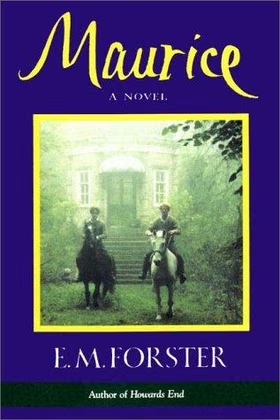
Maurice
I read this as a gay novel, and a novel about England. But it's more than that, it's an important work of early English homosexuality, and I'll comment on that towards the end.
As a gay novel I found it frustrating. Far too much hand-writing about being afflicted with the unspeakable vice, not enough actual gay love. Maurice himself is quite unpleasant at the start of the novel. And then this ridiculous platonic love affair with Clive. That just sort of.. ends? When Clive is miraculously cured of any same sex love. It just felt so old fashioned and overwrought. I liked the second love story much better, with Alec. It's still couched in very old ideas of homosexuality, fear of prosecution and blackmail. But Maurice finds his way to something like gay liberation and the boys do find their way to being in love. Hooray!
Picking this as my novel to read while in London didn't work so well. It's much more a novel of rural England. And while it has a lot of stuff about English class roles and expectations. Which I'm just not that interested in, Downton Abbey was enough of that for me.
I read the book all wrong.
The exciting and important thing about this book is it was written in ~1920, by a gay author, and not published in his lifetime. And it contains the transition to a modern sensibility about gay identity. All the hand-wringing and doubt is essential because it sets the stage for Maurice' decision at the end. To break with the past, his societal expecations, the demands of his class. To declare himself in love with another man and risk everything for him. And that is a hell of a story to be writing in 1920.
So now I need to re-read the book through that eye, to set it in the same Edwardian context as I recently read Teleny and The New Life and am working my way through The First Homosexuals. Only this book is a heartfelt and personal accounting from someone living that moment, a novel author of great skill and insight. It's lovely.
Realistically I won't re-read this book. But I plan to watch the movie, which is a gem on its own merits but now may also offer me a chance to revisit the novel itself.
PS: the scenes where Maurice and Alec reconcile and decide to become lovers are thrilling. I particularly liked the chase scene through the British Museum, the inversion of power and risk and emotion. It's a very subtle and true story and I wonder where Forster got the idea to write it that wya.