
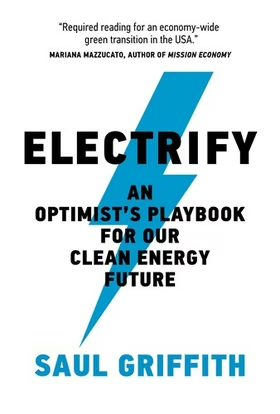
Electrify: An Optimist's Playbook for Our Clean Energy Future
The best thing an individual American can do right now to fight global warming personally is to switch to electricity for all your energy needs. Your next car should be electric and your next home heater and water heater should be heat pumps. Rooftop solar is an excellent idea too.
That’s the central argument in Electrify, Saul Griffith’s new book about global warming. He’s been talking about this for awhile; Electrify covers a lot of the same ground as his free self published Rewiring America and his Make articles.
The most interesting part of the new book isn’t the personal advice but rather his global plan for how the whole world mitigates global warming. He starts by pointing out how urgent the problem is: we have to start doing more right now, this very year, and there’s no time to wait on new technologies. Electricity is the best form of energy for transportation and storage. The basic idea is to shift from fossil fuel to electric consumption while in parallel adding more carbon-neutral electricity sources to the grid. He argues we’ll need 4x as much electricity in the US to achieve full electrification but this is a huge net gain (50%ish) in both total energy consumption and actual costs. He advocates for an effort akin to World War II mobilization to get it done, financed with low interest debt.
What I like best about his argument is it breaks the Gordian knot about “what can we do”? Electrify now and work on adding clean energy sources. I also like his holistic clarity, he really looks at whole-world energy consumption and economics. The optimism is great too. I find the argument convincing.
My one quibble with the book is I wish it were better written. Some of the chapters feel a bit unfinished and some of the arguments are a little glib. This book is an improvement on Rewiring America and the fact it's officially published will give it a lot more impact. That's great! But there was an opportunity here to make a really solid decade-defining book and I think it fell a little short. That's OK, I'm glad Saul has taken the time out of his career of engineering and entrepreneurship to write such an important work of advocacy.