
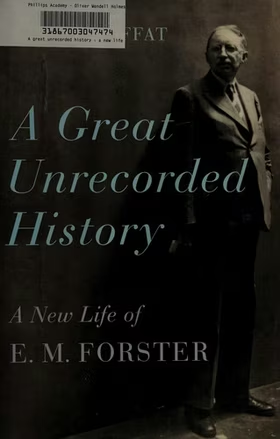
A Great Unrecorded History: A New Life of E. M. Forster
What an absolutely terrific biography. Very well written and very well researched. And with a strong thesis of queer literary history, deftly laid out in the author's introductory chapter Start with the Fact That He Was Homosexual. The book delivers on that premise.
Moffat must have spent years reviewing Forster's copious private papers. His letters, his diaries (including the famous and sexy "Locked Diary"). And then she weaves that all into a coherent story about his life. His development as an author, then as as gay man, and then as a Grand Old Man of letters. The story is hugely compelling and also very personal. I came away feeling real fondness for Morgan, the same fondness I'm sure Moffat had for him.
I don't want to recap the whole biography here. But I was struck by his great passion for Mohammed el Adl, his first real love, and a relationship he revisited over decades in his life. It sounds like Forster had most of the material organized for a book here, one he couldn't quite bring himself to write. I was gratified to learn of his middle-aged life as a relatively well socialized gay man. Then settling down in an unusual unspoken relationship with Bob Buckingham and his wife. With some lovers on the side as chance offered. Moffat does a fantastic job getting us insight into his private gay love life, one Forster kept secret but did document in letters to trusted friends and in diaries.
It's not all sex though! The other half of this is Forster's unusual career art. Three huge successful novels and then.. nothing. Well not nothing, some modest non-fiction, the libretto for Billy Budd, a lot of lectures and just being a respected author. But one gets the impression he had more in him he couldn't offer. Early in his career (1911) he writes in his diary about his "Weariness of the subject that I both can and may treat—the love of men for women and vice versa."
He does write a different novel in 1913, the gay novel Maurice, but then famously doesn't publish it until after his death. What a waste! Particularly remarkable he wrote that so young, before he'd ever been with another man or really understood himself as a member of a gay society. Unfortunately Moffat's biography doesn't have a lot of detail about how Forster thought of this book or how he edited it in later years. Perhaps there's not enough surviving in letters.
There's lots more in the biography though, a full and loving treatment of an important and fascinating man. I'm grateful to have read it.